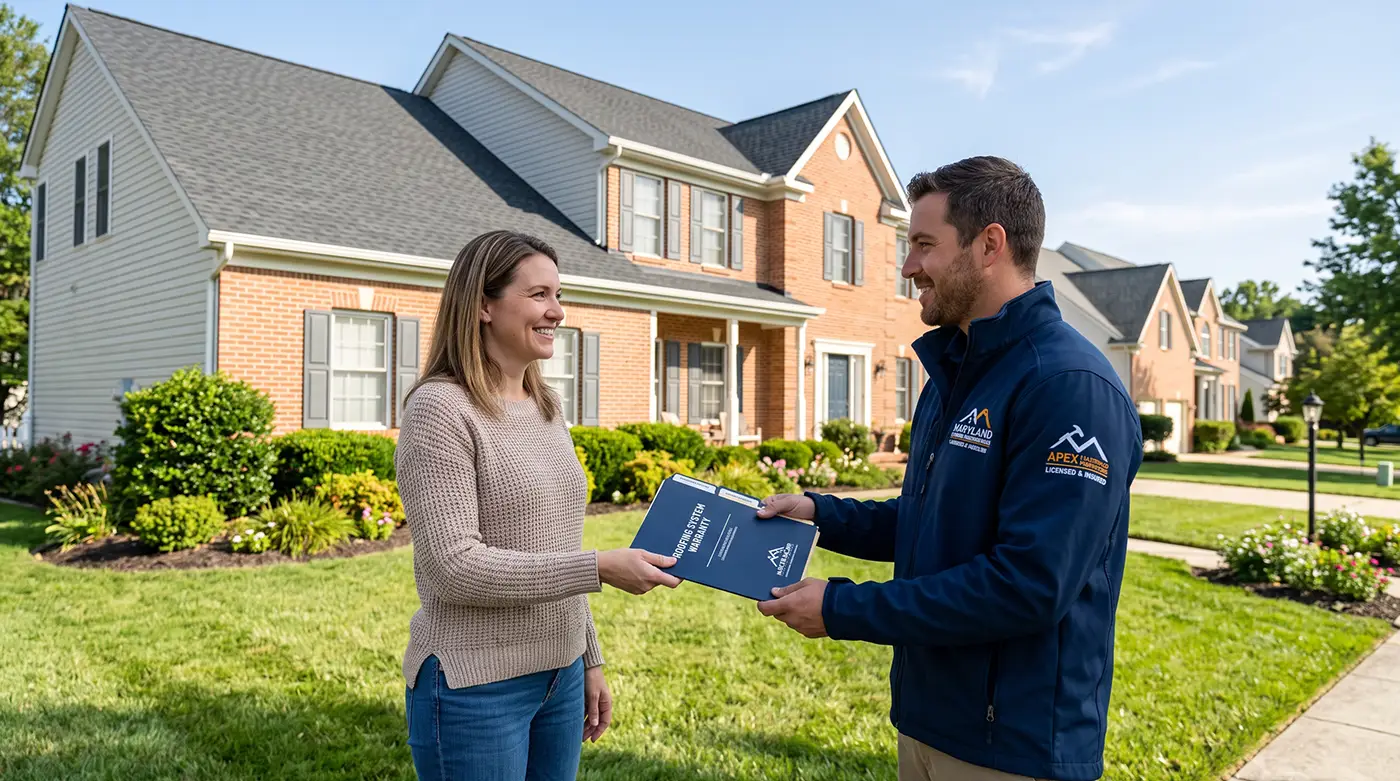

A shingle roof replacement is more than installing new shingles over a Maryland home. A1 Roofing’s KangaRoof, located in Columbia, MD, approaches replacement as a complete roofing-system project: evaluating the existing roof, removing deteriorated materials, inspecting the deck, correcting vulnerable details, and installing a system designed to manage rain, wind, heat, humidity, snow, and seasonal temperature changes. Homeowners considering a new roof can explore our Maryland roofing services before scheduling an inspection.
When Does a Shingle Roof Need Replacement?
Roof age alone should not determine whether replacement is necessary. We evaluate the condition of the entire system and look for patterns of deterioration rather than one isolated defect.
Replacement becomes more practical when we find:
- Recurring leaks in multiple areas
- Widespread curling, cracking, or missing shingles
- Large areas of granule loss
- Repeated flashing failures
- Soft, deteriorated, or moisture-damaged decking
- Extensive wind or storm damage
- Previous repairs that are no longer solving the underlying problem
- Several aging roof components failing at the same time
Localized damage can sometimes be handled through professional roof repair services. When deterioration is widespread, however, repeated repairs can become less economical than replacing the roofing system.
Why Maryland Weather Matters to Shingle Roof Replacement
Maryland roofs experience substantial seasonal variation. Summer heat, humidity, thunderstorms, wind-driven rain, winter freezes, snow, and repeated temperature cycling all affect asphalt roofing.
The NOAA U.S. Climate Normals track temperature, precipitation, and snowfall using the standard 1991–2020 climatological period. For roofing, those conditions make moisture control, flashing, attic ventilation, underlayment, and correct shingle fastening just as important as the visible shingle itself.
That is why we evaluate replacement as a complete system rather than treating shingles as a decorative outer layer.
What a Complete Shingle Roofing System Includes
A high-quality replacement should address every component responsible for moving water away from the structure.
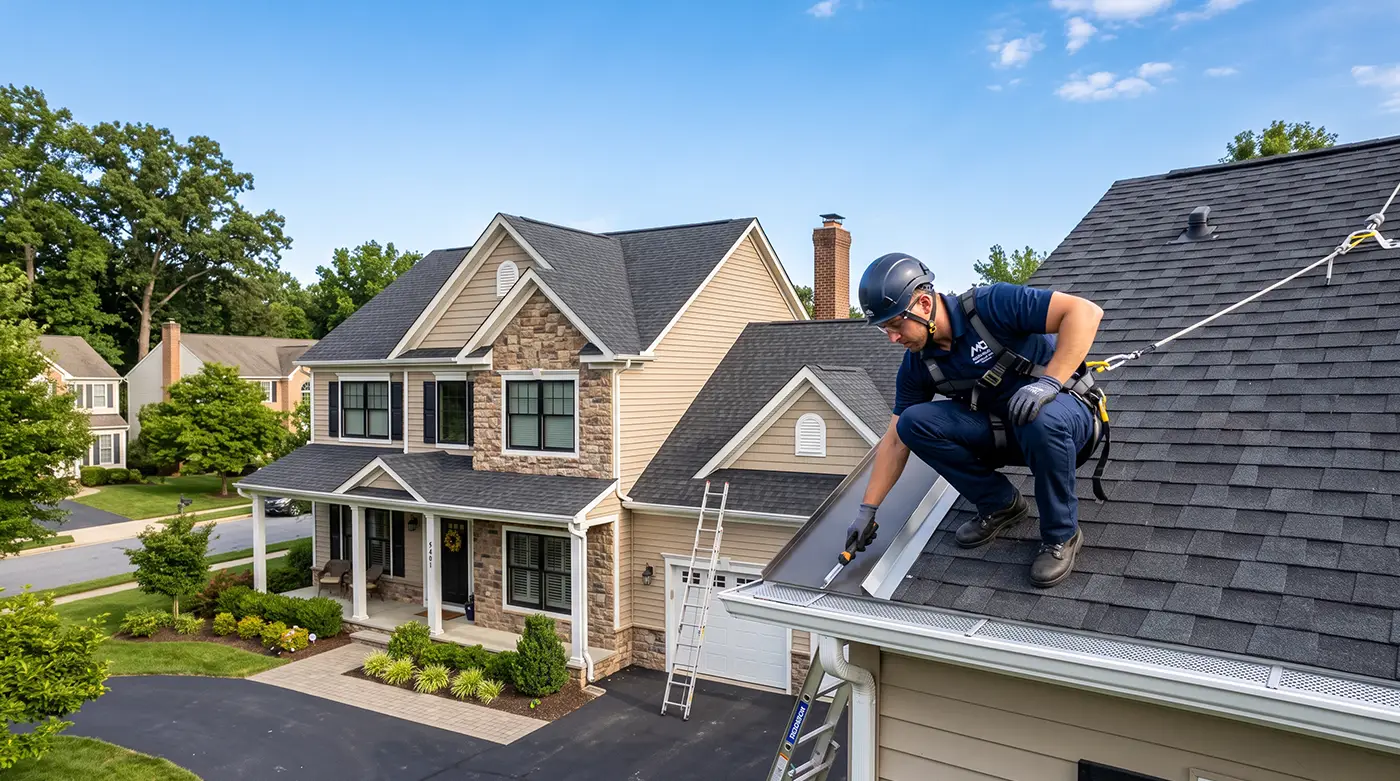
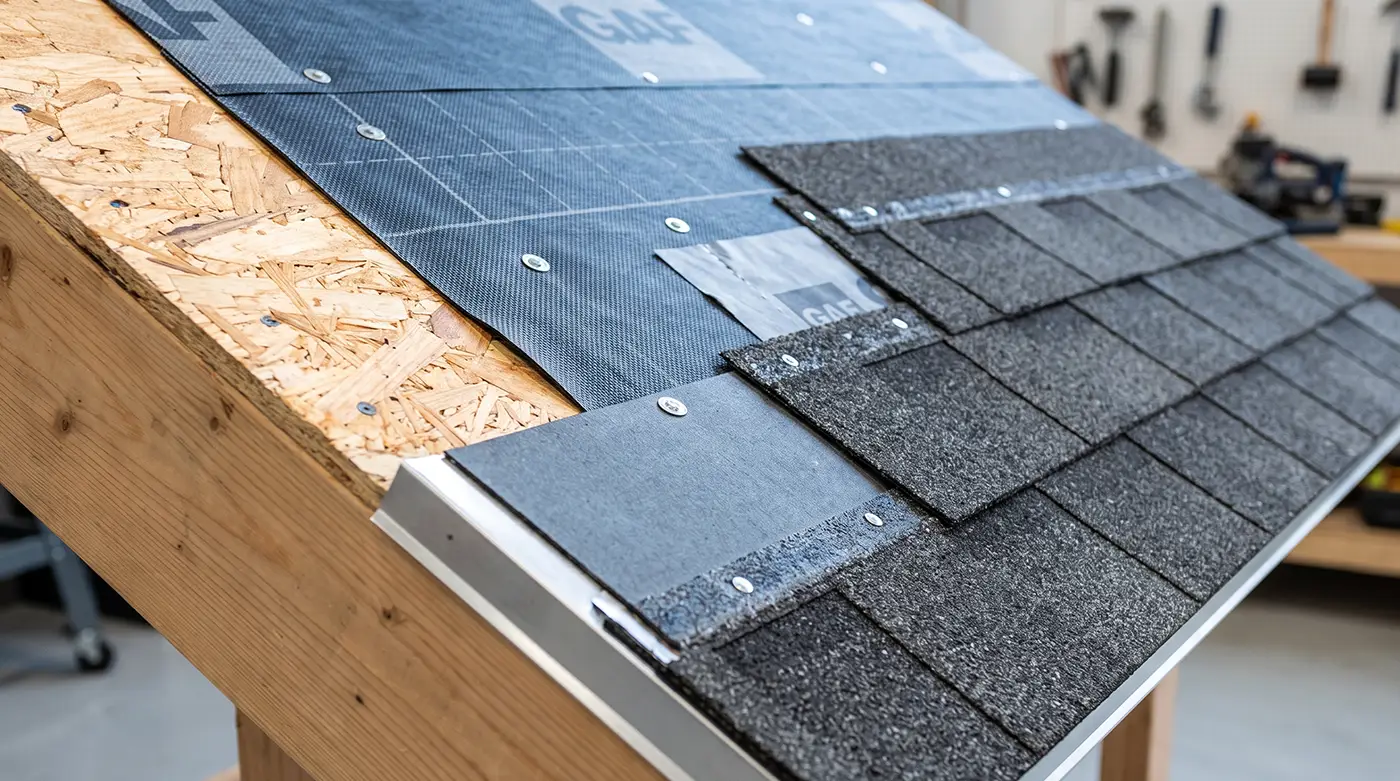
A typical system can include the roof deck, underlayment, eave protection where required, drip edge, starter shingles, field shingles, valleys, pipe boots, chimney and wall flashing, ridge or hip caps, and intake and exhaust ventilation.
After tear-off, previously concealed decking becomes visible. Damaged wood should be identified before the new system covers it. Flashing intersections deserve similar attention because chimneys, walls, valleys, skylights, vents, and plumbing penetrations are common water-entry points.
Our roof replacement services include evaluation of these details rather than simply installing shingles over existing weaknesses.
Choosing Asphalt Shingles for a Maryland Home
Architectural asphalt shingles are widely used because they combine weather protection, design flexibility, and cost efficiency. We recommend comparing products by more than color.
Important specifications include:
- Manufacturer wind classification
- Shingle construction and weight
- Algae-resistance features
- Required fastening pattern
- Starter and ridge-cap compatibility
- Manufacturer warranty requirements
- Roof slope and ventilation requirements
FEMA guidance emphasizes that wind performance depends heavily on correct installation and specifically instructs installers to “pay close attention to the fastener location.” FEMA also recommends verifying applicable asphalt-shingle wind classifications rather than assuming a longer product warranty automatically means greater wind resistance.
Homeowners comparing material options can also review our asphalt roofing services.
The Shingle Roof Replacement Process
A properly planned replacement generally follows a defined sequence.
- Roof inspection. We document visible shingle deterioration, flashing problems, leaks, penetrations, drainage concerns, and accessible ventilation conditions.
- Written scope. The proposal should identify the roofing materials, tear-off, flashing work, ventilation components, disposal, warranties, and how concealed decking repairs will be handled.
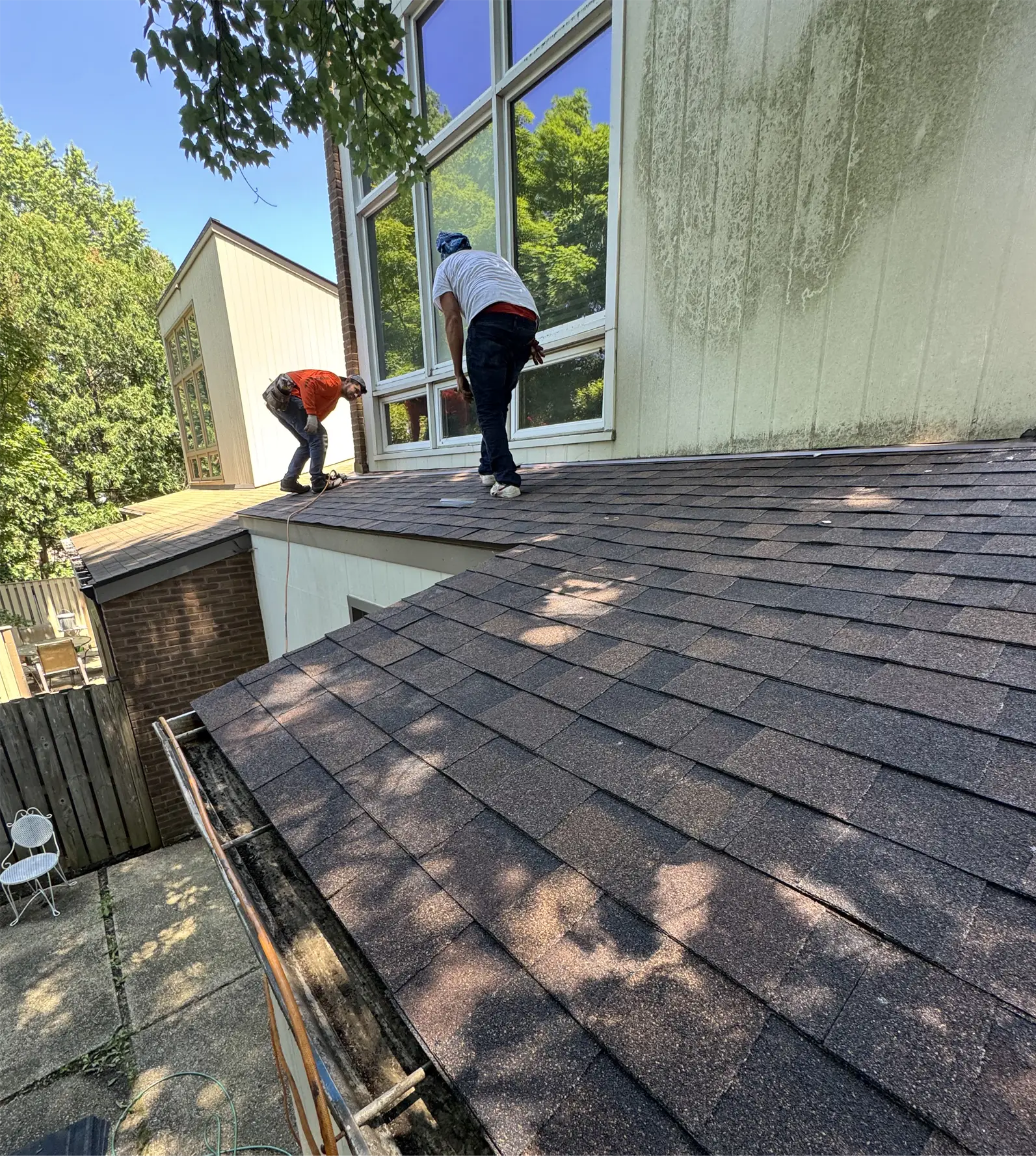
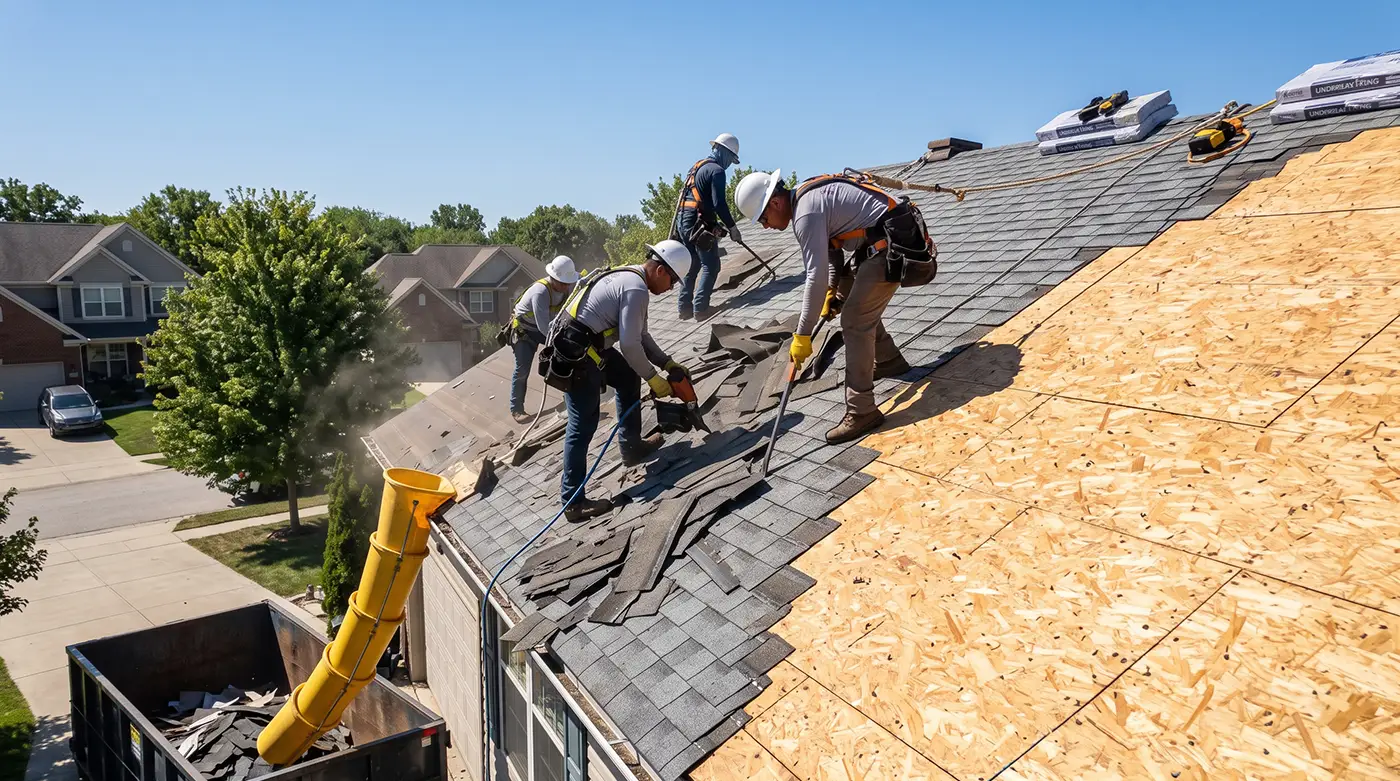
- Tear-off. Existing roofing materials are removed so the underlying deck can be evaluated.
- Deck inspection. Deteriorated or structurally unsuitable sections are identified and corrected according to the approved scope.
- Water-shedding components. Underlayment, edge details, valleys, flashing, and related protection are installed according to the selected system.
- Shingle installation. Starter courses, field shingles, penetrations, hips, and ridges are completed using the manufacturer-required fastening pattern.
- Cleanup and final review. Debris is removed, the property is checked for roofing materials and fasteners, and completed details are reviewed.
What Determines Shingle Roof Replacement Cost?
Square footage is only one pricing factor. Two Maryland homes with similar floor plans can require substantially different roofing scopes.
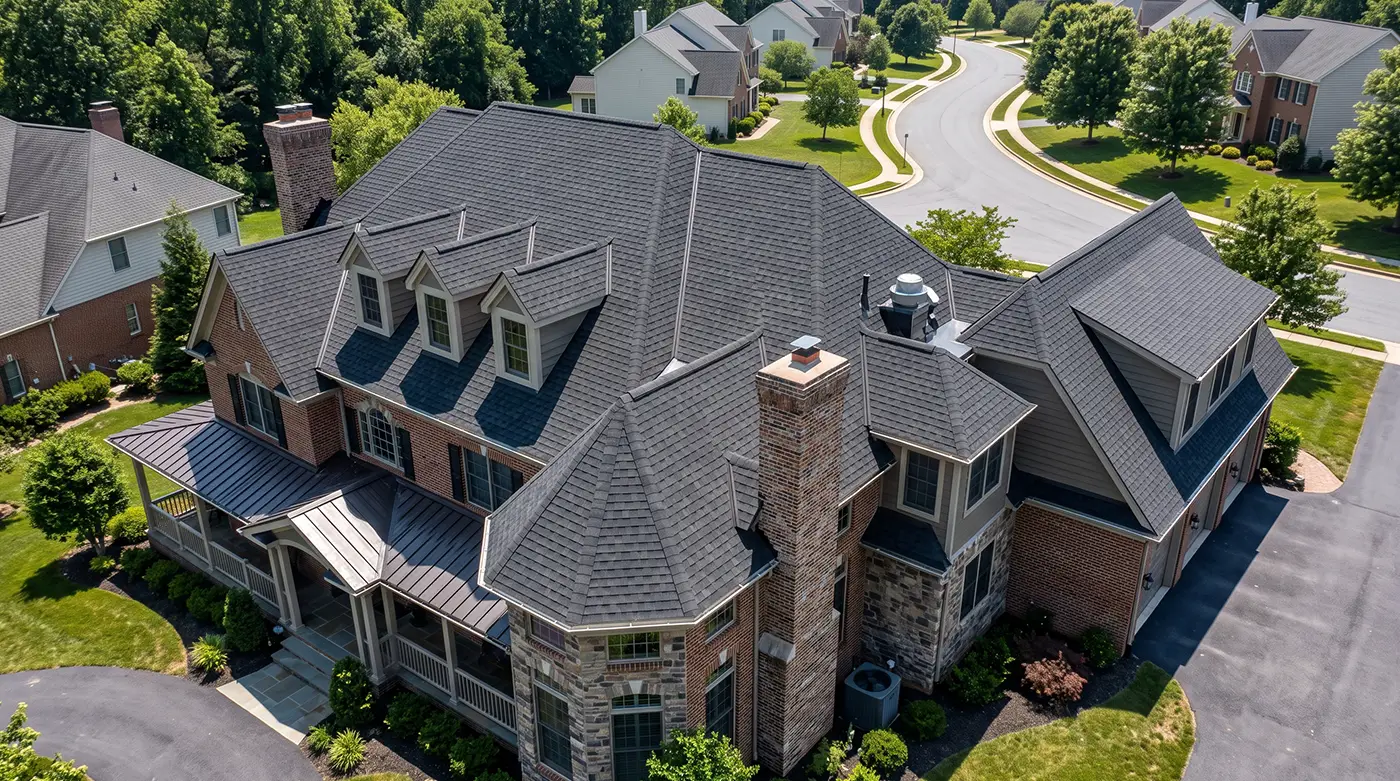
Cost can change based on roof pitch, number of stories, valleys and dormers, access, tear-off requirements, shingle selection, flashing complexity, ventilation work, disposal, and concealed decking deterioration.
For that reason, we recommend using a roof-specific written estimate instead of relying on generic price-per-square-foot averages.
Repair or Replace? Make the Decision From the Roof Condition
A single missing shingle does not automatically justify a new roof, and an older roof does not automatically need replacement. We compare the damaged area with the condition of the surrounding roofing system.
Repair usually makes more sense when damage is concentrated and the remaining system still has useful service life. Replacement becomes stronger economically when failures are widespread, leaks repeatedly return, or significant portions of the system are deteriorating together.
Homeowners ready for a roof-specific assessment can contact our Columbia roofing team for a written replacement estimate.
Conclusion
Shingle roof replacement in Maryland should address far more than worn shingles. Deck condition, underlayment, flashing, valleys, penetrations, ventilation, fastening, material selection, and workmanship collectively determine how effectively the new roof protects the home. By inspecting the complete system, documenting the scope before installation, and selecting materials suited to the property and Maryland weather, we can build a replacement roof for dependable long-term performance rather than another cycle of temporary repairs.
FAQ
How do I know whether my Maryland shingle roof needs replacement?
Widespread shingle deterioration, recurring leaks, extensive storm damage, repeated repairs, deteriorated decking, and failures across several roof areas can indicate that replacement is more practical than another localized repair.
How long does a shingle roof replacement take?
Project duration depends on roof size, pitch, complexity, weather, material delivery, access, and the amount of decking repair discovered after tear-off. The installation schedule should be discussed in the written proposal before work begins.
Should old shingles be removed before installing a new roof?
Tear-off allows the roofing contractor to inspect the roof deck and address concealed deterioration, flashing problems, and other underlying conditions before installing the new system. The appropriate approach should be determined from the existing roof, local requirements, manufacturer instructions, and the approved project scope.