
A professional roof inspection can uncover damaged shingles, failed flashing, moisture entry points, ventilation problems, membrane defects, and structural warning signs before they become larger repairs. At A1 Roofing’s KangaRoof in Columbia, MD, we evaluate accessible roof components and explain whether the findings support maintenance, targeted repair, or replacement. Homeowners can explore our roofing services, visit the KangaRoof website, or request an assessment through our Contact Us page.
How Much Does a Roof Inspection Cost?
Roof inspection costs vary because the scope can range from a basic visual assessment to drone imaging, infrared scanning, attic evaluation, or formal documentation. According to Angi’s 2026 roof inspection cost data, professional inspections can range from $75 to $1,150, depending on roof size, pitch, accessibility, material, and inspection method. Its Eastern Seaboard benchmark is approximately $170 to $370.
| Inspection Type | Typical Cost |
| Physical roof inspection | $75–$200 |
| Drone roof inspection | $150–$400 |
| Infrared roof inspection | $400–$600 |
These are national benchmarks, not fixed Columbia, Maryland prices. Actual pricing should reflect the property, roofing system, access conditions, inspection purpose, and documentation required.

What Determines Roof Inspection Cost?
Roof Size and Complexity
Larger roofs require more inspection time. Multiple roof planes, dormers, valleys, skylights, chimneys, parapet walls, and roof-to-wall transitions increase the number of vulnerable details requiring evaluation. Complex drainage patterns also require closer examination around valleys, gutters, scuppers, drains, and low-slope transitions.
Roof Pitch, Height, and Accessibility
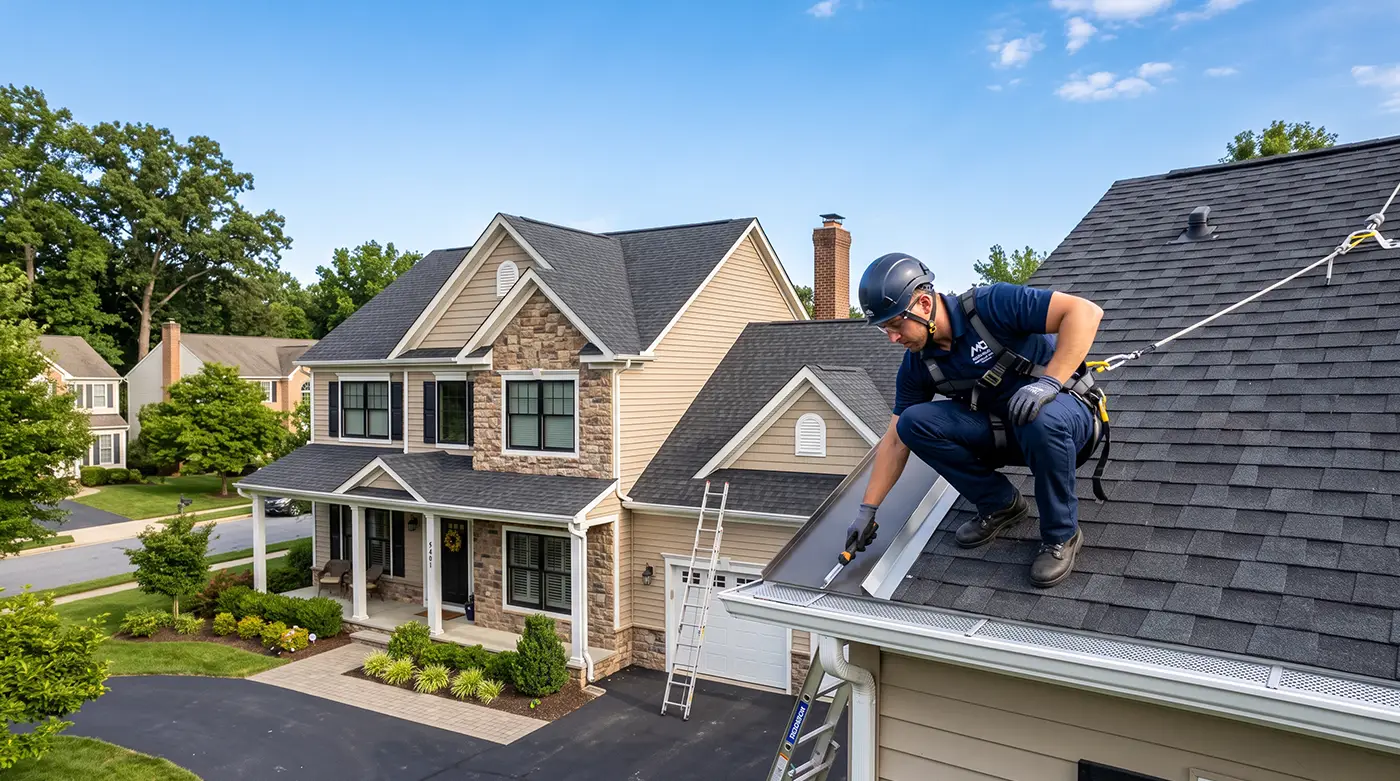
Steep or high roofs may not be safe to walk. Limited ladder placement, landscaping, adjacent structures, solar panels, fragile materials, or unstable decking can restrict physical access. In these situations, high-resolution photography or drone inspection may be necessary.
Roofing Material
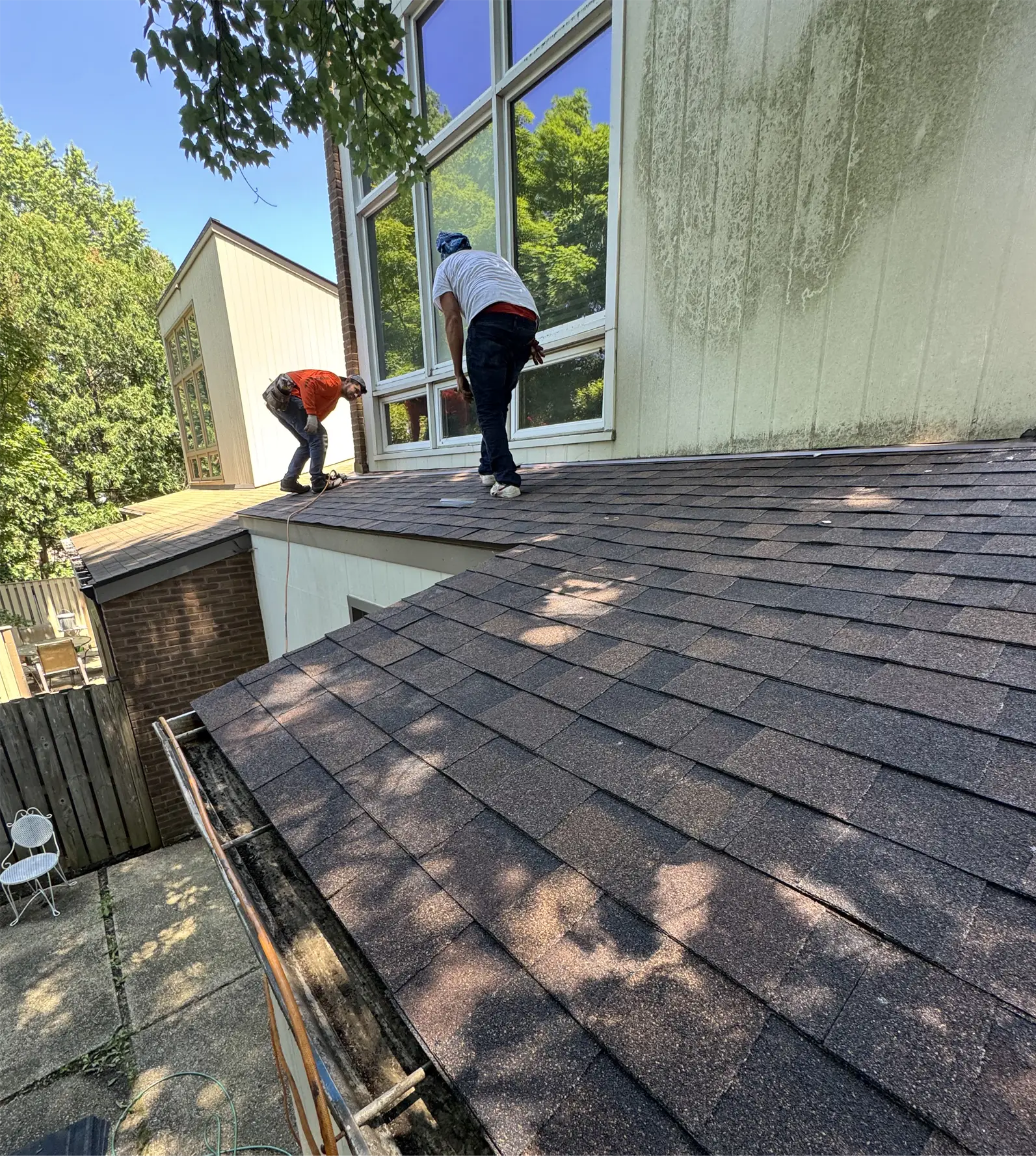
Asphalt shingles, metal, slate, cedar, TPO, EPDM, PVC, and modified bitumen develop different failure patterns. Shingle inspections typically focus on missing or lifted shingles, creasing, granule loss, exposed fasteners, flashing, and seal failures. Flat-roof inspections place greater emphasis on seams, membrane punctures, penetrations, ponding water, edge details, and drainage.
Inspection Scope and Reporting
A roofing estimate is not necessarily equivalent to a detailed roof-condition report. Costs can increase when an inspection requires extensive photographs, attic observations, moisture tracing, infrared imaging, written documentation, or certification. We recommend confirming the exact inspection scope before scheduling.
What Should a Professional Roof Inspection Include?
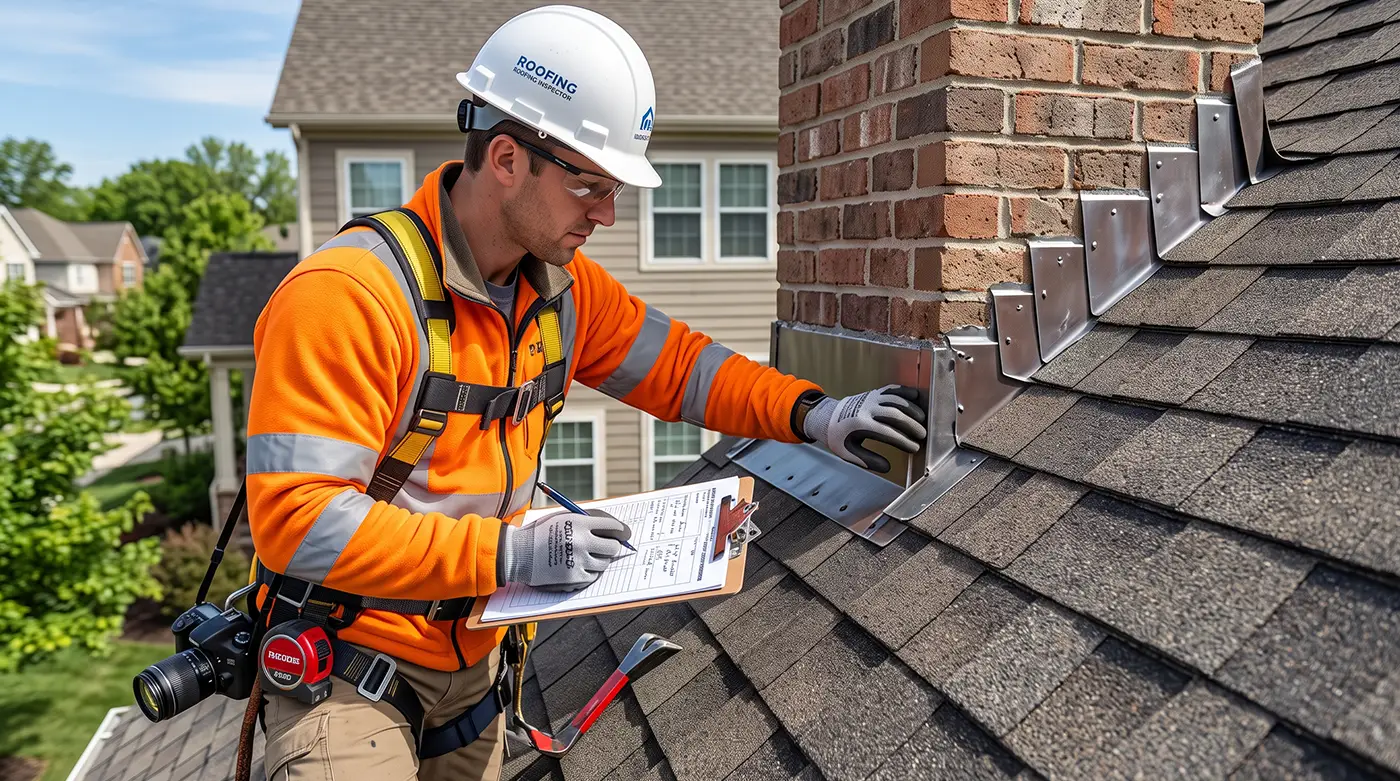
The InterNACHI Standards of Practice identify roof-covering materials, gutters, downspouts, vents, flashing, skylights, chimneys, roof penetrations, and accessible roof structure among important inspection areas.
For a roofing-specific assessment, important checkpoints include:
- Missing, cracked, lifted, curled, or deteriorated roofing materials
- Chimney, wall, valley, vent, skylight, and pipe flashing
- Exposed, loose, or backed-out fasteners
- Failed sealants and open joints
- Soft, sagging, or visibly deflected areas
- Flat-roof seams, punctures, blisters, and ponding locations
- Evidence of water intrusion in accessible attic or interior areas
- Ventilation conditions and visible moisture staining
When damage is localized, our roof repair service can address practical repair options. When deterioration is widespread, leaks repeatedly return, or repairs no longer provide reasonable long-term value, we can compare those findings with roof replacement options.
When Should You Schedule a Roof Inspection?
A professional inspection is particularly valuable after severe wind or hail, before buying or selling a property, when ceiling stains develop, after repeated leak repairs, or when an aging roof begins showing widespread deterioration.
Inspections are also useful when shingles are missing, flashing appears damaged, granules accumulate in gutters, flat-roof areas retain water, or previously repaired areas begin leaking again.
After significant storm damage, property owners should document visible conditions while avoiding unsafe roof access. If water is actively entering the building, inspection may need to be combined with immediate stabilization through emergency roof repair services.

Roof Inspection vs. Free Roofing Estimate
A free roofing estimate is generally intended to identify a specific problem and establish the scope and price of proposed work. A paid roof inspection may provide a broader condition assessment, specialized testing, extensive photographs, or documentation intended for a lender, insurer, buyer, seller, or other third party.
The appropriate option depends on the objective. If the goal is to locate a leak and obtain a repair quote, a contractor assessment may be sufficient. If formal documentation is required, confirm the required inspection standard and report format before scheduling.
How an Inspection Helps Control Future Roofing Costs
The financial value of an inspection is often found in identifying problems while they remain localized. A failed pipe boot, lifted flashing, isolated membrane puncture, or small group of damaged shingles may require targeted repair. If moisture continues entering unnoticed, the scope can expand to underlayment, roof decking, insulation, drywall, and interior finishes.
Inspection findings also make it easier to compare repair and replacement objectively. Instead of relying only on roof age, we can evaluate the actual extent of deterioration, recurring leak history, condition of surrounding materials, and whether another repair represents reasonable long-term value.
CONCLUSION
Roof inspection costs depend on inspection method, roof size, pitch, accessibility, material, complexity, and reporting requirements. Basic physical inspections carry lower national price benchmarks, while drone, infrared, and specialized assessments cost more. For Columbia and surrounding Maryland communities, we recommend selecting an inspection based on the roof condition and the decision the inspection must support. A1 Roofing’s KangaRoof can evaluate roofing concerns, explain practical options, and provide a clear estimate when repair or replacement work is appropriate.
FAQ
How much does a roof inspection cost in Columbia, MD?
There is no universal price. Roof size, slope, accessibility, material, inspection method, damage level, and documentation requirements all affect cost. National averages provide useful context, but local pricing should reflect the specific property.
How long does a professional roof inspection take?
A straightforward residential inspection can be completed more quickly than an assessment of a large, steep, damaged, or highly complex roof. Drone imaging, attic evaluation, moisture investigation, and detailed reporting can extend inspection time.
Can a roof inspection determine whether I need repair or replacement?
Yes. An inspection can identify the location and extent of visible deterioration and help determine whether targeted repair is practical. Replacement may be more appropriate when damage is widespread, leaks repeatedly return, or isolated repairs would not provide dependable long-term value.