A roofing warranty can protect a major home investment, but its value depends on the exact coverage, installation requirements, documentation, and homeowner obligations. At A1 Roofing’s KangaRoof in Columbia, MD, we treat warranty protection as part of the roofing system—not paperwork to forget after installation. The best protection starts before installation and continues through inspections, repairs, ownership changes, and any future claim.

Know the Two Roofing Warranties That Protect Your Roof
Most roofing projects involve two separate protections.
Manufacturer material warranties address qualifying defects in shingles, membranes, or other covered products. Coverage varies by manufacturer, product line, building type, system components, and installation method.
Workmanship warranties come from the roofing contractor and address installation-related problems covered by the contractor’s written terms. This matters because premium materials can still fail when flashing, fastening, underlayment, seams, ventilation, or penetrations are installed incorrectly.
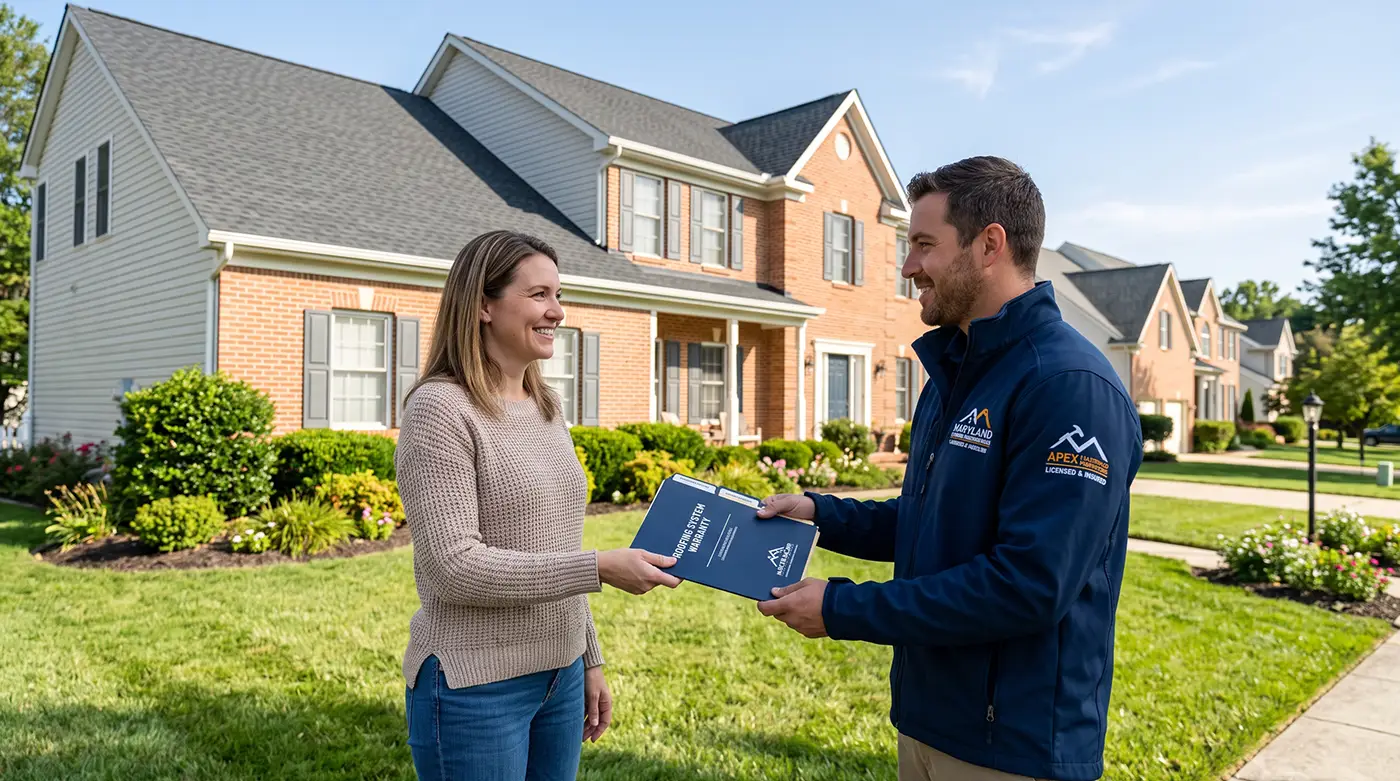
Our applicable terms are stated in the written proposal. Shingle roof replacements include a 10-year workmanship warranty, while manufacturer shingle warranties are normally 40–50 years depending on product and manufacturer terms. Roof repair warranties typically run 1–3 years. Residential flat roof replacements include a 20-year material warranty and 10-year workmanship warranty; commercial flat roofs may include 20-year material and workmanship warranties.
Read the Warranty Before Roof Installation
Do not judge coverage by a headline such as “lifetime,” “50-year,” or “20-year.” Verify:
- Covered roofing components.
- Whether labor, tear-off, disposal, flashing, or only materials are included.
- When coverage becomes prorated.
- Contractor-certification or complete-system requirements.
- Registration procedures and deadlines.
- Transfer rules when the property is sold.
- Maintenance and inspection obligations.
- Exclusions involving storms, structural movement, ventilation, alterations, or unauthorized repairs.
Owens Corning’s roofing warranty overview, for example, separates standard product coverage from enhanced system warranties and identifies specific component and contractor-certification requirements. Some enhanced options provide broader protection than a standard material warranty.
Register the Warranty and Build a Roof File
Warranty administration varies by manufacturer. Owens Corning offers online warranty registration and management. CertainTeed’s warranty registration portal states that failure to register does not void its warranty, while still providing registration, transfer, and claim-management options.
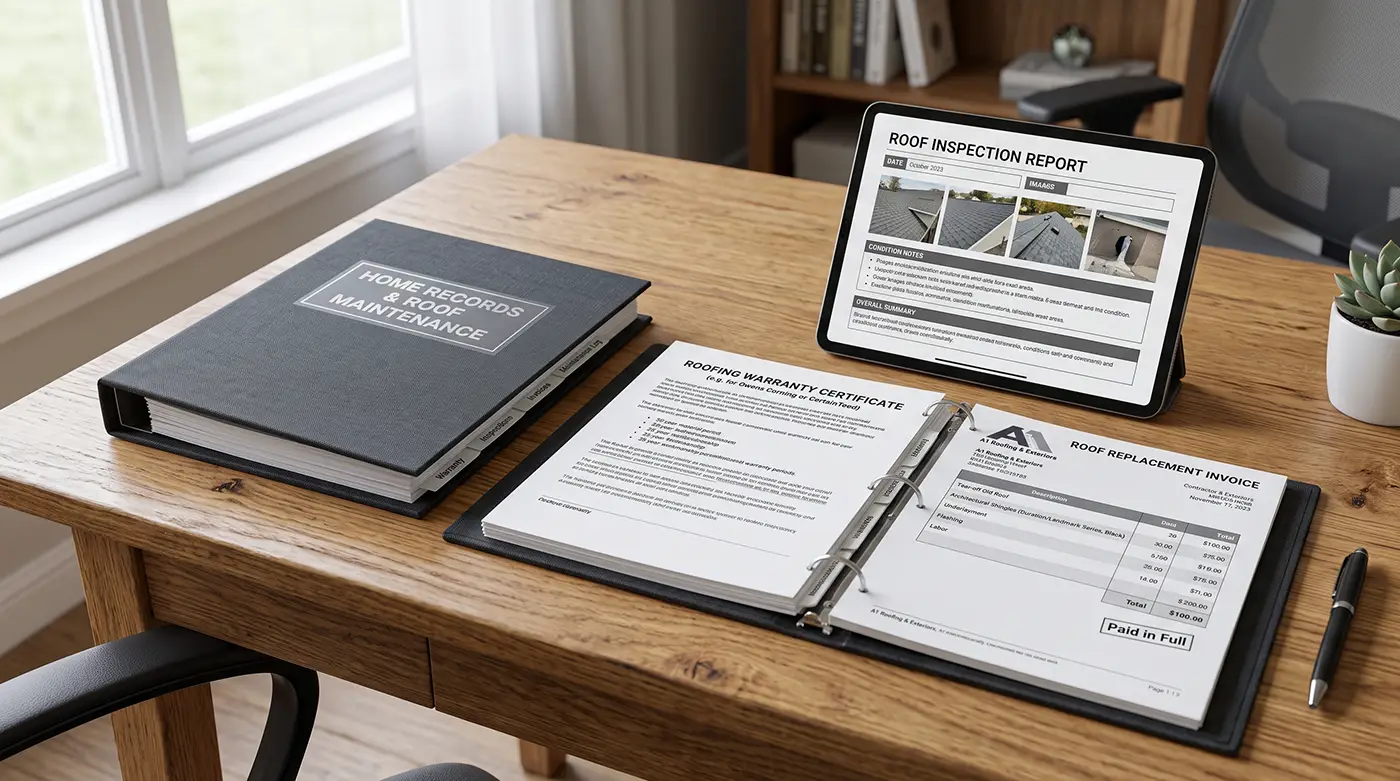
Keep a permanent digital roof file containing the signed contract, final invoice, material list, product names and colors, installation date, contractor information, permits when applicable, warranty certificates, photographs, inspection reports, and repair records.
Manufacturers may request proof of purchase, proof of ownership, photographs, installation details, product identification, or material samples when evaluating a defect claim. Good documentation can prevent unnecessary delays.
Protect Warranty Coverage With Proper Roof Maintenance
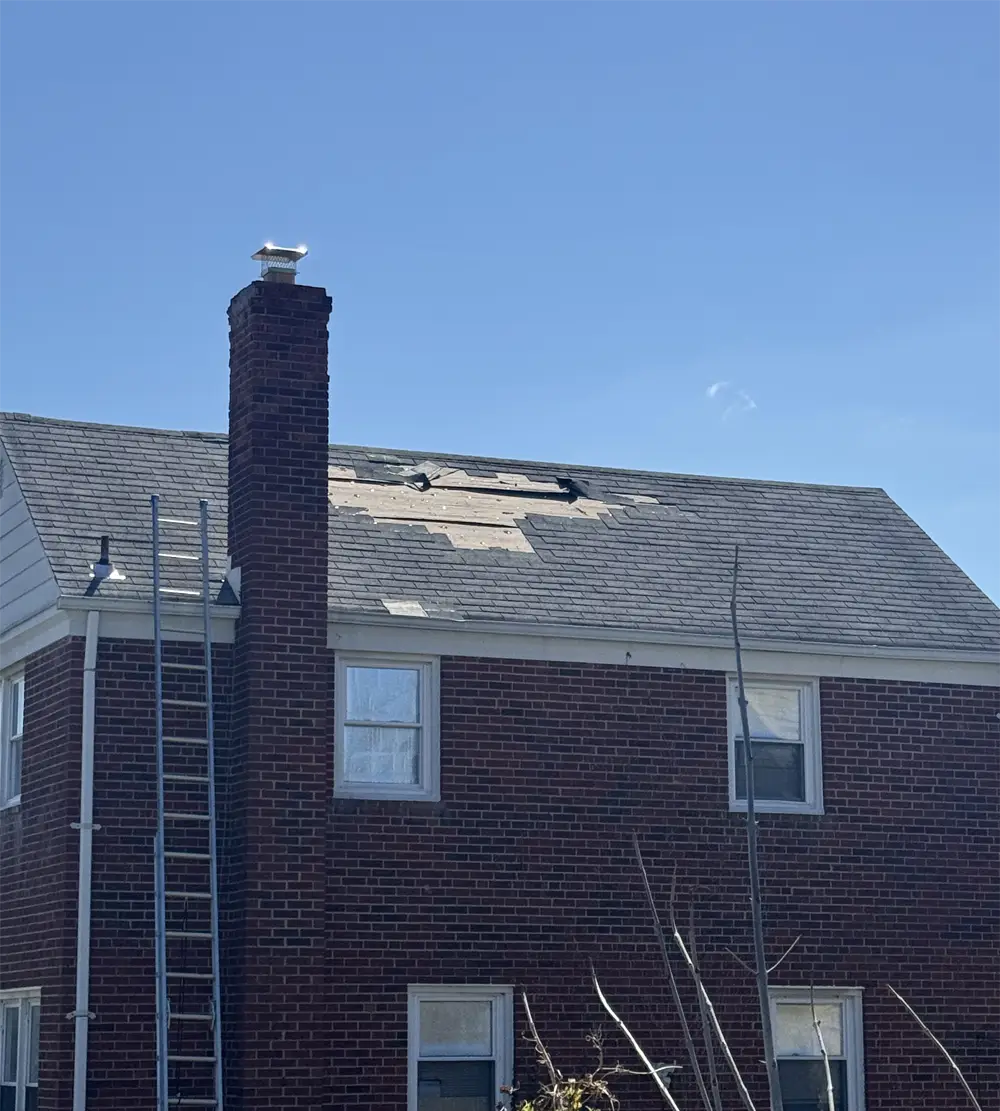
A roofing warranty is not a maintenance plan. Schedule an inspection after significant storm damage or when you notice leaks, missing shingles, damaged flashing, loose membrane, failed sealant, or interior water staining. Our roof repair service can address localized problems before water reaches decking, insulation, ceilings, or wall assemblies.
Avoid aggressive pressure washing, unapproved coatings, unqualified repairs, and poorly integrated roof penetrations. Solar panels, satellite equipment, skylights, and rooftop HVAC work should be installed without violating applicable manufacturer or contractor requirements.
Roofing Warranty vs. Homeowners Insurance
Warranty coverage and insurance coverage address different causes. A roofing warranty generally responds to qualifying product defects or covered installation errors. Homeowners insurance may respond to sudden covered events such as wind, hail, or falling objects, subject to the policy.
After storm damage, document conditions promptly and arrange an inspection. Do not assume storm damage is a warranty claim merely because the roof remains within its warranty period.

Protect Transferability When Selling the Home
Check warranty transfer rules before closing because transfer windows can be short. Owens Corning, for example, states that certain warranties may transfer to a second owner when required steps are completed within 60 days of the real-estate transfer.
A properly transferred roofing warranty gives the buyer documented protection and creates a clearer record of the roof’s installation history.
Prepare a Strong Roofing Warranty Claim
When a possible defect appears, photograph the affected area, record when the problem was discovered, locate the original proposal and warranty, and avoid destructive work until the contractor or manufacturer explains the claim procedure.
For suspected workmanship problems, contact the installer first. For suspected material defects, follow the manufacturer’s claim process. If replacement becomes necessary, review our roof replacement options before approving work that could affect an open warranty claim.
CONCLUSION
The best way to maximize a roofing warranty is to manage it throughout the roof’s service life. We recommend qualified installation, clearly documented coverage, complete records, timely maintenance, authorized repairs, and strict compliance with transfer and claim deadlines. For warranty questions, inspections, repairs, or replacement planning, contact A1 Roofing’s KangaRoof through our Contact Us page.
FAQ
What is the difference between a material warranty and a workmanship warranty?
A material warranty covers qualifying manufacturing defects under the manufacturer’s terms. A workmanship warranty covers qualifying installation errors under the roofing contractor’s written warranty. One does not automatically replace the other.
Can roof repairs void a roofing warranty?
They can affect coverage if the repair violates manufacturer or contractor requirements. Before allowing third-party work, confirm who may perform repairs, which materials are permitted, and whether the work must be documented.
Do roofing warranties transfer when a home is sold?
Some do, but transfer rules vary. A warranty may require notice, documentation, a transfer fee, or action within a specific deadline. Review the exact warranty terms before ownership changes.