A durable Maryland roof must handle heavy rain, humid summers, freeze-thaw cycles, wind, snow, ice, and severe thunderstorms. At A1 Roofing’s KangaRoof in Columbia, MD, we help homeowners evaluate roof condition, compare repair and replacement options, and choose systems suited to the property. We assess the complete assembly: shingles or membrane, underlayment, flashing, ventilation, drainage, penetrations, decking, and installation quality.
Maryland Weather Creates Specific Roofing Risks
NOAA’s Maryland climate summary reports annual average precipitation of roughly 40 inches in parts of Maryland and about 50 inches in western and eastern areas. The state also experiences nor’easters, severe thunderstorms, tropical systems, and ice storms. NOAA data show that 2-inch extreme-precipitation events averaged 2.5 days per year from 2005–2020, compared with 1.8 days per year from 1950–2004.
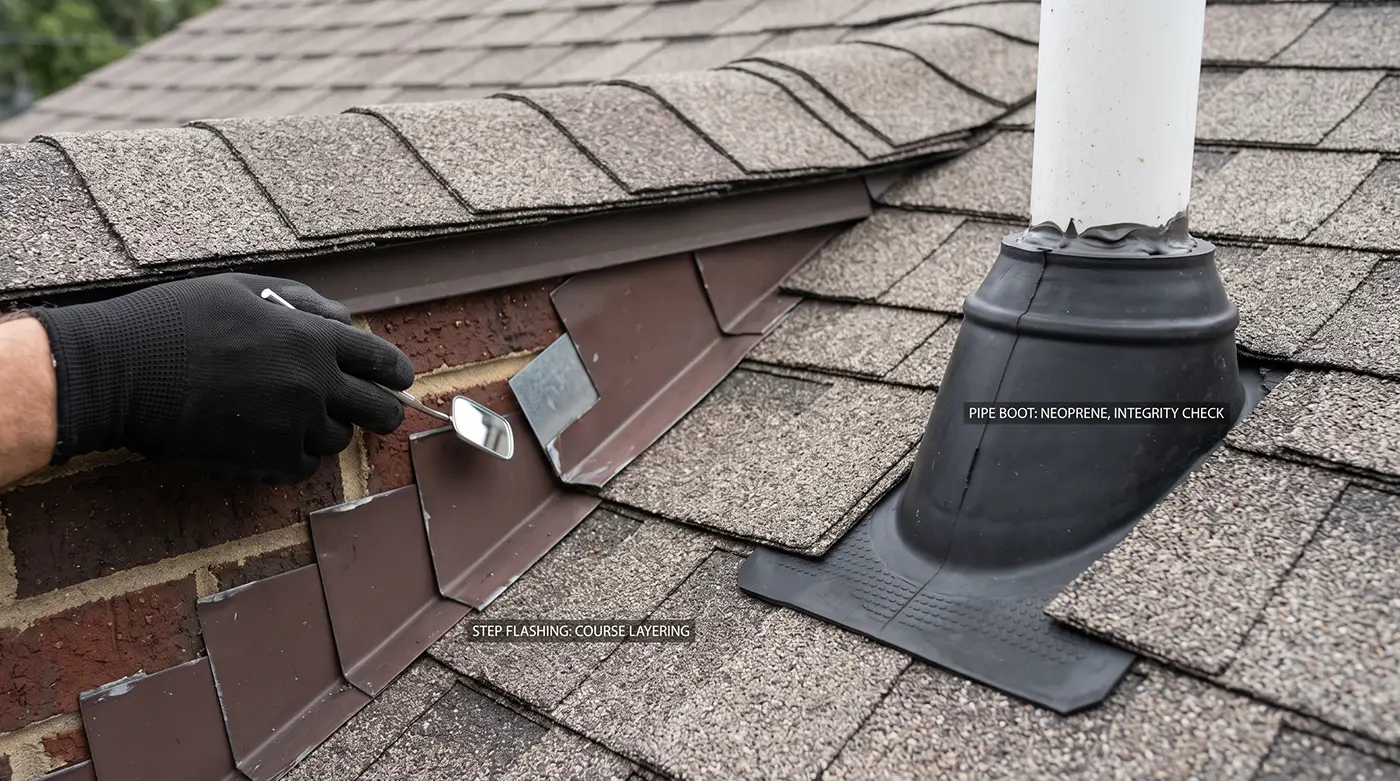
That makes water management critical. We pay close attention to valleys, eaves, wall intersections, chimneys, skylights, pipe boots, vents, low-slope transitions, and flashing because these details concentrate runoff or interrupt the roof surface.
Know the Roof Components That Fail First
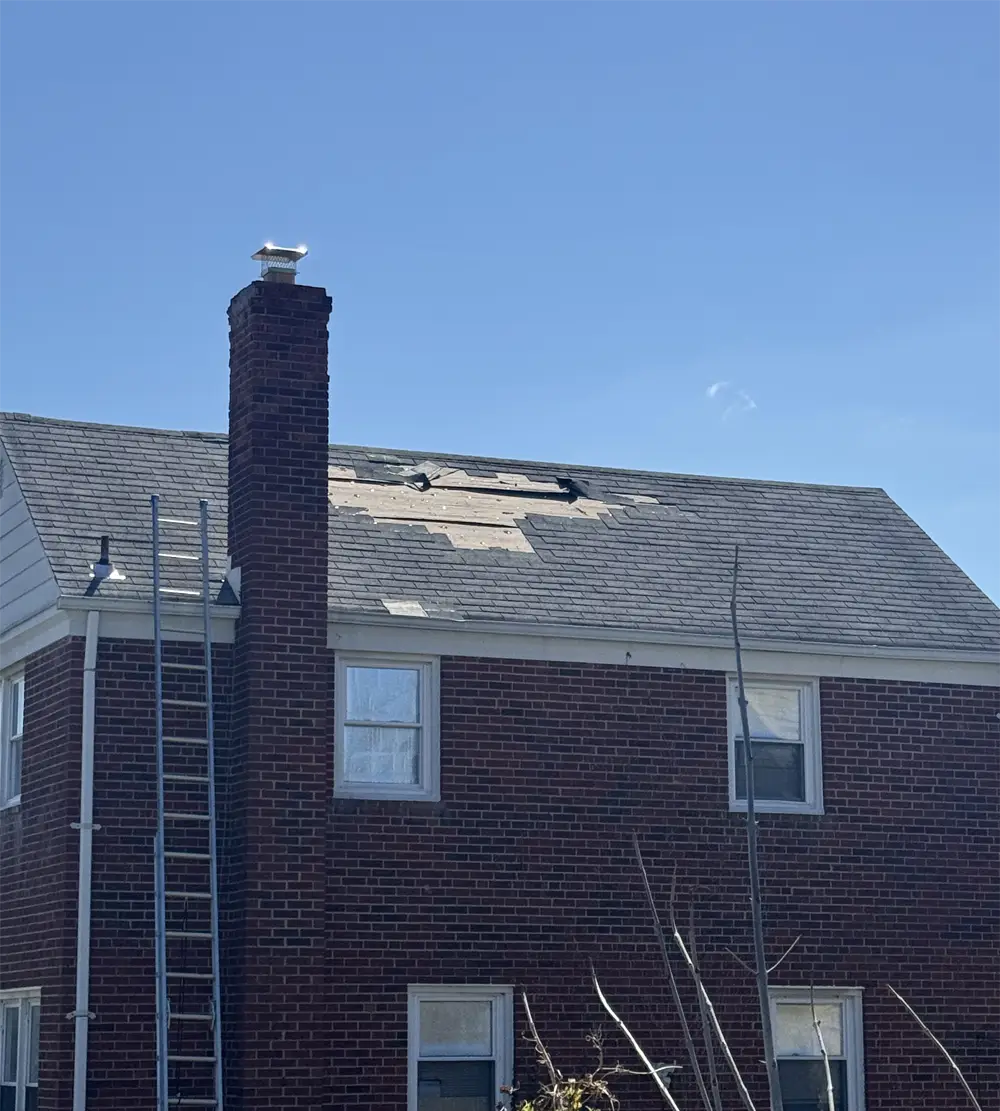
Many leaks begin at details rather than in the middle of an intact shingle field. Common failure points include cracked pipe boots, loose step flashing, exposed fasteners, damaged ridge caps, lifted shingles, skylight flashing, and deteriorated membrane seams.
Inside the home, we recommend checking the attic after heavy rain for darkened sheathing, damp insulation, rusted fasteners, water tracks, or musty odors. Ceiling stains do not always identify the leak location; water can travel along decking or framing before becoming visible.
When to Schedule a Roof Inspection
We recommend a professional inspection after an active leak, missing or lifted shingles, visible storm damage, recurring repairs, damaged flashing, interior staining, or uncertainty about an older roof.
A useful inspection should assess more than surface materials. We examine roof planes, penetrations, flashing, drainage, ventilation, visible decking conditions, attic evidence where accessible, and previous repairs.

Roof Repair vs. Roof Replacement
A targeted roof repair is usually appropriate when damage is localized and surrounding materials remain serviceable. Examples include replacing damaged shingles, correcting flashing failure, repairing a pipe boot, or fixing a limited membrane defect.
Roof replacement becomes more practical when failures are widespread: repeated leaks, extensive shingle deterioration, brittle materials, large storm-damaged areas, recurring flat-roof seam failure, or repeated repairs that no longer provide dependable protection. Roof age matters, but condition, ventilation, exposure, installation quality, and repair history matter too.
Choosing Roofing Materials for Maryland Homes
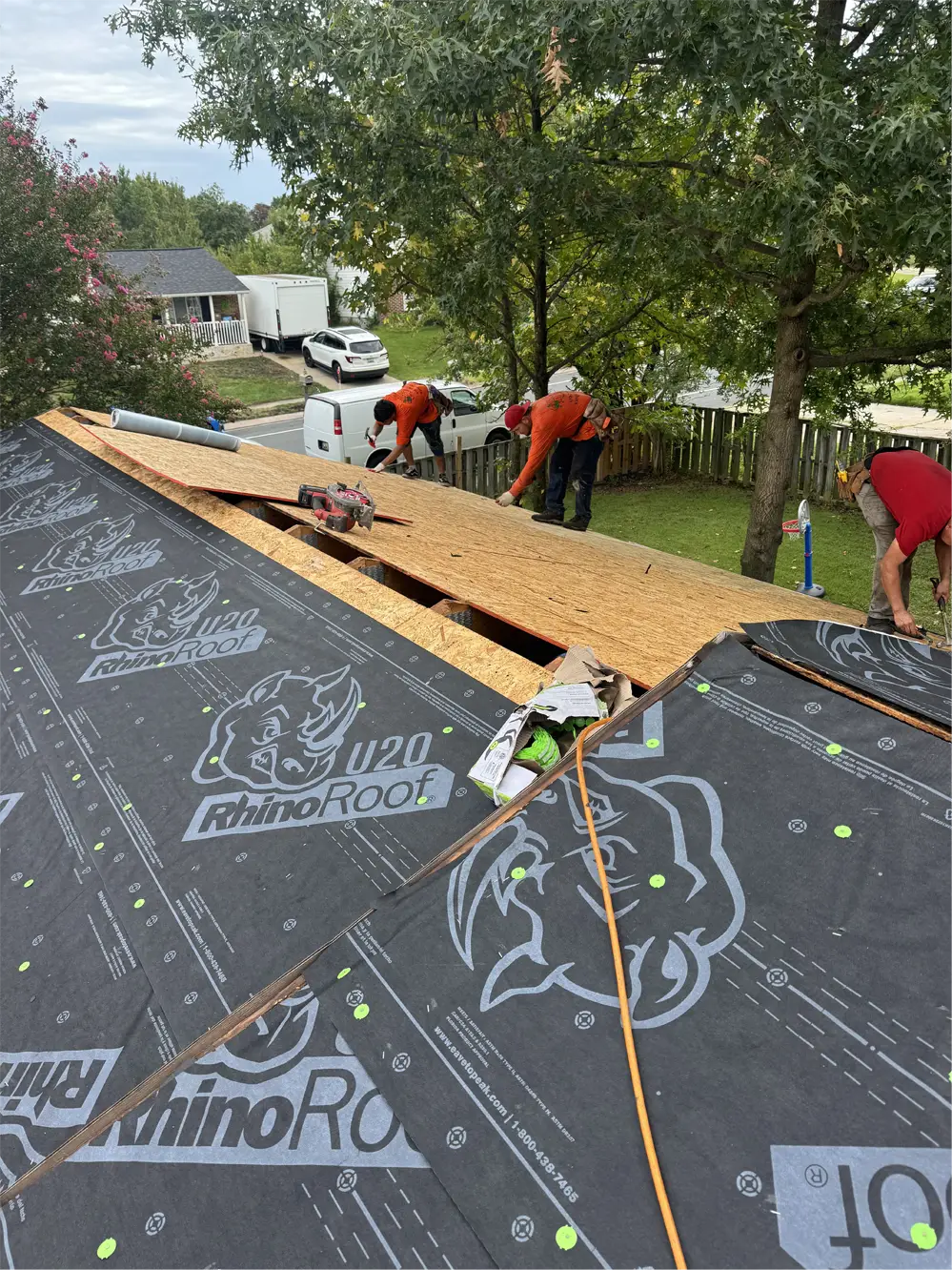
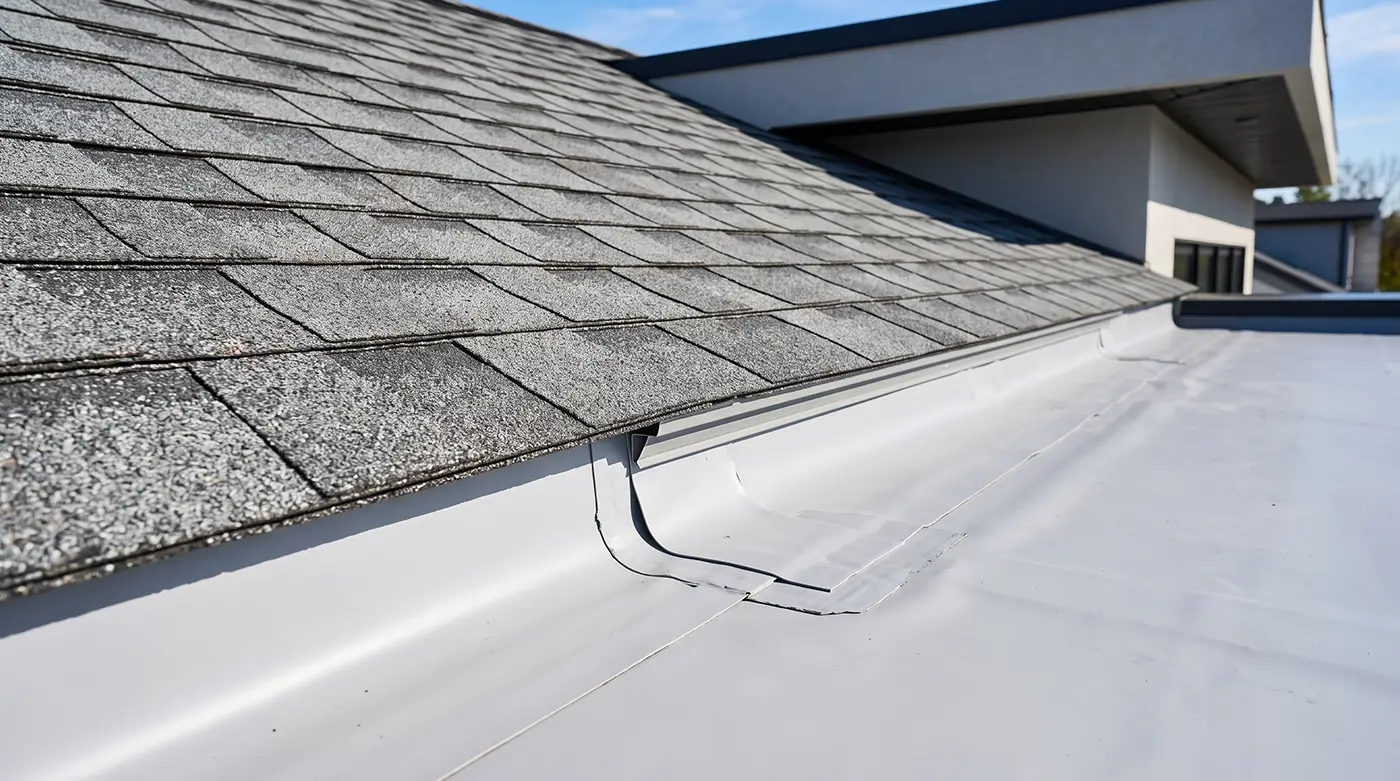
Architectural asphalt shingles are practical for many Maryland pitched roofs because they balance cost, appearance, repairability, and availability. A complete shingle system should include suitable underlayment, flashing, starter components, ridge materials, ventilation, and manufacturer-compliant fastening.
Flat or low-slope roof sections require purpose-built systems such as TPO, EPDM, PVC, or modified bitumen. We recommend choosing the membrane based on roof geometry, drainage, penetrations, substrate, expected foot traffic, repairability, and warranty requirements.
Ventilation, Flashing, and Drainage Matter
Premium materials can still fail early when roof details are wrong. Balanced attic ventilation helps manage heat and moisture. Proper flashing directs water away from penetrations and roof-to-wall intersections. Clear gutters, scuppers, drains, and downspouts help prevent backups and ponding.
We treat these components as one system. Replacing shingles without correcting failed flashing, poor ventilation, or damaged decking can leave the original problem unresolved.
Hire a Licensed Maryland Roofing Contractor
The Maryland Home Improvement Commission advises homeowners to verify contractor licensing, request references, obtain a current liability-insurance certificate, use a written contract, and confirm permits when required. Maryland also limits a contractor’s deposit to one-third of the contract price.
Before approving work, we recommend comparing the scope line by line: tear-off, decking allowances, underlayment, flashing, ventilation, materials, cleanup, permit responsibility, workmanship warranty, manufacturer warranty, and change-order procedures. Our current licenses include Maryland MHIC #85692, D.C. #410518000709, and Virginia #2705158457.
Roofing Maintenance for Long-Term Protection
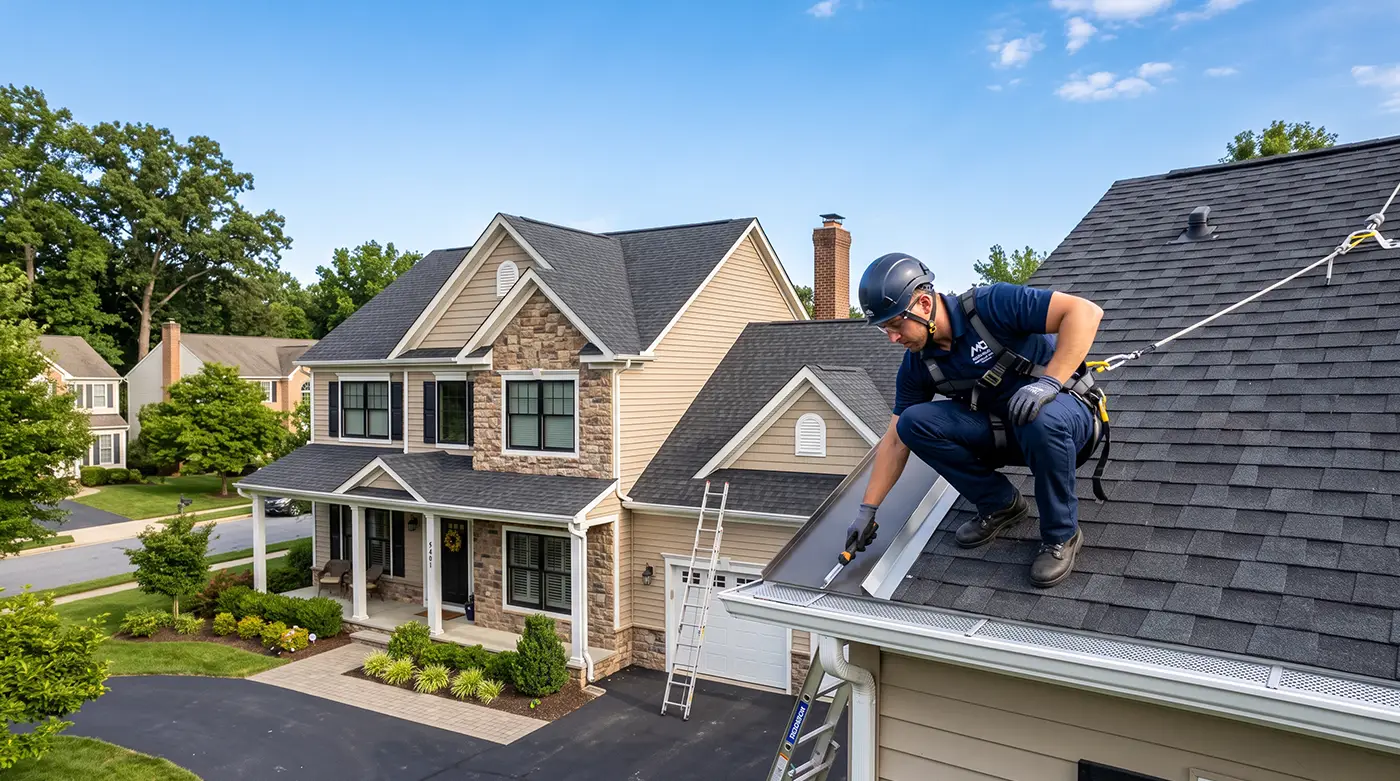
Keep branches from rubbing the roof, remove debris from valleys and drainage areas, address moss or algae using roof-safe methods, inspect for displaced shingles after wind events, and investigate leaks promptly. We do not recommend walking a roof without training and fall protection.
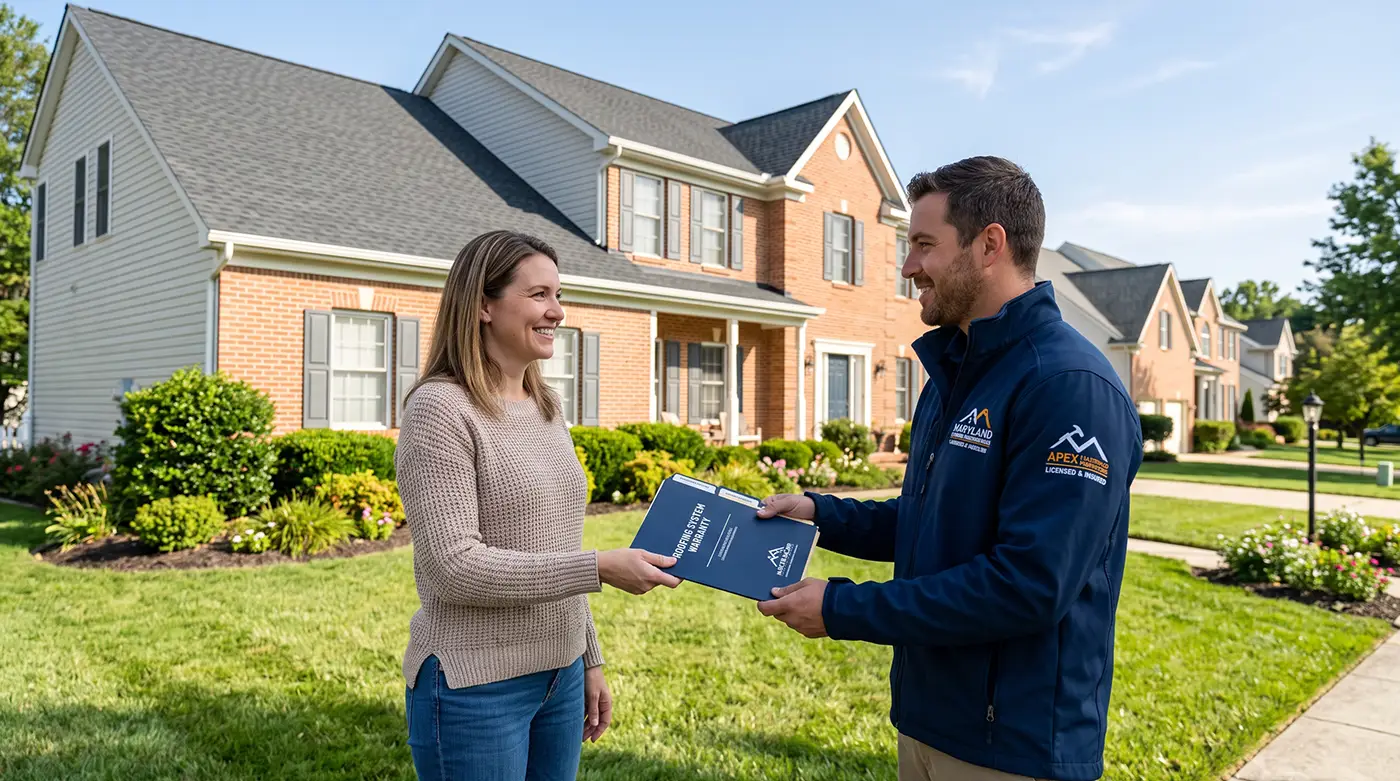
For project-specific help, our roof leak repair services provide practical options for diagnosing water intrusion. Shingle roof replacements include a 10-year workmanship warranty, while repair warranties typically range from one to three years depending on the repair.

Conclusion
Maryland homeowners get better long-term results by treating the roof as a complete weatherproofing system rather than focusing only on shingles. We recommend timely inspections, fast leak response, careful repair-versus-replacement decisions, climate-appropriate materials, correct ventilation and flashing, and a licensed contractor with a clearly written scope. A1 Roofing’s KangaRoof can evaluate the roof and provide options based on its actual condition; homeowners can contact our roofing team to schedule an evaluation.
FAQ
How often should a Maryland homeowner have a roof inspected?
We recommend an inspection after leaks, storm impacts, visible damage, recurring repairs, or concerns about an aging roof. Periodic inspections can also identify problems before interior damage appears.
What are the most common causes of roof leaks in Maryland?
Common causes include failed flashing, damaged shingles, cracked pipe boots, skylight or chimney details, exposed fasteners, membrane seams, and drainage problems.
Is it better to repair or replace an older roof?
We base the decision on condition, not age alone. Localized damage may justify repair, while repeated leaks, widespread deterioration, or extensive damage often make replacement the better long-term option.