






Project Description
Project Snapshot
- Project Type: Residential asphalt shingle roof replacement
- Property Type: Residential home with multiple roof planes and a stone-clad front section
- Roof System / Materials: Architectural asphalt shingles, synthetic underlayment, wood roof decking, and metal flashing
- Primary Work Performed: Full shingle tear-off, deck preparation, underlayment installation, new shingles, and detailing around penetrations, valleys, eaves, and wall transitions
The Challenge
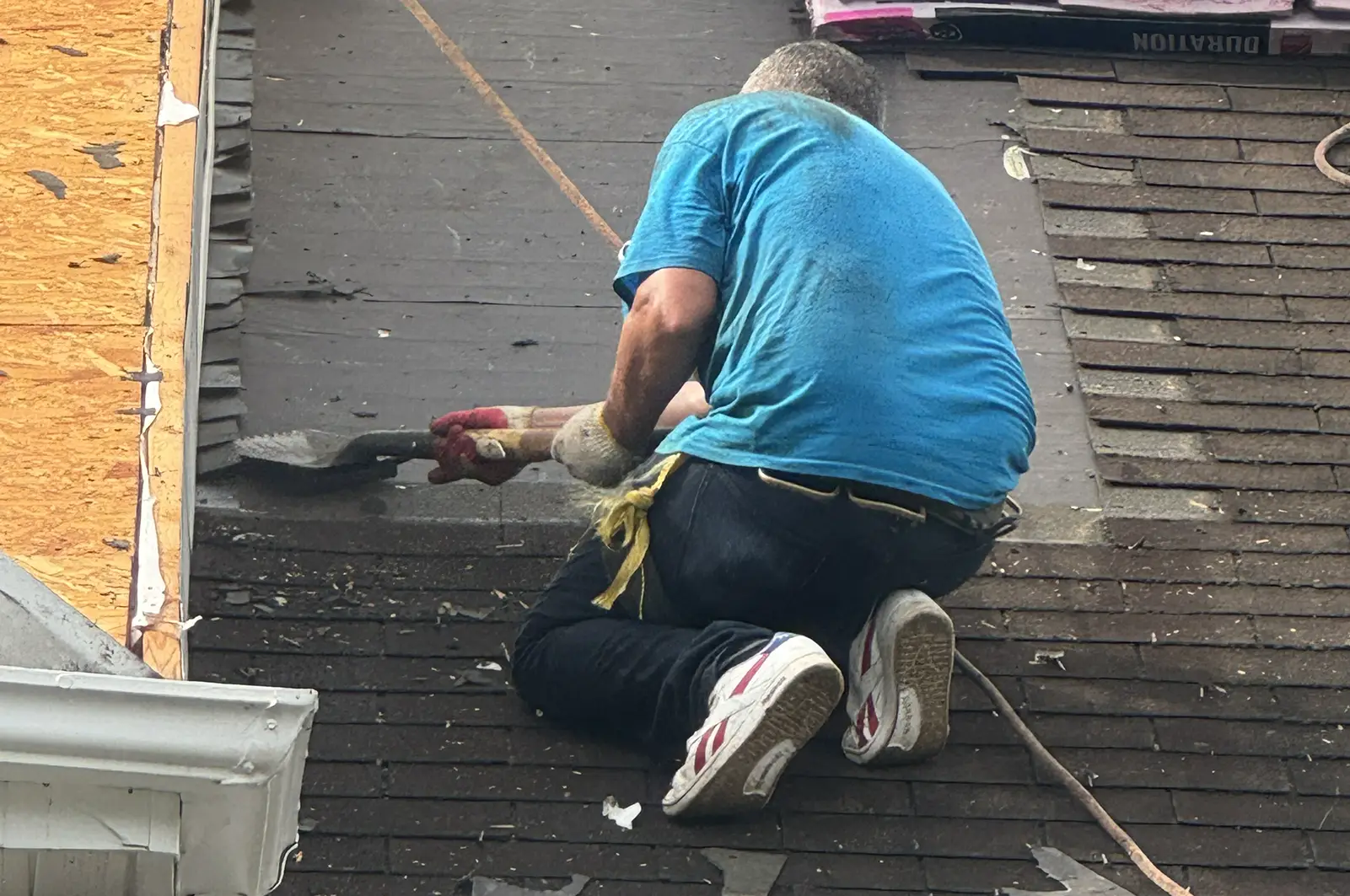
This Maryland roofing project involved an aging asphalt shingle roof with several details that made the replacement more complex than a simple open roof plane. The existing shingles showed widespread weathering and discoloration, and the tear-off photos reveal older roofing material being removed across the main roof and smaller intersecting sections.
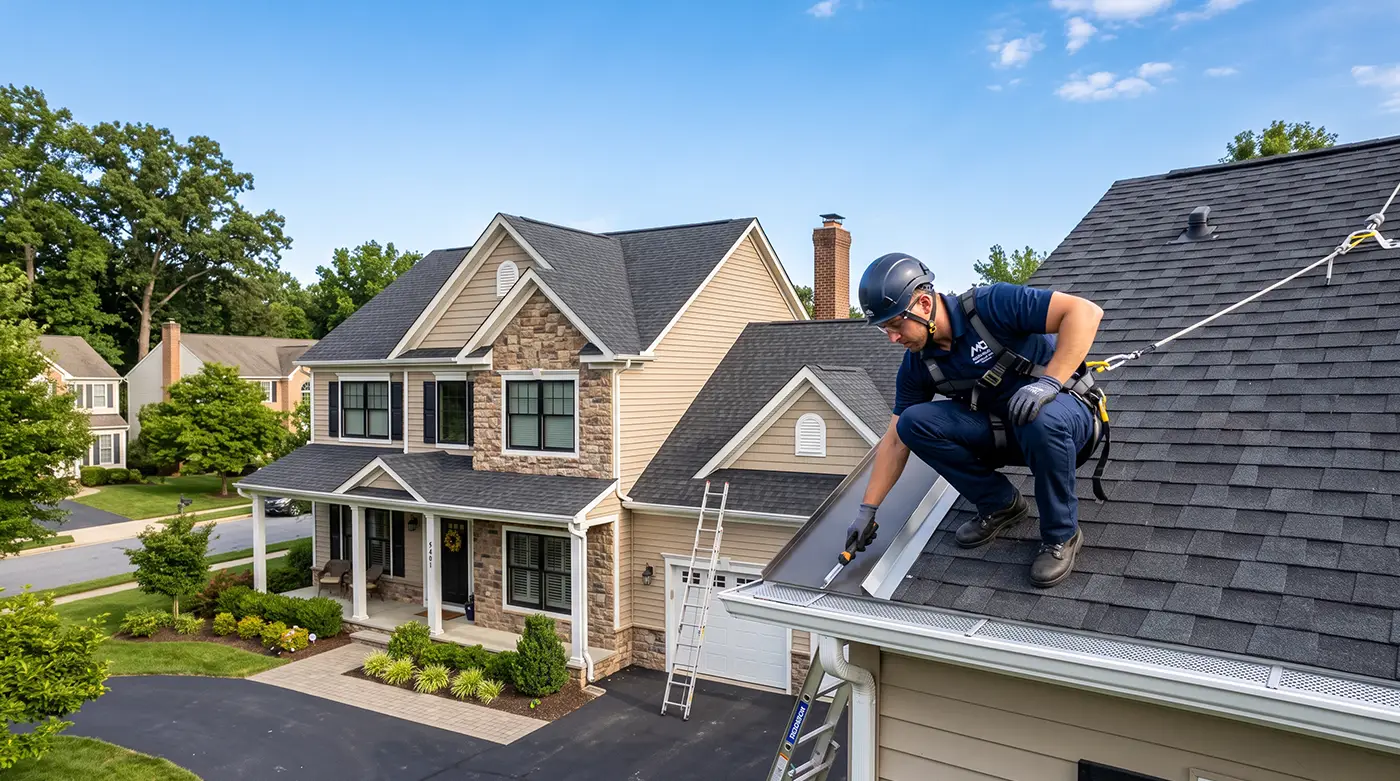
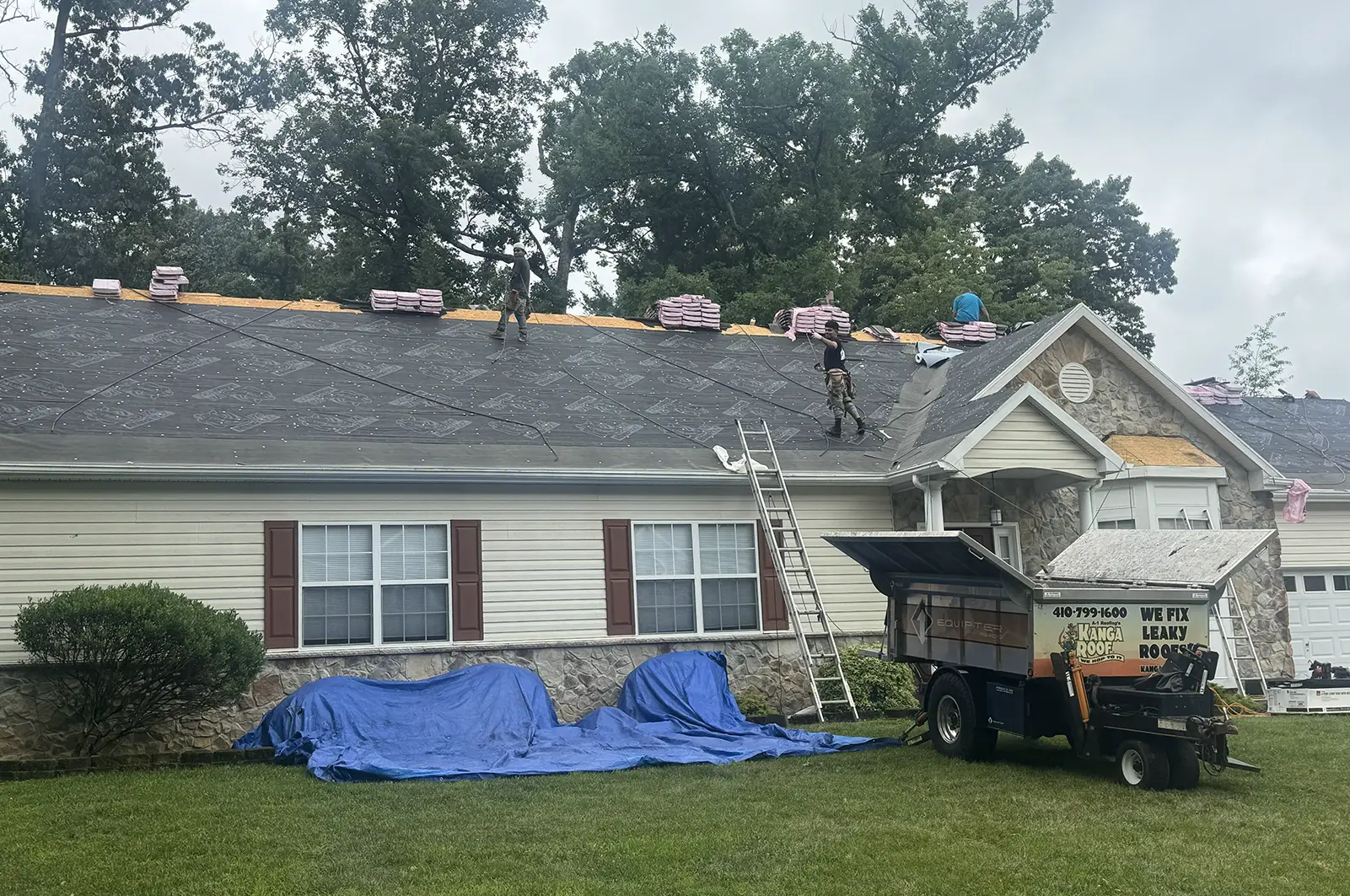
The roof includes long sloped fields, a prominent front gable, a lower roof section beside the stone-clad façade, and multiple penetrations. A tall flue pipe rises through the rear roof, while smaller vents are also visible. The front roof section meets a vertical stone wall, creating a transition where flashing and shingle integration are especially important.
Because water naturally concentrates at valleys, wall intersections, penetrations, and lower roof edges, these areas can become vulnerable as a roof ages. The goal was to remove the worn system, expose the deck for inspection, and rebuild the roof with consistent water-shedding layers without disturbing the surrounding siding, stonework, gutters, and landscaping.
Scope of Work
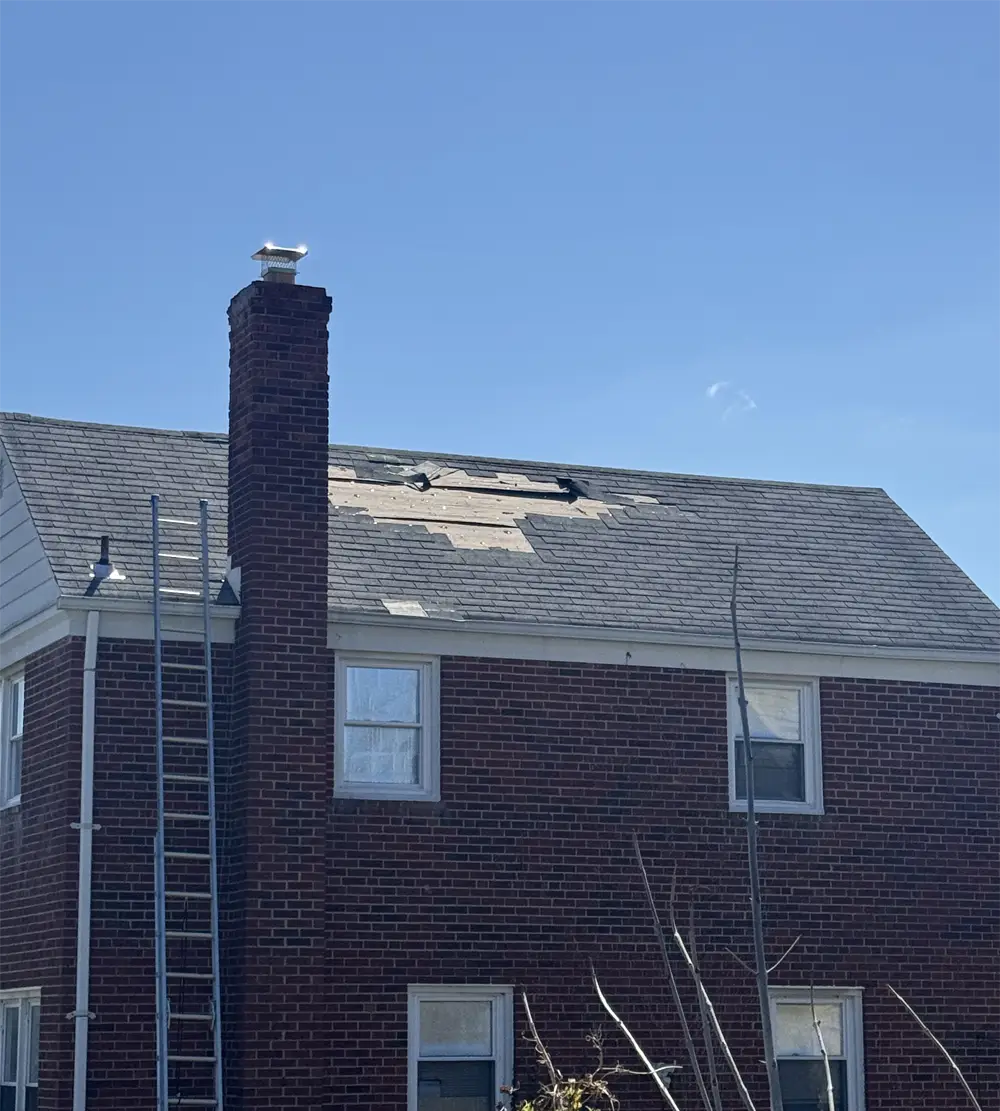
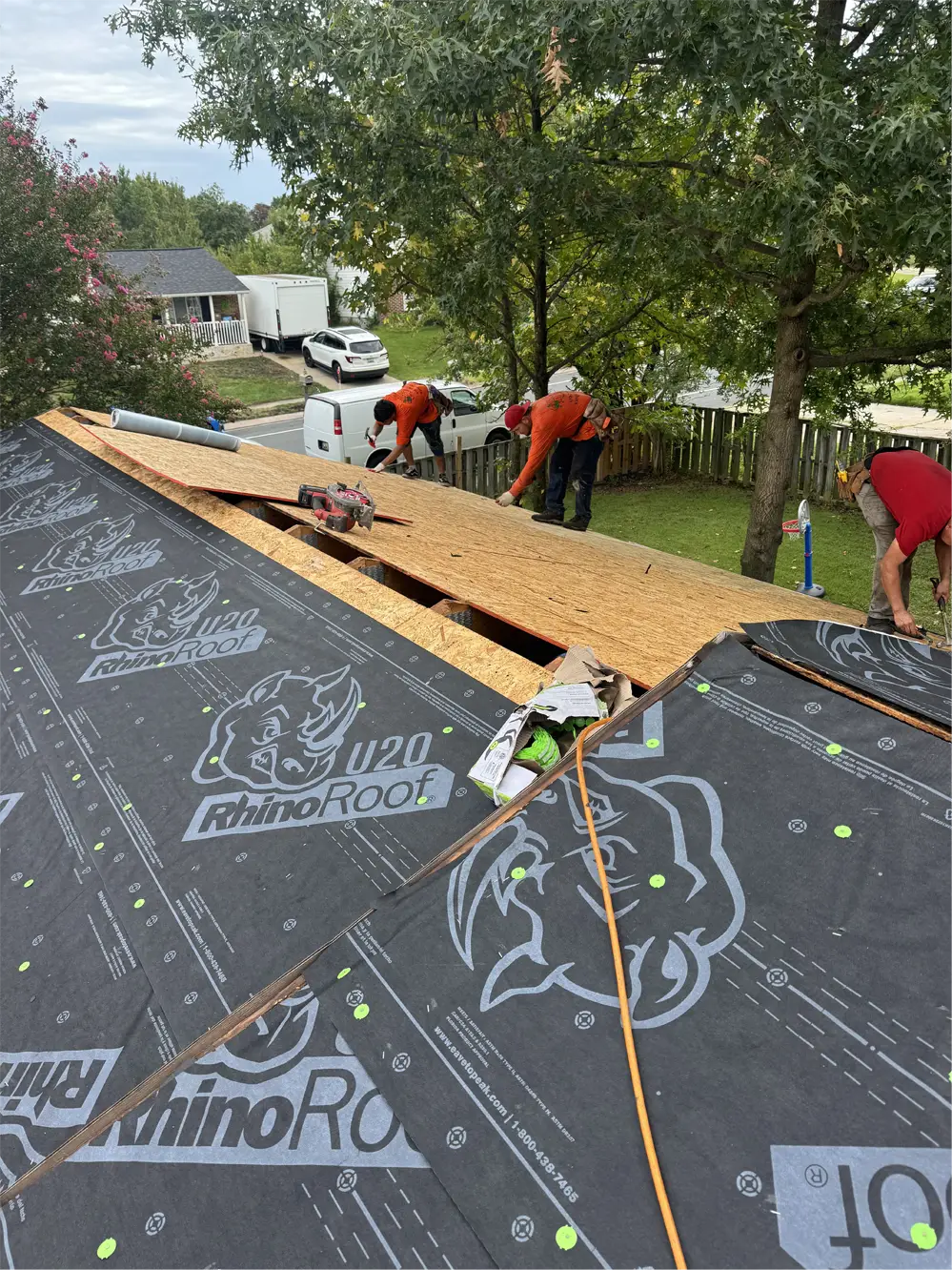
A1 Roofing’s KangaRoof began with a full tear-off of the existing asphalt shingles. The photos show the crew removing old shingles and underlayment down to the wood roof decking across large sections of the home. Tarps were placed around the property to help contain debris, and a roofing debris trailer was positioned near the work area.
Once exposed, the roof deck was prepared for the new system. The visible sheathing provided a clean base for the next layers, while crews worked progressively across the roof rather than leaving the entire structure uncovered at once.
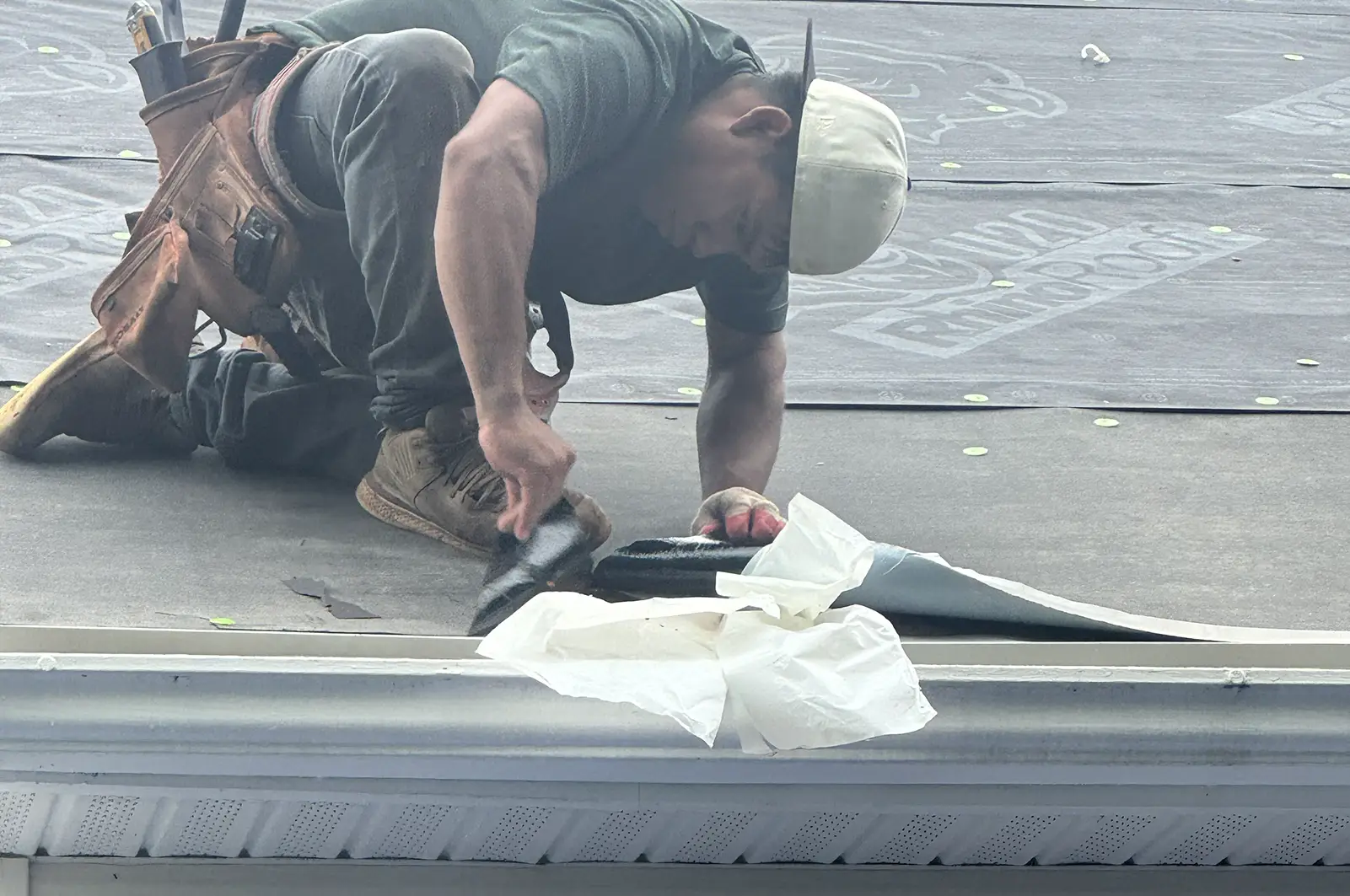
Synthetic underlayment was then installed over the prepared decking in overlapping courses. New architectural asphalt shingles were staged across the roof and installed from the lower edges upward.
Special attention was required at the roof’s more complicated details. Crews worked around the large flue penetration and smaller vents, where metal flashing must integrate with the surrounding roofing. At the front of the home, technicians removed old shingles from the narrow roof section where the slope meets the stone wall. That transition required careful fitting so the new shingles and flashing could direct water away from the wall-roof joint.
The crew also worked through roof intersections and valley areas, where two slopes direct runoff toward a concentrated drainage path.
The Result
The photo set focuses primarily on the tear-off and installation stages rather than a final wide-angle after view. Even so, the documented work clearly shows a complete rebuilding process rather than a cosmetic shingle-over. Old roofing was removed to expose the deck, the surface was prepared, synthetic underlayment was installed, and new architectural shingles were staged and installed across active roof sections.
The key improvement is the systematic treatment of the entire roof assembly. Clean underlayment coverage and detailed work around the flue, vents, valleys, and stone-wall transition create the foundation for a more dependable water-shedding system.
The dark architectural shingles visible during installation also work naturally with the home’s light siding, stone façade, and white trim.
Why This Project Matters
Asphalt shingle roofs in Maryland must handle heavy rain, high winds, summer heat, winter moisture, and repeated temperature swings. Those conditions affect not only shingles but also the flashing and transition points that keep water out of the roof assembly.
Homes with multiple roof planes, wall intersections, and penetrations require especially careful professional roofing installation. A roof replacement allows the roofing contractor to remove aging materials, inspect the exposed surface, install new protective layers, and rebuild vulnerable details as part of one coordinated system.
Worn Flashing or Leaking Valleys? Safeguard Your Maryland Home
If your Maryland home has aging shingles, worn roof transitions, or concerns around vents, valleys, or wall flashing, contact A1 Roofing’s KangaRoof. Our team can provide a professional roof inspection, explain whether roof repair or roof replacement is the better option, and prepare an estimate for a new asphalt shingle roofing system.