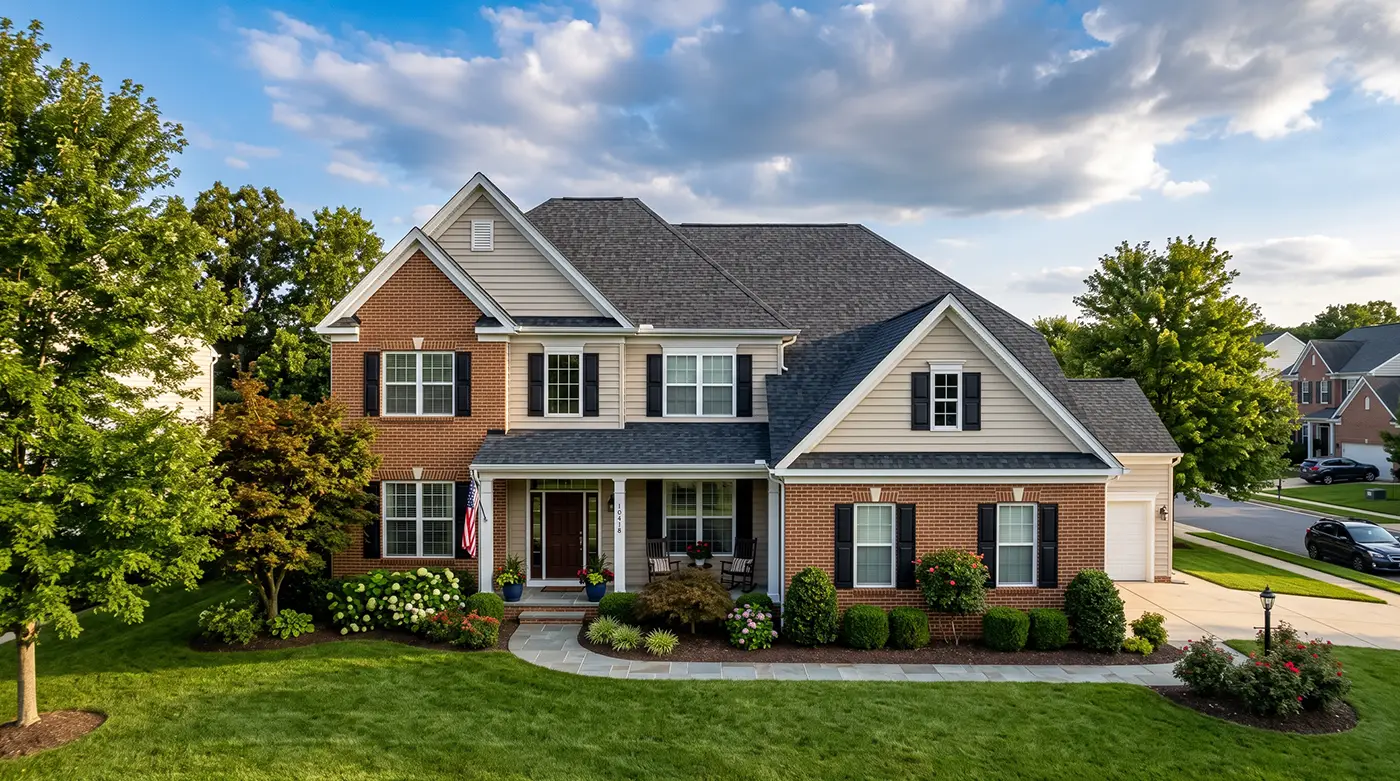
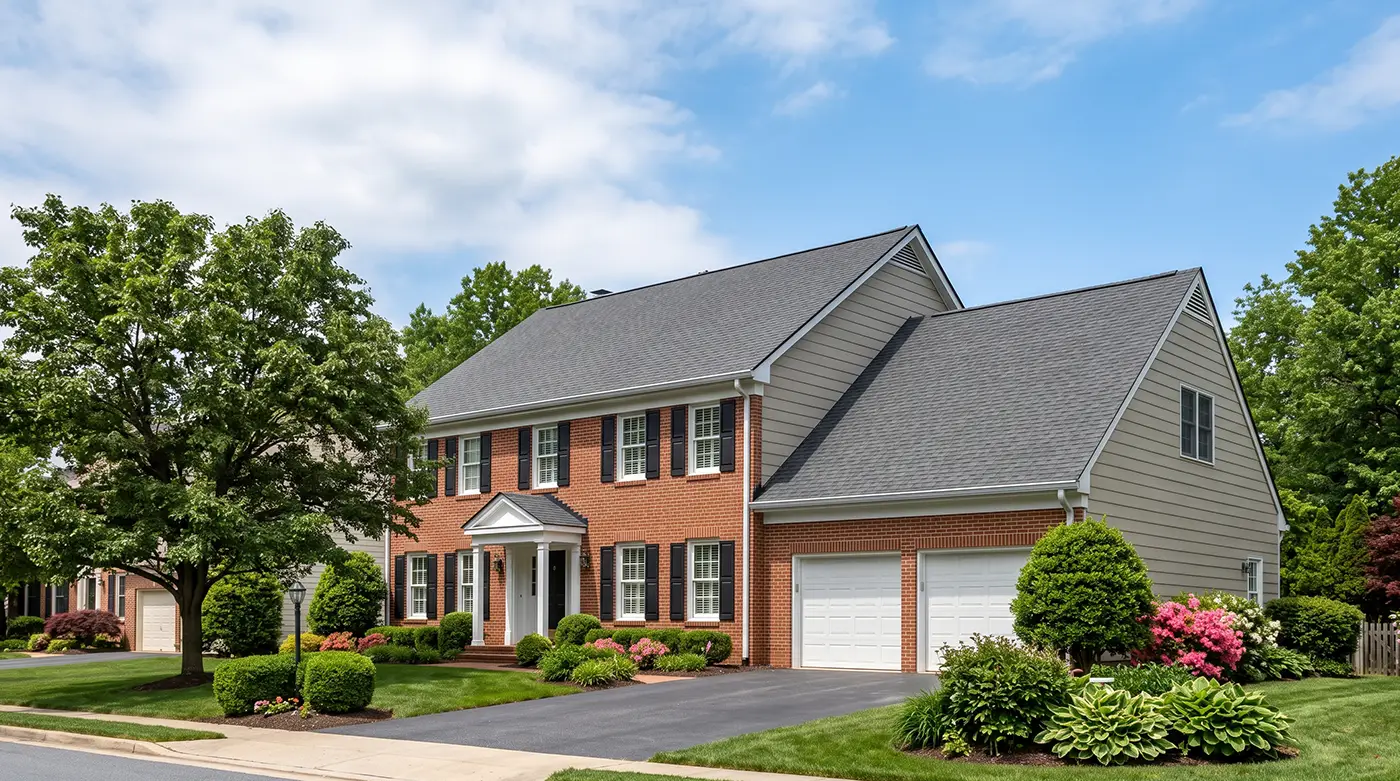
The rake of a roof is the sloped edge that runs along a gable end from the eave to the ridge. At A1 Roofing’s KangaRoof in Columbia, MD, we treat this edge as an important part of the complete roofing system because shingles, underlayment, decking, edge metal, and exterior trim all meet here. A properly built rake helps shed water, secure the roof covering at the perimeter, protect exposed deck edges, and create a clean finished line.
What Is the Rake of a Roof?
The National Roofing Contractors Association defines a rake as “the sloped edge of a roof at or adjacent to the first or last rafter.” On a standard gable roof, rake edges extend diagonally from the lower eave to the upper ridge.
The rake is not a separate roof surface. It is an edge condition where several components terminate. Asphalt-shingle roofs commonly use drip edge and starter shingles along the rake, while metal roofs use purpose-made rake or gable trim.
Rake vs. Eave vs. Ridge: Roof Anatomy Explained
These roof components serve different locations and functions:
- Rake: sloped perimeter edge at a gable end.
- Eave: lower horizontal roof edge where runoff commonly enters the gutter.
- Ridge: upper line where two roof slopes meet.
- Fascia: finishing board commonly installed along the eave behind the gutter.
- Rake board or bargeboard: trim along the sloping gable edge on certain roof designs.
- Soffit: finished underside of a roof overhang.
A hip roof generally has no traditional rake because its roof planes slope downward on all sides instead of ending at a vertical gable wall.
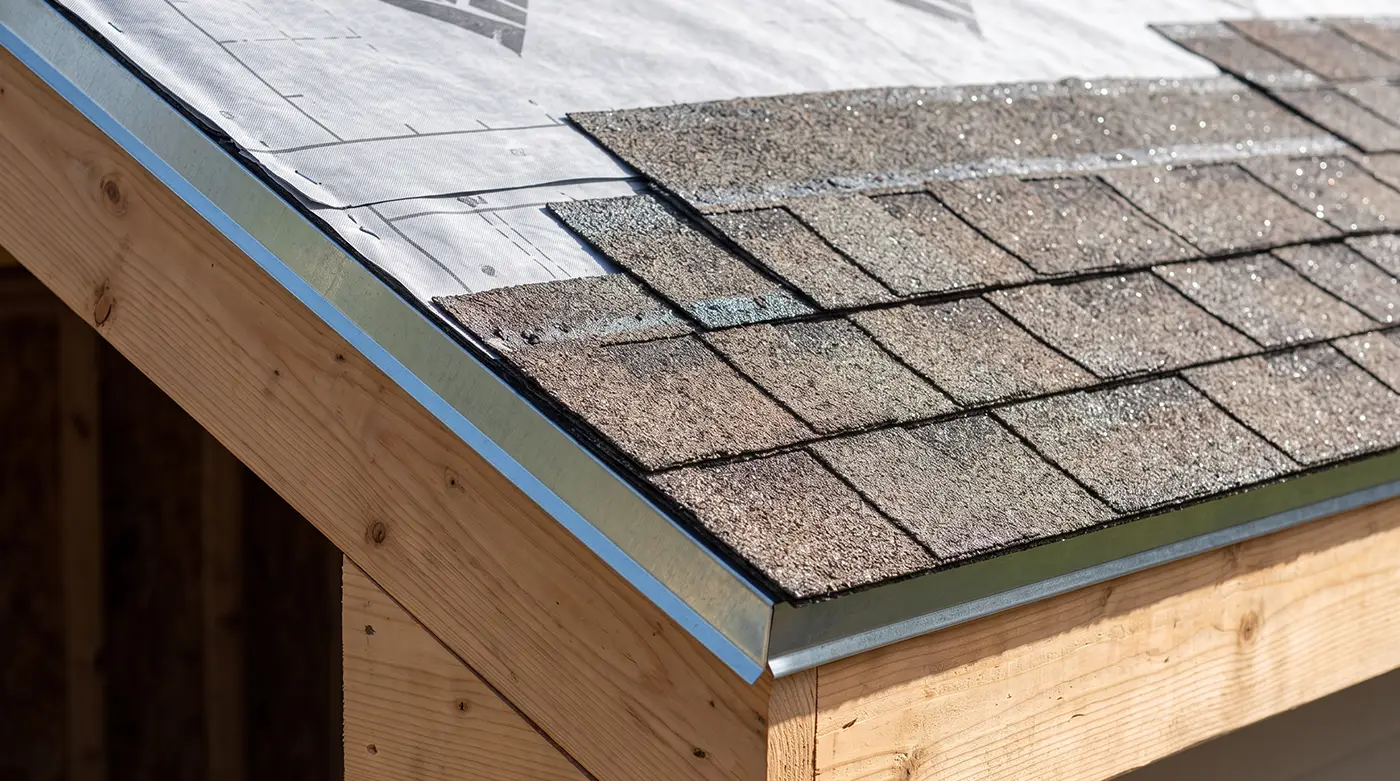
Roofing Components That Meet at the Rake Edge
A rake works as an assembly rather than as one piece.
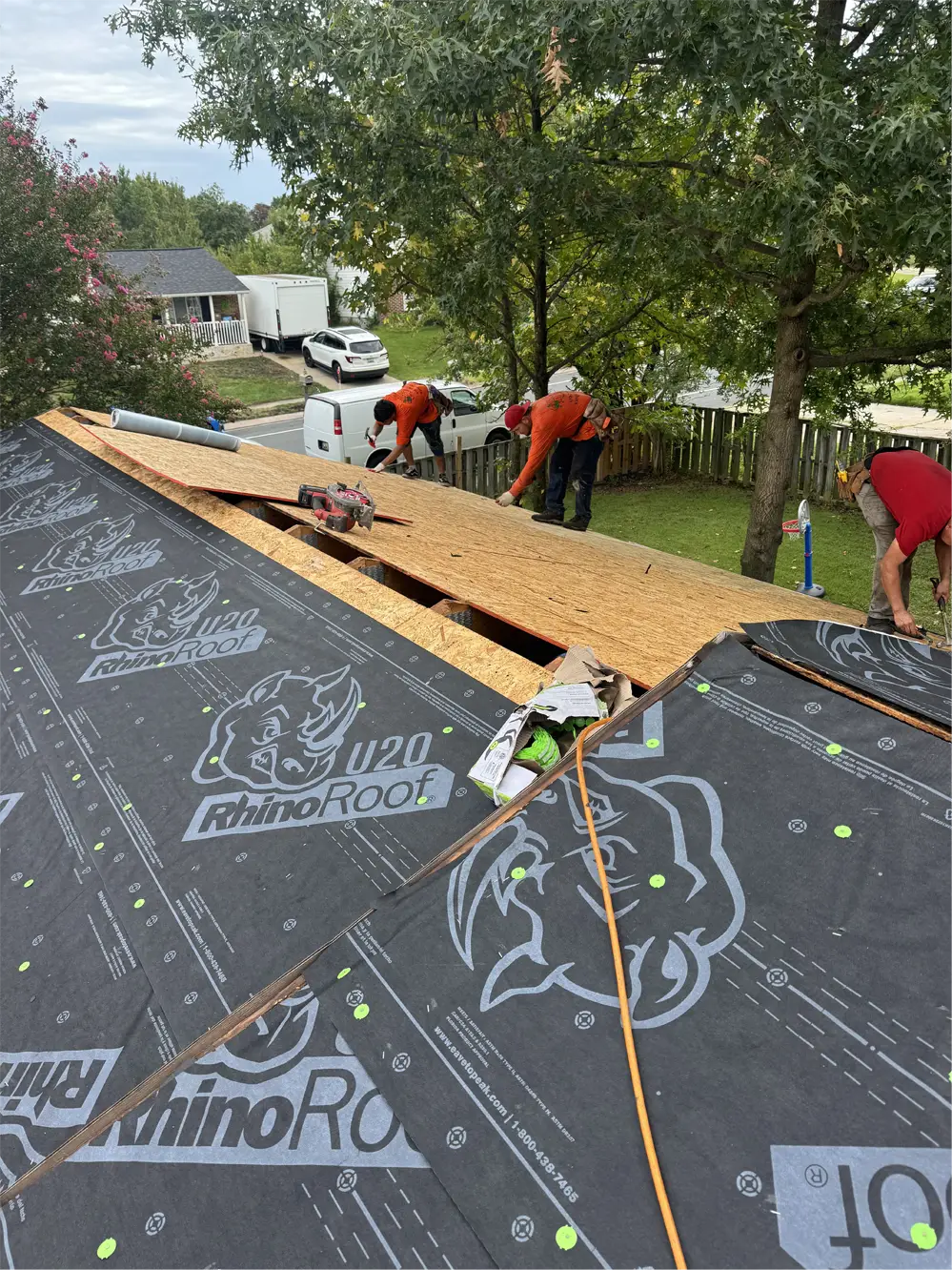
Roof decking forms the structural surface beneath the roof covering. Its exposed perimeter must be protected from repeated wetting.
Underlayment provides secondary water-shedding protection below the shingles. At the rake, correct sequencing with edge metal helps limit wind-driven rain intrusion.
Drip edge is corrosion-resistant flashing that directs water away from the deck edge and trim. The 2024 International Residential Code specifies drip edge at eaves and rake edges of shingle roofs. It calls for adjacent sections to overlap at least 2 inches, extend at least 1/4 inch below the sheathing, extend at least 2 inches onto the deck, and be fastened no more than 12 inches on center.
Starter strip shingles create the first sealed shingle edge. Along the rake, their adhesive area helps resist wind getting beneath field shingles when installed to manufacturer requirements.
Field shingles must end in a straight, supported line. Excessive overhang can leave shingles vulnerable to bending; insufficient overhang can reduce effective water shedding.
Why the Roof Rake Matters
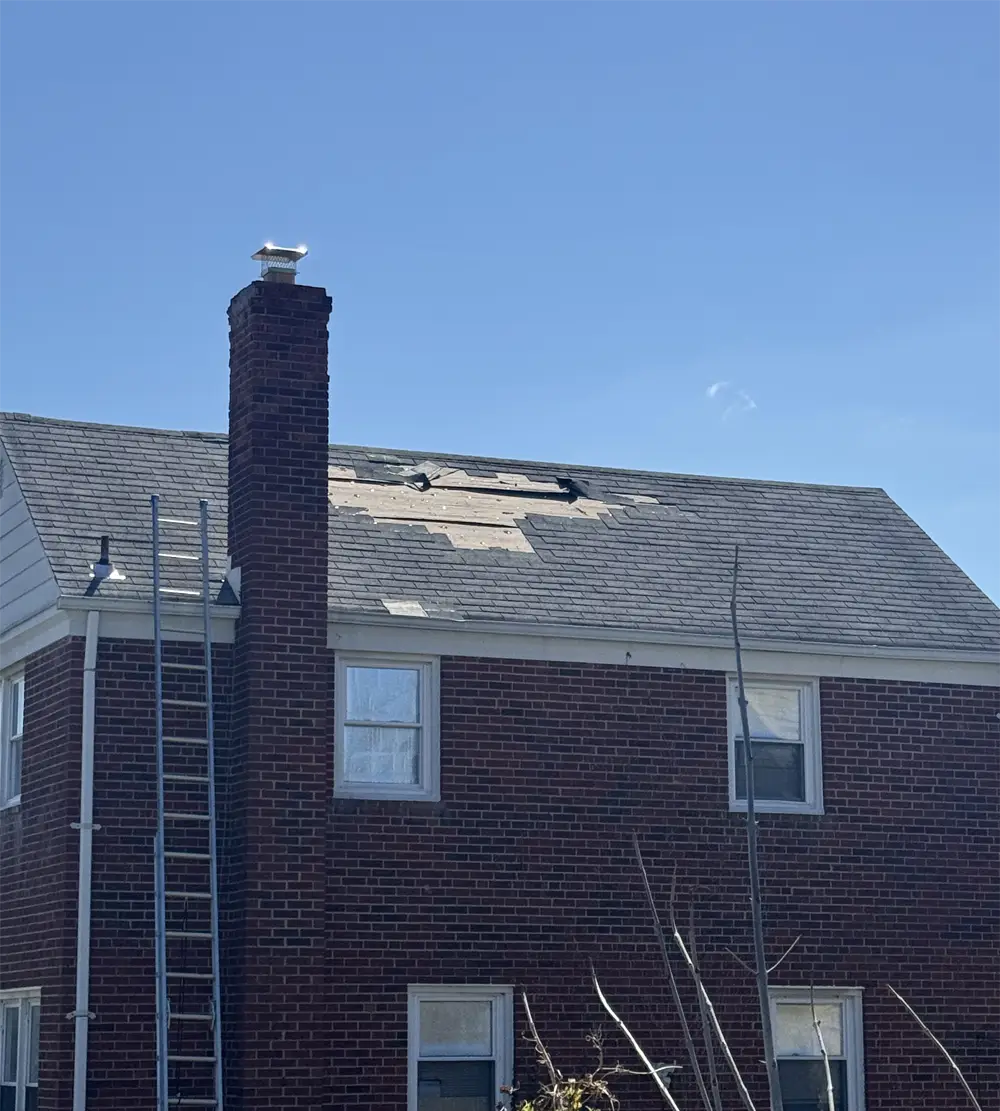
The rake sits at an exposed perimeter where wind can act directly on shingle edges and wind-driven rain can reach vulnerable joints. Loose edge metal, weak shingle adhesion, damaged starter strips, or deteriorated trim can contribute to lifted shingles, wet decking, staining, and wood decay.
The rake also affects roof appearance. Wavy metal, uneven cuts, deteriorated rake boards, or displaced trim can make an otherwise sound roof look poorly installed.
Localized edge defects may be suitable for roof repair. Widespread deterioration involving shingles, decking, and multiple roof sections may justify evaluating roof replacement.

Common Roof Rake Problems
During roof assessments, we look for:
- bent, loose, missing, or corroded drip edge;
- lifted or creased shingles at the gable perimeter;
- exposed or incorrectly positioned fasteners;
- rotted rake boards or trim;
- soft or delaminated decking near the edge;
- gaps that allow insects or small animals into the assembly;
- storm damage from branches or wind-borne debris;
- uneven or unsupported shingle overhang.
A small trim defect may be cosmetic, but recurring moisture at the rake can indicate failure across several roofing layers.
Rake of a Roof vs. a Roof Rake
A rake of a roof is part of roof anatomy. A roof rake is a long-handled tool used to remove snow from a roof. The terms are unrelated. Snow-removal tools should be used carefully because aggressive scraping can damage shingles, gutters, flashing, and edge metal.

How We Inspect Roof Rake Edges
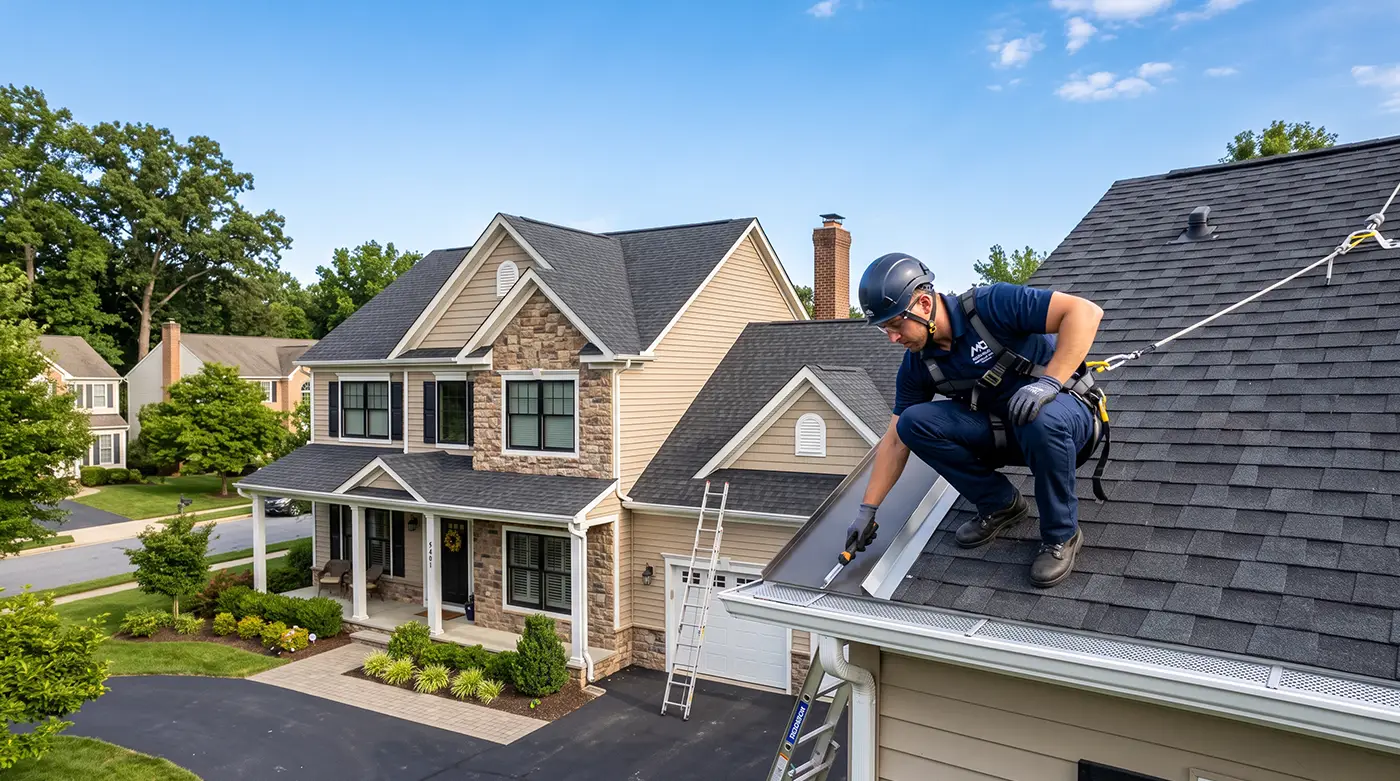
During an inspection, we check shingle adhesion, edge-metal alignment, fasteners, visible underlayment transitions, decking edges, gable trim, and signs of moisture movement. Homeowners can perform a ground-level check after storms for lifted shingles, hanging metal, displaced trim, or debris impact.
Because edge damage can extend beyond what is visible from the ground, our residential roofing services evaluate the roof as a complete system rather than focusing only on surface shingles.

CONCLUSION
The rake of a roof is a critical sloped gable edge where decking, underlayment, edge metal, starter strips, shingles, and trim must work together. Correct detailing improves water control, wind resistance, and long-term durability. At A1 Roofing’s KangaRoof, we evaluate rake-edge damage in the context of the entire roof; homeowners who notice loose metal, lifted shingles, rot, or storm damage can contact us for an inspection or estimate.
FAQ
Is the rake of a roof the same as the fascia?
No. The rake is the sloped edge of a gable roof. Fascia usually refers to the board along the lower eave, while a gable edge may use a rake board or bargeboard.
Does every roof have a rake edge?
No. Rake edges are typical of gable roof sections. Hip roofs slope downward on all sides and generally do not have traditional gable rakes.
Can a damaged roof rake cause a leak?
Yes. Loose edge metal, lifted shingles, deteriorated trim, or exposed decking can allow wind-driven rain into the roof assembly. An inspection can determine whether damage is limited to the edge or extends farther into the roof.