

A plumbing vent is one of the smallest penetrations through a roof, yet it can become a persistent leak point when its flashing is installed incorrectly. At A1 Roofing’s KangaRoof in Columbia, MD, we treat vent-pipe flashing as part of the complete water-shedding roof assembly—not as a rubber boot that simply gets sealed to a pipe. Correct installation depends on the relationship between the pipe flashing, underlayment, shingles, fasteners, and roof slope.
What Is Vent Pipe Flashing?
Vent pipe flashing, often called a pipe boot, pipe collar, or plumbing vent flashing, creates a watertight transition where a plumbing vent penetrates the roof.
A typical asphalt-shingle roof flashing assembly contains:
- A flat flange that integrates with the shingles
- A raised cone surrounding the pipe
- An elastomeric gasket or collar that seals against the pipe
- Roofing underlayment beneath the flashing
- Shingles layered around the flange to direct water downslope
The principle is simple: every upper layer must overlap the layer below it. The National Roofing Contractors Association identifies flashing as a critical method of preventing water entry where roofing meets vents and other penetrations.
Why Vent Pipe Flashing Installation Matters
A vent pipe interrupts the continuous roof plane. Rainwater moving downslope encounters the pipe, so the flashing must redirect that water onto the shingles below without allowing it beneath the roof covering.
The International Residential Code specifically requires roof pipe penetrations to use approved flashing installed to prevent water from entering the building.
Common vent flashing failures include cracked rubber collars, exposed fasteners, incorrectly layered shingles, separated sealant, corroded metal, oversized roof openings, and flashing installed entirely on top of the shingles.
Step 1: Inspect the Vent Pipe and Roof Deck
Before installing new flashing, we inspect the pipe itself, surrounding shingles, roof decking, and underlayment.
The vent should remain securely positioned while the flashing is fitted. Moving or forcing the pipe can distort the boot or damage plumbing connections below the roof.
When replacing failed flashing, surrounding shingles must be loosened or removed carefully enough to expose the complete flange. Any deteriorated decking should be repaired before the penetration is rebuilt. If water has already entered the roofing system, our roof repair services address the flashing and any related roof damage rather than simply covering the leak with sealant.
Step 2: Integrate the Underlayment Around the Pipe
Roof underlayment provides a secondary drainage plane beneath the shingles. Around penetrations, the underlayment should fit closely around the pipe without leaving unnecessary exposed decking.
Depending on the roofing system, a compatible self-adhering membrane may also be used around the penetration for additional protection. Cuts should be controlled and properly lapped so water cannot travel beneath the membrane.
Underlayment does not replace flashing. It provides another layer of protection if wind-driven rain or incidental moisture gets beneath the roof covering.
Step 3: Select the Correct Pipe Flashing
The flashing must match the vent pipe diameter, roofing material, slope, and expected environmental exposure.
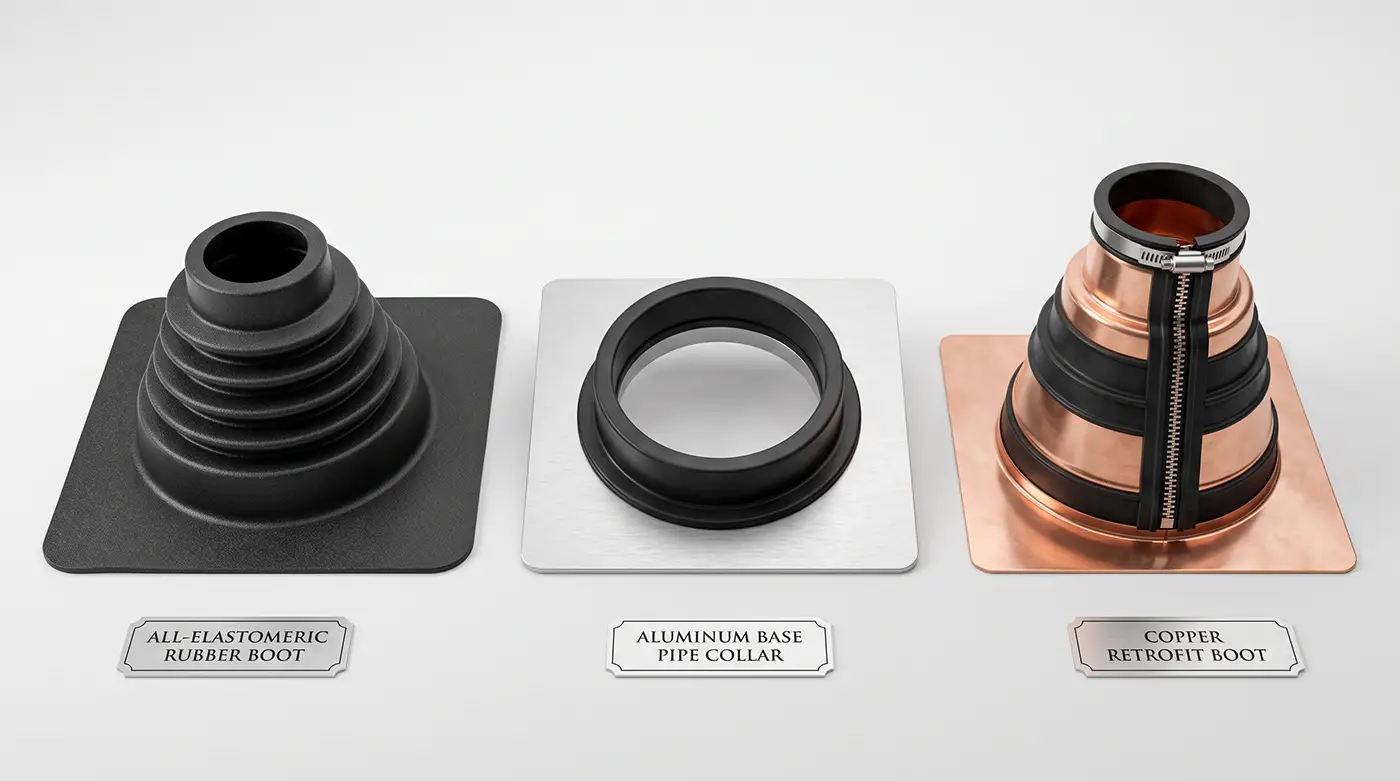
Common products include:
Elastomeric pipe boots: Flexible collars that seal tightly around PVC or similar vent pipes.
Metal-base flashing: Aluminum, galvanized steel, or other corrosion-resistant metal combined with a rubber or synthetic collar.
Specialty retrofit boots: Designed for situations where replacing the entire original flashing assembly is impractical.
The gasket should grip the pipe without folding, splitting, or being stretched beyond its intended range.
Step 4: Position the Flashing Using Proper Shingle Laps
This is the most important installation detail.
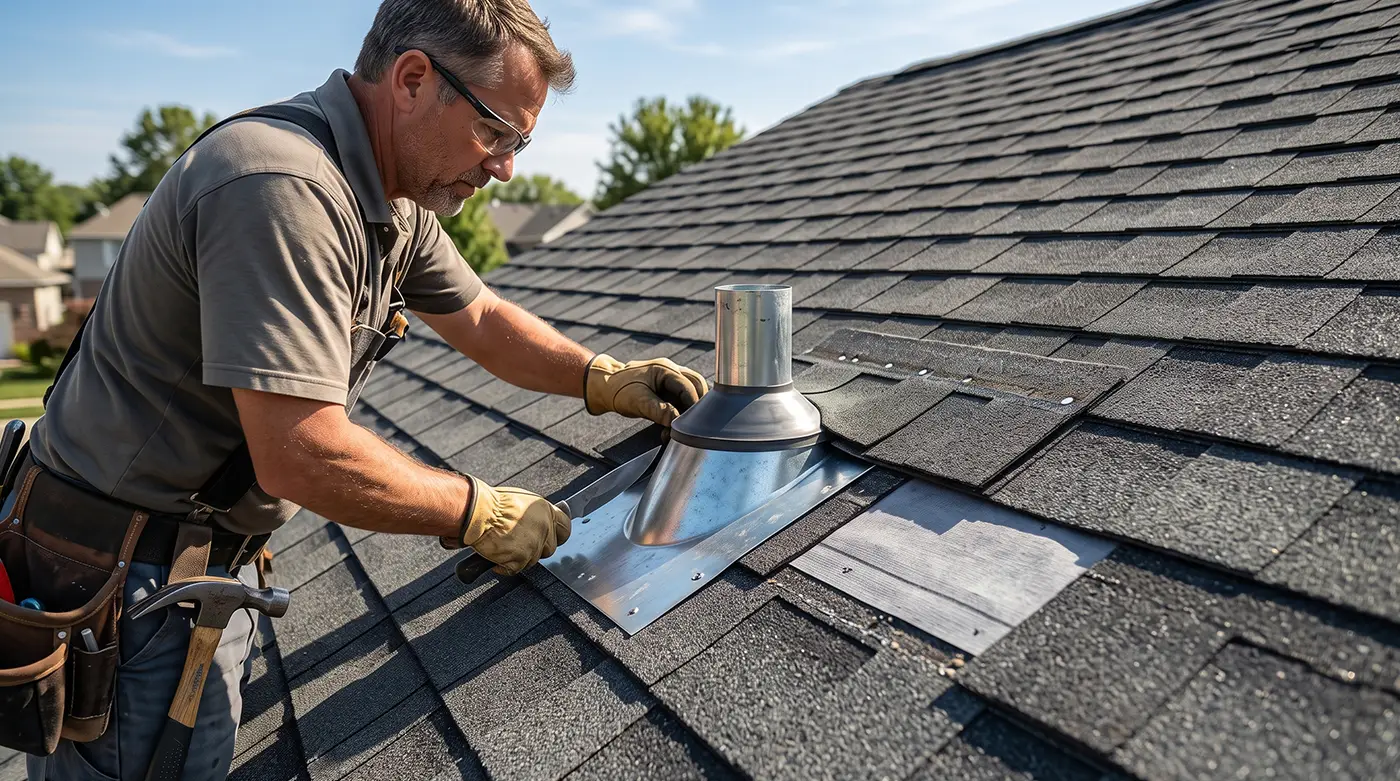
We slide the flashing over the vent pipe while keeping the gasket properly seated. On a conventional asphalt-shingle roof, the upper portion and sides of the flashing flange are integrated beneath the shingles above and beside the penetration, while the lower flange remains positioned over the downslope shingles.
This creates a drainage path similar to overlapping shingles:
upper shingles → flashing flange → lower shingles → gutter
Water should be able to travel naturally down the roof without encountering an uphill seam.
Shingles should also be trimmed neatly around the flashing rather than forced tightly against the raised boot. Installation clearances should follow the flashing and shingle manufacturers’ requirements.
Step 5: Fasten the Flashing Without Creating New Leak Paths
Fasteners must secure the flashing without unnecessarily perforating areas carrying concentrated runoff.
We use compatible, corrosion-resistant roofing fasteners and place them according to the flashing manufacturer’s installation requirements. Fastener heads that require sealing should receive a roofing-compatible sealant.
Excessive nailing is counterproductive. Every unnecessary fastener creates another penetration through the roof assembly.
Step 6: Seal Only Where Sealant Is Appropriate
Roof cement and sealant are supplementary materials—not substitutes for correct flashing geometry.
Sealant may be appropriate at designated fasteners, specific flange locations, or transitions identified by the product manufacturer. Applying thick beads of roofing cement around the entire pipe boot can trap water, conceal deterioration, and make future repairs more difficult.
A properly flashed vent should primarily rely on mechanical laps and gravity-driven drainage rather than exposed caulk.
Signs Vent Pipe Flashing Needs Replacement
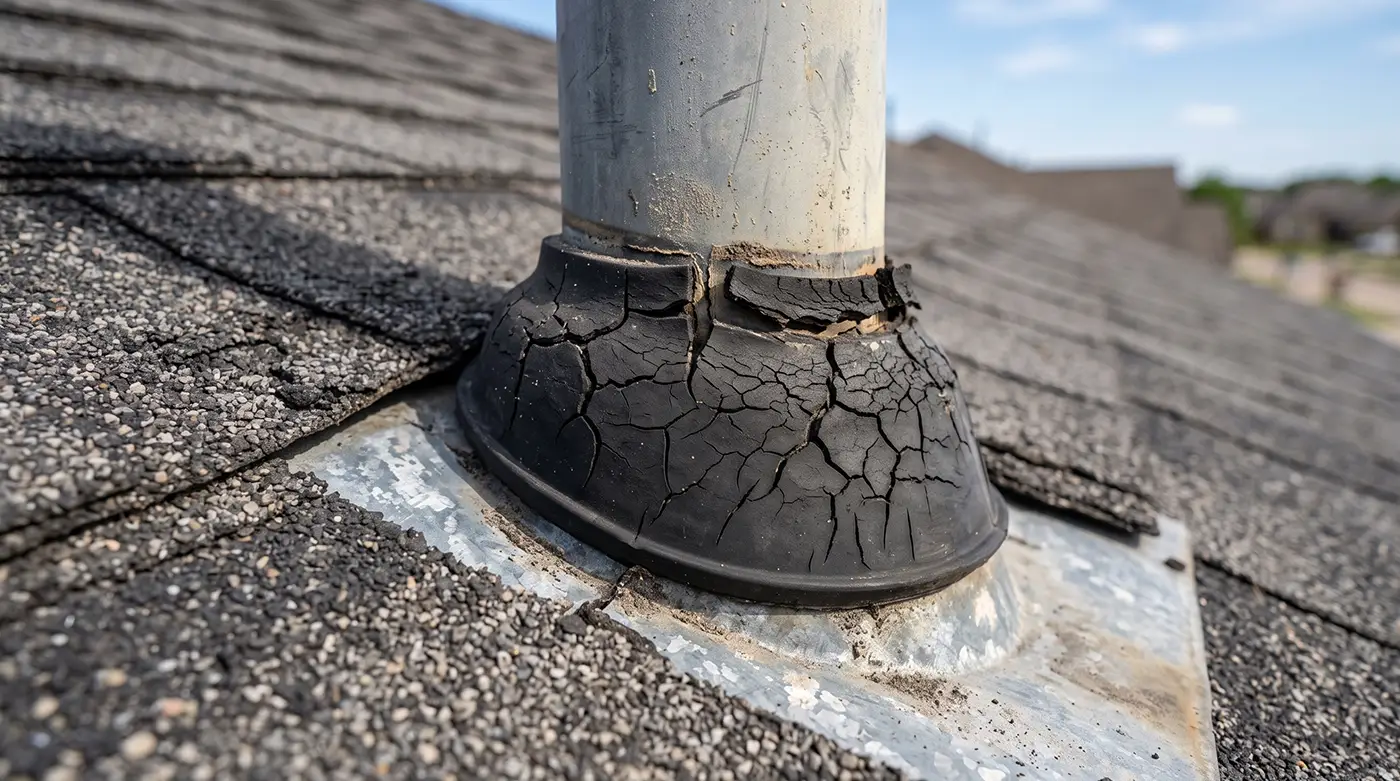
Vent flashing should be evaluated when we find:
- Cracks in the rubber collar
- Gaps between the boot and vent pipe
- Rust or corrosion
- Loose or exposed fasteners
- Shingles lifting around the penetration
- Water stains near the vent inside the attic
- Ceiling stains appearing after rainfall
- Repeated caulk repairs around the pipe
Water can travel along roof decking or the pipe before becoming visible indoors, so the ceiling stain may not sit directly below the defect.
Property owners experiencing water intrusion can review our roof leak repair services for professional diagnosis.
Repairing Flashing vs. Replacing the Roof
A deteriorated pipe boot does not automatically mean the entire roof needs replacement. When the shingles and surrounding roofing system remain serviceable, replacing one flashing assembly may be a straightforward localized repair.
Broader deterioration, recurring leaks, brittle shingles, damaged decking, or multiple failed roof penetrations may indicate a larger roofing problem. In those cases, we compare targeted repair with appropriate roof replacement options rather than repeatedly patching individual symptoms.
CONCLUSION
Correct vent pipe flashing installation depends on layered water management: sound decking, properly integrated underlayment, correctly sized flashing, shingle-to-flange laps, controlled fastening, and compatible sealing materials. The top and sides of the flashing must work beneath the upslope roofing while the bottom remains positioned to discharge water onto the roof surface below. If a vent boot is cracked, leaking, incorrectly installed, or surrounded by damaged shingles, property owners can contact our roofing team to have the complete penetration evaluated.
FAQ
How should flashing fit around a roof vent pipe?
The flashing collar should fit securely around the pipe without being excessively stretched, folded, or loose. Its flange must integrate with the surrounding shingles so water passes from the shingles above onto the flashing and then onto the shingles below.
Can I stop a leaking vent pipe by applying roof cement around it?
Roof cement may temporarily seal a small opening, but it cannot correct cracked rubber, improperly layered flashing, damaged shingles, or deteriorated materials. Repeatedly applying sealant can also conceal the actual source of the leak.
How long does vent pipe flashing last?
Service life varies according to material, UV exposure, temperature cycling, installation quality, roof conditions, and the flashing manufacturer. Rubber components often deteriorate before surrounding asphalt shingles, so pipe boots should be examined during routine roof inspections rather than assumed to last as long as the roof covering.