
Roofing nails do not have a single predictable “rust date.” Their corrosion rate depends on the metal, protective coating, moisture exposure, installation quality, and surrounding roofing materials. At A1 Roofing’s KangaRoof in Columbia, MD, we treat fasteners as a critical part of the roofing system because a shingle roof depends on thousands of small connections between the shingles, underlayment, and roof deck. Bare steel can begin developing visible surface rust after repeated moisture exposure within days or weeks, while properly selected galvanized or stainless-steel roofing nails can remain functional for decades.
Why Roofing Nails Rust
Rust forms when iron or steel reacts with oxygen and water. On a properly installed asphalt roof, nail heads are normally covered by overlapping shingles and protected from direct rain. The portion extending through the roof deck, however, is exposed to attic conditions.
Persistent humidity, condensation, roof leaks, or inadequate ventilation can repeatedly wet nail shafts and tips. The U.S. Forest Service notes that even wood can become corrosive to metal fasteners when it remains wet; stainless steel has substantially greater corrosion resistance in these conditions.
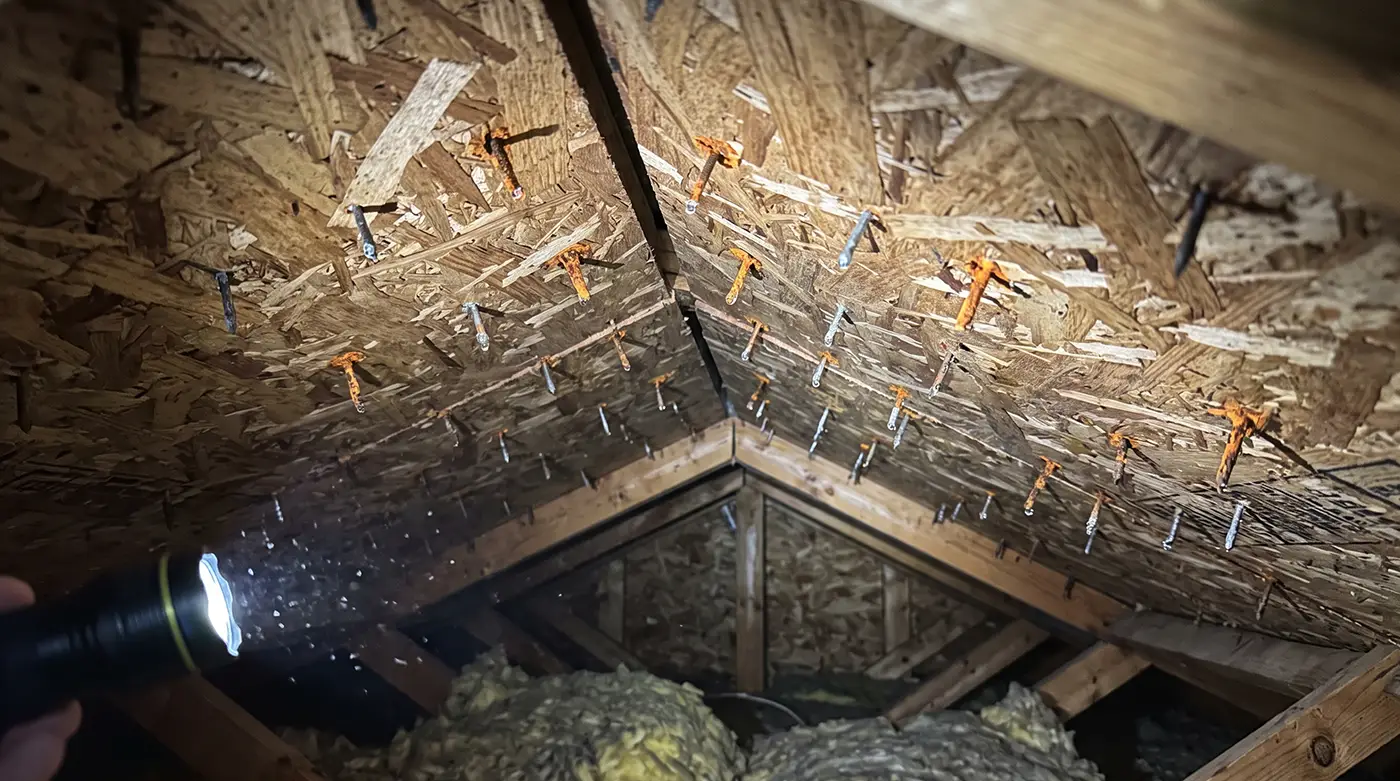
This is why rusted nail tips visible in an attic deserve investigation. They can indicate elevated moisture even when water is not actively dripping from the roof.

How Long Different Roofing Nails Take to Rust
Galvanized Steel Roofing Nails
Galvanized nails are steel fasteners covered with zinc. Instead of leaving the steel directly exposed, the zinc coating acts as a sacrificial protective layer and corrodes preferentially.
The Asphalt Roofing Manufacturers Association recommends corrosion-resistant galvanized steel, stainless-steel, or aluminum roofing nails and states that steel fasteners should comply with ASTM F1667 and applicable zinc-coating requirements. ARMA also specifies a nominal 12-gauge shank and minimum 3/8-inch nail head for asphalt roofing applications.
A properly coated galvanized nail buried beneath correctly installed shingles should therefore not develop significant rust simply because the roof is several years old. Premature corrosion usually points toward prolonged moisture exposure, coating damage, incompatible materials, or inappropriate fasteners.
Stainless-Steel Roofing Nails
Stainless steel offers substantially greater corrosion resistance because chromium in the alloy creates a passive protective surface. These fasteners are particularly useful where moisture, treated wood, salt exposure, or other corrosive conditions are expected.
Stainless steel costs more than standard galvanized steel, so the correct choice depends on the roofing material and environment rather than simply selecting the most expensive fastener.
Aluminum and Copper Roofing Nails
Aluminum does not develop iron oxide, so it does not “rust” in the traditional sense, although it can corrode under incompatible conditions. Copper fasteners likewise develop oxidation rather than conventional red rust.
Material compatibility matters. Combining dissimilar metals can create galvanic corrosion when moisture provides an electrolyte. Copper roofing components, for example, should not automatically be paired with ordinary steel fasteners.
Where Roof Nails Fit Into Roof Anatomy
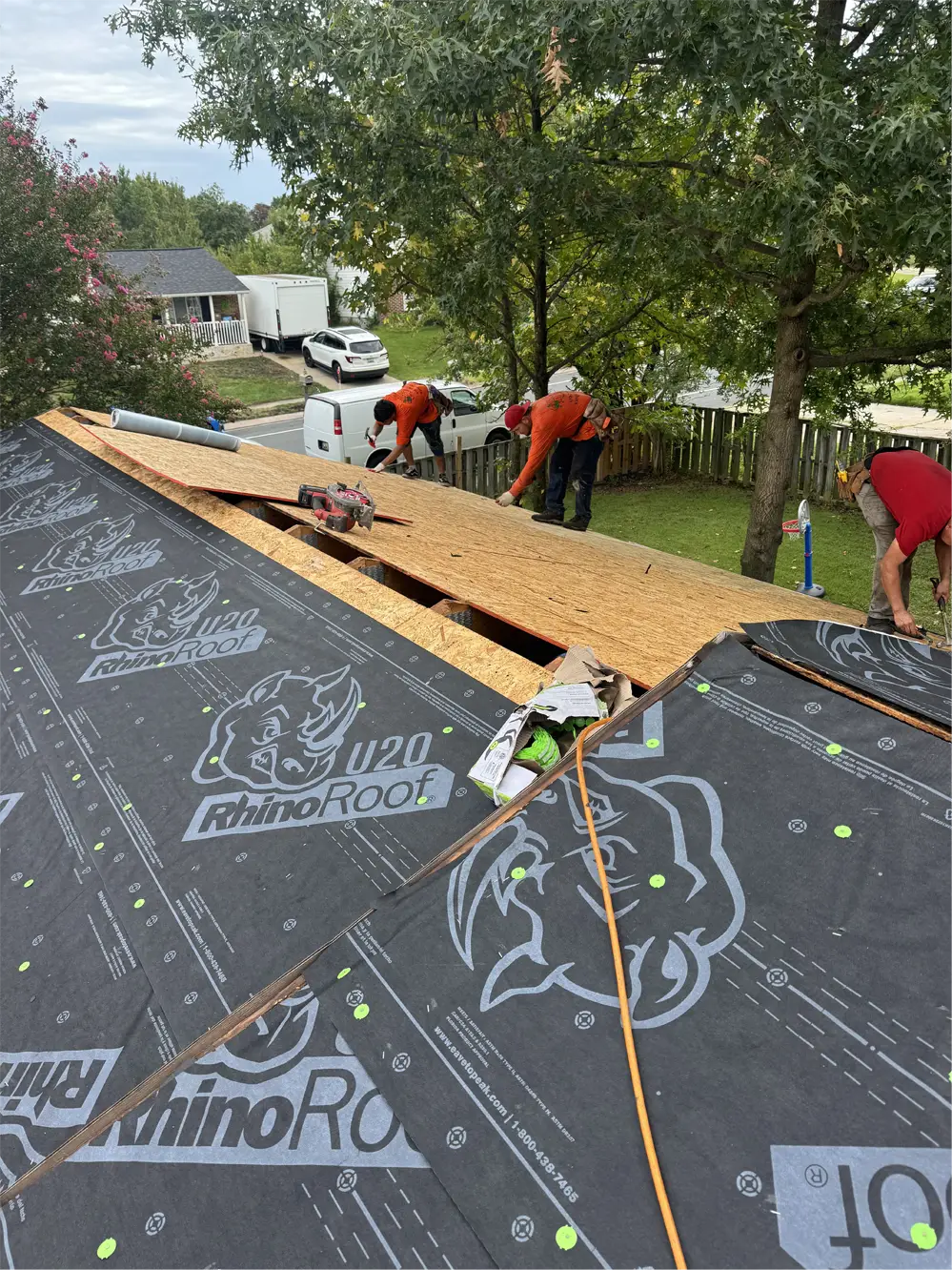
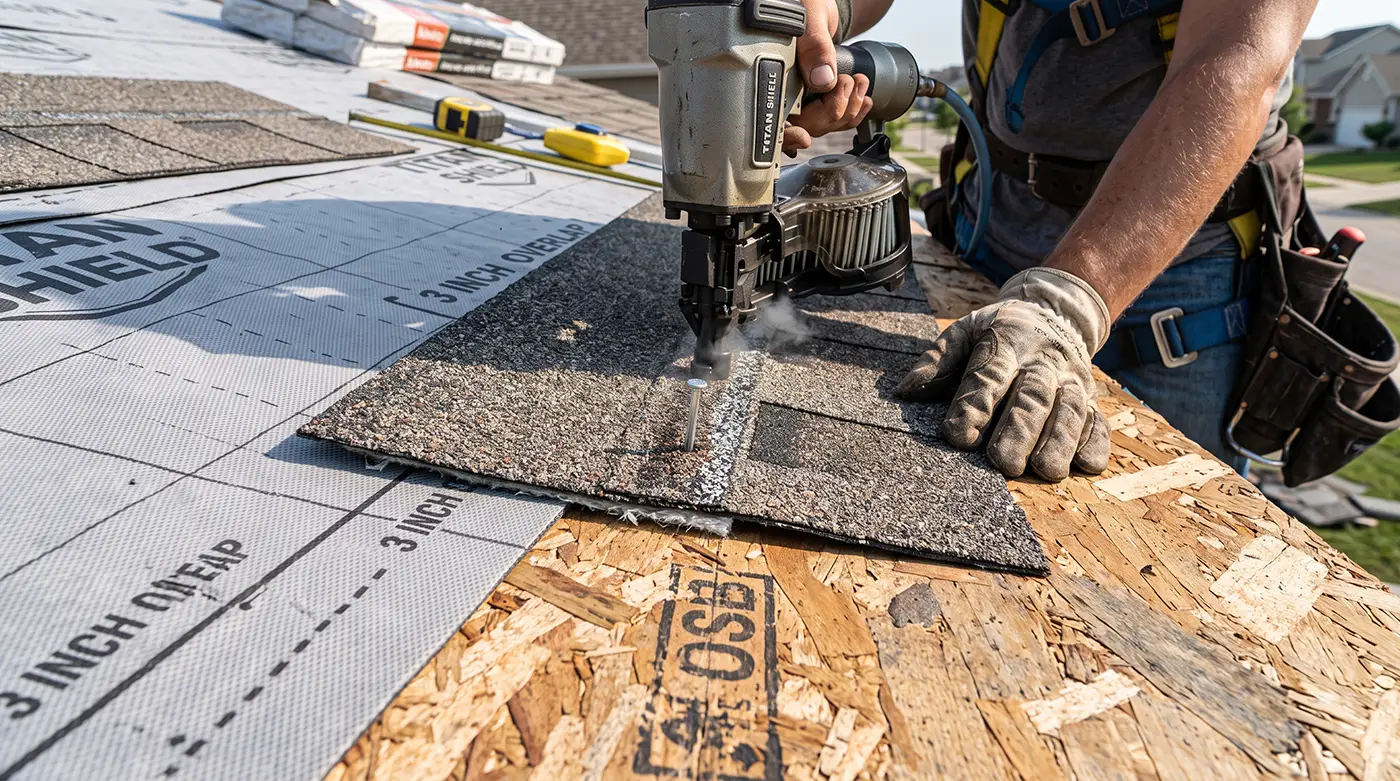
Roofing nails are small components with a major structural responsibility. On a typical asphalt roofing system, the roof deck forms the structural substrate, underlayment provides secondary water protection, shingles shed precipitation, flashing protects transitions and penetrations, and nails mechanically connect the roof covering to the deck.
For asphalt shingles, nails must penetrate deeply enough to develop proper holding strength. They also need to be driven straight and flush. An underdriven nail leaves the head elevated; an overdriven nail can cut into the shingle and reduce its holding ability.
These installation details matter because corrosion resistance cannot compensate for incorrect fastening.
Why Exposed Roofing Nails Rust Faster
An exposed nail head receives rain, dew, ultraviolet exposure, and repeated wet-dry cycles that concealed fasteners normally avoid. This commonly occurs when nails are improperly placed, shingles become damaged, flashing is incorrectly fastened, or previous repairs leave nail heads uncovered.
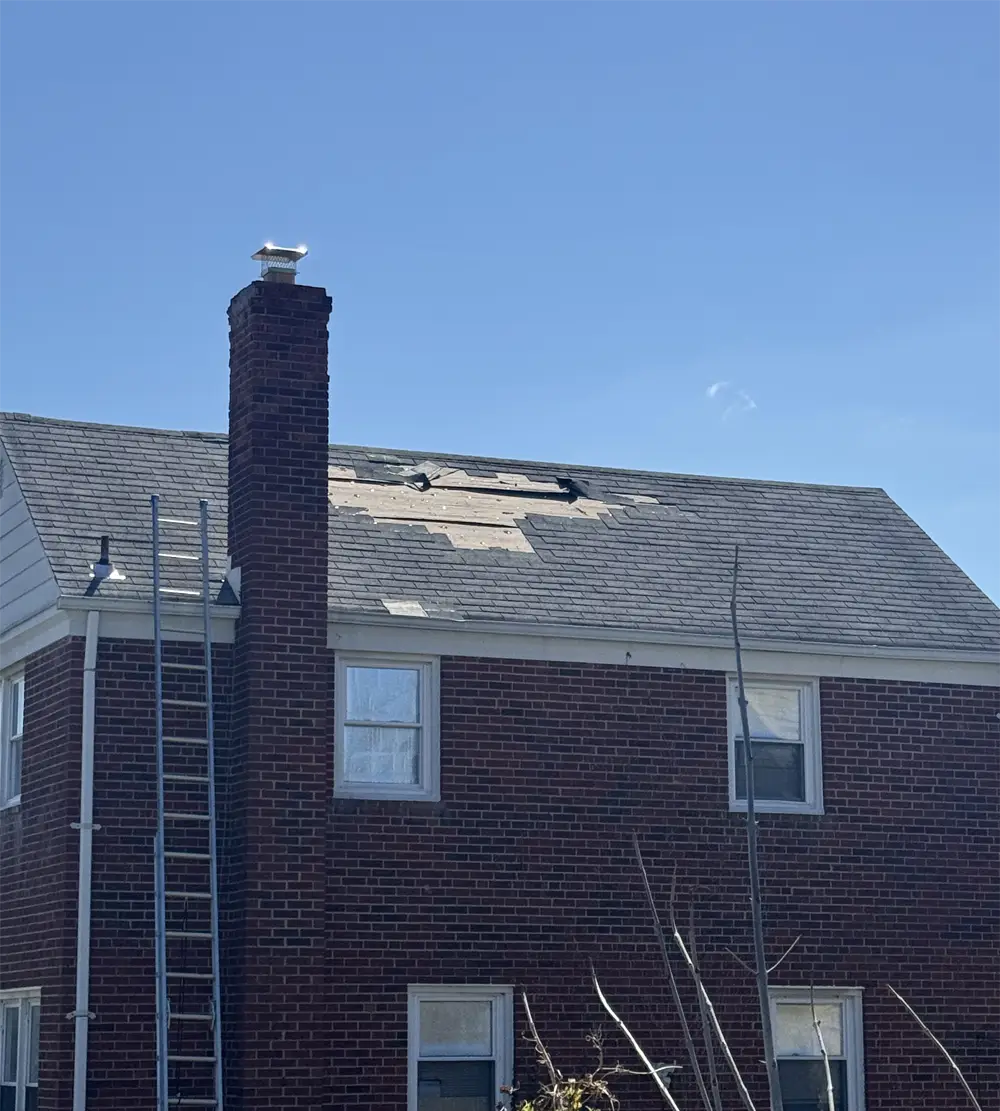
Exposed fasteners should not simply be ignored until they visibly deteriorate. Water can follow the nail shaft into the roof deck and create localized moisture damage. Our roof repair services address the surrounding roofing detail—not merely the visible nail—because correcting the moisture pathway is more important than covering rust with sealant.
Rusty Roofing Nails in the Attic: Leak or Condensation?
Rust on nail tips does not automatically mean the roof is leaking. During cold weather, warm humid indoor air can enter the attic and condense on cold metal fasteners. Numerous nails showing similar oxidation across broad sections of the attic often point toward an attic-moisture or ventilation problem rather than one isolated roof penetration.
Conversely, heavy corrosion concentrated beneath a valley, chimney, vent, flashing joint, or damaged shingle area deserves closer attention.
When corrosion is accompanied by stained decking, wet insulation, darkened wood, mold-like growth, or recurring ceiling stains, a professional residential roofing inspection can help identify the actual moisture source.
Can Rusted Nails Cause Roof Failure?
Minor surface oxidation does not mean a roofing nail has immediately lost its holding capacity. Advanced corrosion is different. As steel is consumed, the nail shaft and head become thinner, reducing their ability to keep shingles attached during wind loading.
Fastener corrosion is especially concerning when it appears alongside widespread shingle deterioration, deteriorated decking, recurring leaks, or large numbers of loose fasteners. When deterioration affects the overall roofing system rather than isolated areas, roof replacement may be more practical than repeatedly repairing individual components.
How We Reduce Roofing Nail Corrosion
We focus on compatible corrosion-resistant fasteners, correct nail placement, adequate penetration, properly installed flashing, watertight shingle courses, and moisture control throughout the roofing assembly. Nail corrosion is rarely an isolated issue; it often reveals how water or humidity is moving through the roof.
If rusty fasteners, moisture stains, or unexplained attic condensation are present, homeowners can contact our roofing team for an inspection before corrosion progresses into decking or shingle damage.

Conclusion
There is no fixed answer to how long roof nails take to rust. Bare or damaged steel can develop corrosion rapidly when repeatedly exposed to moisture, while properly installed galvanized or stainless-steel roofing nails are designed for long-term service. The more important question is why the fastener is getting wet. At A1 Roofing’s KangaRoof, we evaluate the nail together with the shingles, flashing, roof deck, underlayment, ventilation, and attic conditions so the underlying moisture problem can be addressed.
FAQ
Do rusty roofing nails mean my roof is leaking?
Not necessarily. Widespread rust on nail tips can result from attic condensation, while concentrated corrosion near flashing, valleys, vents, or stained decking may indicate water intrusion.
Should roofing nails be galvanized or stainless steel?
Galvanized steel is commonly used for asphalt shingles, while stainless steel provides higher corrosion resistance for demanding moisture conditions or applications requiring greater material compatibility. The roofing manufacturer and applicable installation requirements should determine the fastener.
Should exposed roofing nails be sealed?
An exposed nail should be evaluated as part of the surrounding roofing detail. Simply covering a nail head with sealant may provide temporary protection, but incorrectly placed fasteners, damaged shingles, or defective flashing should be repaired correctly to prevent recurring water intrusion.