
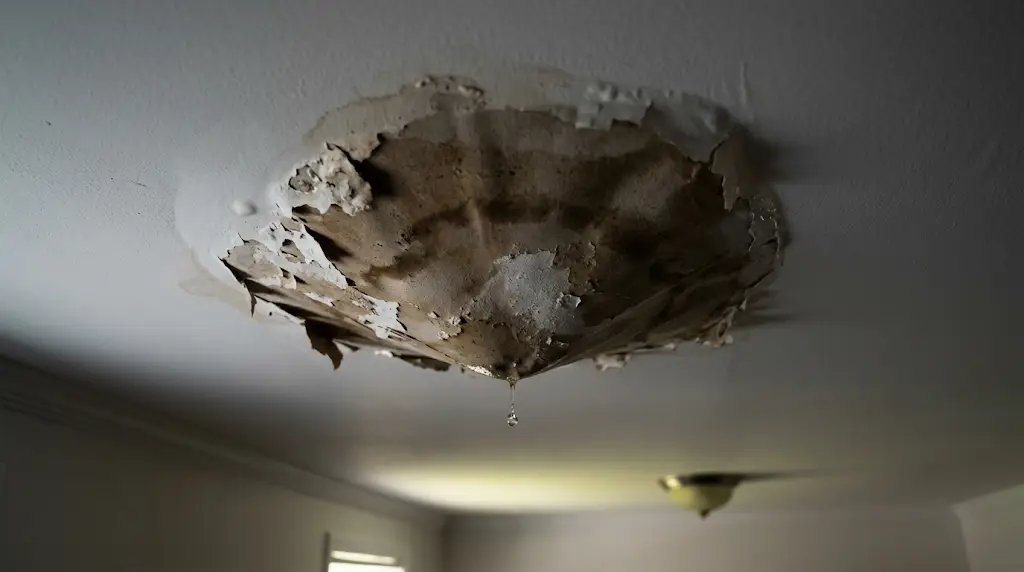
A brown ceiling ring may look cosmetic, but it shows that water has already passed through part of the building assembly. Moisture may have reached the roof deck, insulation, framing, and back of the drywall before the stain appeared. A leak that seems minor during one storm can become a larger repair when ignored.
Homeowners in Columbia, Elkridge, Clarksville, Fulton, Scaggsville, Laurel, Baltimore, and Baltimore City should identify the entry point, stop it at the roof, and then evaluate the interior. KangaRoof’s roof leak repair service traces the water path rather than assuming the defect is directly above the stain.

How Water Travels From the Roof to the Ceiling
Water does not always fall straight down. It can run along sheathing, rafters, pipes, fasteners, or insulation before reaching a visible opening. The stain may appear several feet from the failed shingle, flashing, or membrane seam.
Wet insulation can hold moisture against wood and drywall. Repeated wetting may discolor or blister the drywall facing, soften the gypsum core, loosen joint compound, peel paint, and cause sagging. Persistent moisture may also damage decking or framing. Repainting the stain is not a repair: the source and hidden moisture must be addressed first.
Why Central Maryland Conditions Matter
The National Weather Service’s BWI precipitation record lists a 1991–2020 annual normal of 45 inches. That total does not predict damage at one property, but it shows how often roofs in the Baltimore–Washington corridor must manage rain, snow, and melting moisture.
Exposure can make nearby roofs behave differently. On wooded lots in Clarksville, Fulton, Scaggsville, and Columbia, debris may collect in valleys or behind penetrations. Shaded slopes in Wilde Lake or Oakland Mills may dry slowly. Baltimore City rowhouses and additions may have low-slope membranes, parapets, drains, and wall transitions instead of typical shingle details.

Common Causes of Roof Leaks
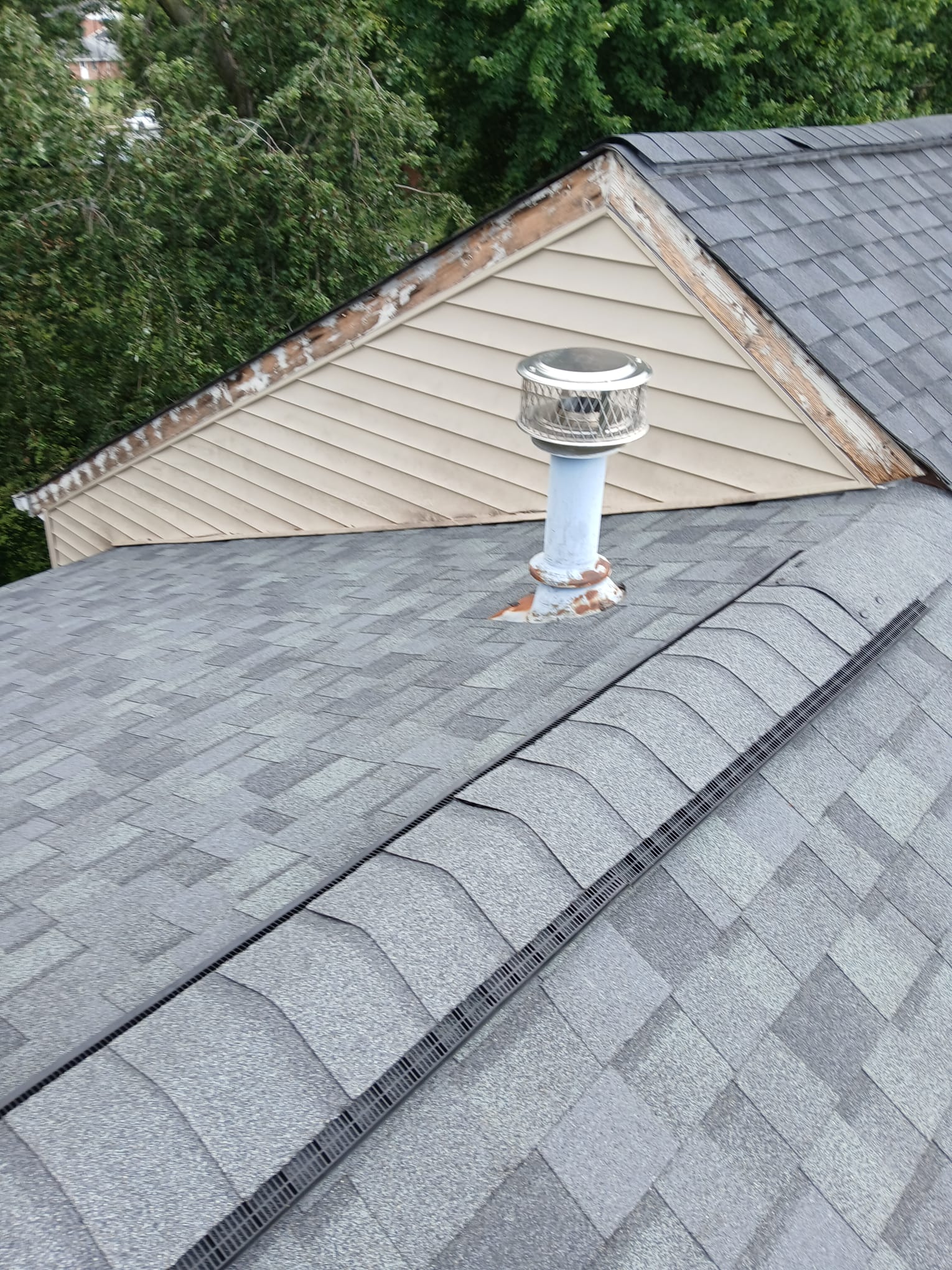
On an asphalt-shingle roof, water may enter through damaged shingles, exposed fasteners, worn valleys, or failed flashing around a chimney, dormer, skylight, sidewall, or plumbing vent. A cracked pipe-boot collar is easy to miss; our roof vent pipe leak guide explains why the boot and surrounding flashing should be inspected together.
On a low-slope roof, trouble areas include open seams, punctures, old patches, parapet flashing, and ponding near blocked drains. Repairs must be compatible with the existing TPO, EPDM, PVC, or modified-bitumen system.
Not every ceiling stain begins at the roof. Plumbing leaks, HVAC condensation, bathroom exhaust problems, and condensation on cold pipes can look similar. Moisture appearing only during rain points toward the exterior; staining during dry weather may have another source.
Warning Signs That Require Fast Action
An expanding stain, active drip, peeling paint, damp insulation, musty odor, or soft ceiling needs prompt investigation. A bulge or sag is more urgent because water may be collecting above the drywall.
Keep people and pets away from a sagging area. Do not puncture a water-filled ceiling or touch a wet light fixture. When water is near wiring, recessed lights, or a ceiling fan, avoid the area and contact the appropriate professional. Never climb onto a wet, icy, or steep roof.
Even when dripping stops, moisture can remain in insulation or enclosed cavities.
What to Do When You Discover a Ceiling Leak
Move furniture and valuables away. Place a container under a drip only when the ceiling appears stable. Protect the floor, photograph the stain, and note the weather and time. These details may help distinguish wind-driven rain from plumbing or condensation.
Arrange a roof and attic inspection promptly. It should cover the roof surface, flashing, penetrations, drainage, decking, insulation, and visible water path. Moisture readings or controlled water testing may help when the source is unclear.
Repair the Roof Before Repairing the Ceiling
First, stop the exterior leak. Next, determine whether insulation, decking, framing, or drywall is wet or damaged. Then dry the assembly and replace material that cannot be restored. Ceiling finishing comes last.
The U.S. Environmental Protection Agency’s mold and moisture guidance advises drying water-damaged areas and items within 24 to 48 hours to help prevent mold growth. It also notes that moldy porous materials may need disposal because they can be difficult to clean completely. Whether drywall can remain depends on its condition and how long it stayed wet.
Do not prime or paint until the source is corrected and the ceiling is dry. Stain-blocking primer may finish the cosmetic repair, but it cannot stabilize softened drywall or solve hidden moisture.
Repair or Replace the Roof?
A localized flashing defect, damaged shingle, puncture, or failed pipe boot can often be repaired when the surrounding roof and deck remain serviceable. Replacement becomes more reasonable when several areas leak, shingles are broadly deteriorated, a low-slope membrane has widespread failure, or deck damage extends beyond one repair zone.
Base the decision on the complete roof system, not one stain. A small stain can come from an important flashing failure, while a large stain may result from one repairable defect.
How to Reduce Repeat Damage
Check ceilings and accessible attic areas after severe wind, hail, falling branches, or prolonged rain. From the ground, look for missing shingles, loose flashing, valley debris, and changes around vents or skylights. Keep roof drains and gutters open.
Have penetrations checked after satellite, plumbing, HVAC, or exterior work. Repeated patches around the same detail are a reason to inspect the flashing and deck instead of adding another surface layer.
Roof Leak and Ceiling Damage FAQ
Can a Small Roof Leak Cause a Ceiling to Collapse?
It can if water accumulates or drywall loses strength. Treat a sagging or bulging ceiling as unsafe, clear the area, and arrange professional help.
Does a Brown Stain Mean the Leak Is Active?
Not necessarily. It may remain from an older event, but do not assume it is inactive without checking. Dated photographs can show whether it expands after later rain.
Can I Paint Over the Stain After the Roof Is Repaired?
Only after the assembly has dried and damaged material has been repaired or removed. Painting too soon can hide continuing moisture, and the stain may bleed through.
How Quickly Can Mold Develop?
Conditions vary, so there is no exact timeline for every house. EPA guidance recommends drying water-damaged materials within 24 to 48 hours; waiting for visible mold is not sensible.
Should I Call a Roofer or Drywall Contractor First?
A roofer should address a suspected roof entry point first. Interior restoration follows after the source is stopped and moisture is assessed. A plumber, HVAC contractor, electrician, or remediation professional may also be needed.
Does One Ceiling Leak Require Roof Replacement?
No. Many leaks are localized. Consider replacement when the broader roof condition, repeated failures, or deck damage makes another isolated repair poor value.

Schedule a Local Roof Leak Assessment
KangaRoof serves homeowners and commercial property owners in Columbia, Elkridge, Clarksville, Fulton, Scaggsville, Laurel, Baltimore, and Baltimore City. Call (410) 799-1600 or schedule an online estimate to have the roof, attic, and likely water path evaluated before ceiling damage spreads.
Watch the video to learn more.
Timestamps:
00:00 Introduction to Ceiling Damage from Roof Leaks
00:17 Initial Steps After Roof Repair
00:28 Drywall Repair and Replacement
00:43 Finishing Touches and Prevention
00:50 Additional Tips and Resources
00:54 Conclusion and Contact Information