
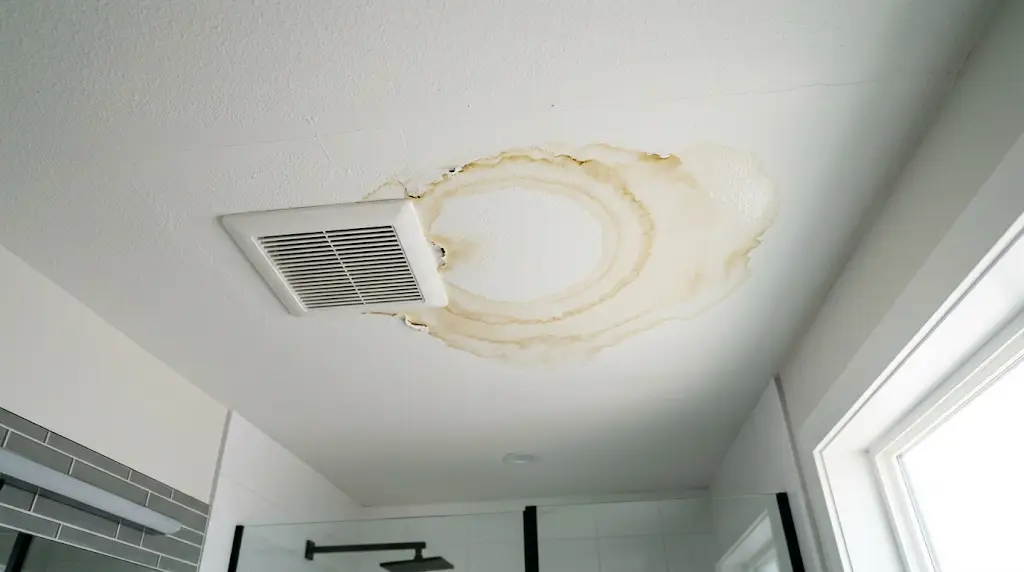
A ceiling stain near a bathroom does not always mean the shingles have failed. In many Maryland homes, water enters where a plumbing vent pipe passes through the roof. A small crack or flashing error can wet insulation, drywall, and roof decking before the leak becomes obvious.
Homeowners in Columbia, Elkridge, Clarksville, Fulton, Scaggsville, Laurel, and Baltimore should act promptly. KangaRoof’s residential roof leak repair service starts by locating the actual entry point instead of assuming every nearby stain comes from the pipe boot.
What Is a Roof Vent Pipe?
A plumbing vent pipe, or vent stack, extends through the roof and supports the home’s drain-waste-vent system. It is not the same as a ridge vent, soffit vent, or attic fan. The vulnerable area is the transition between the pipe and the roof.
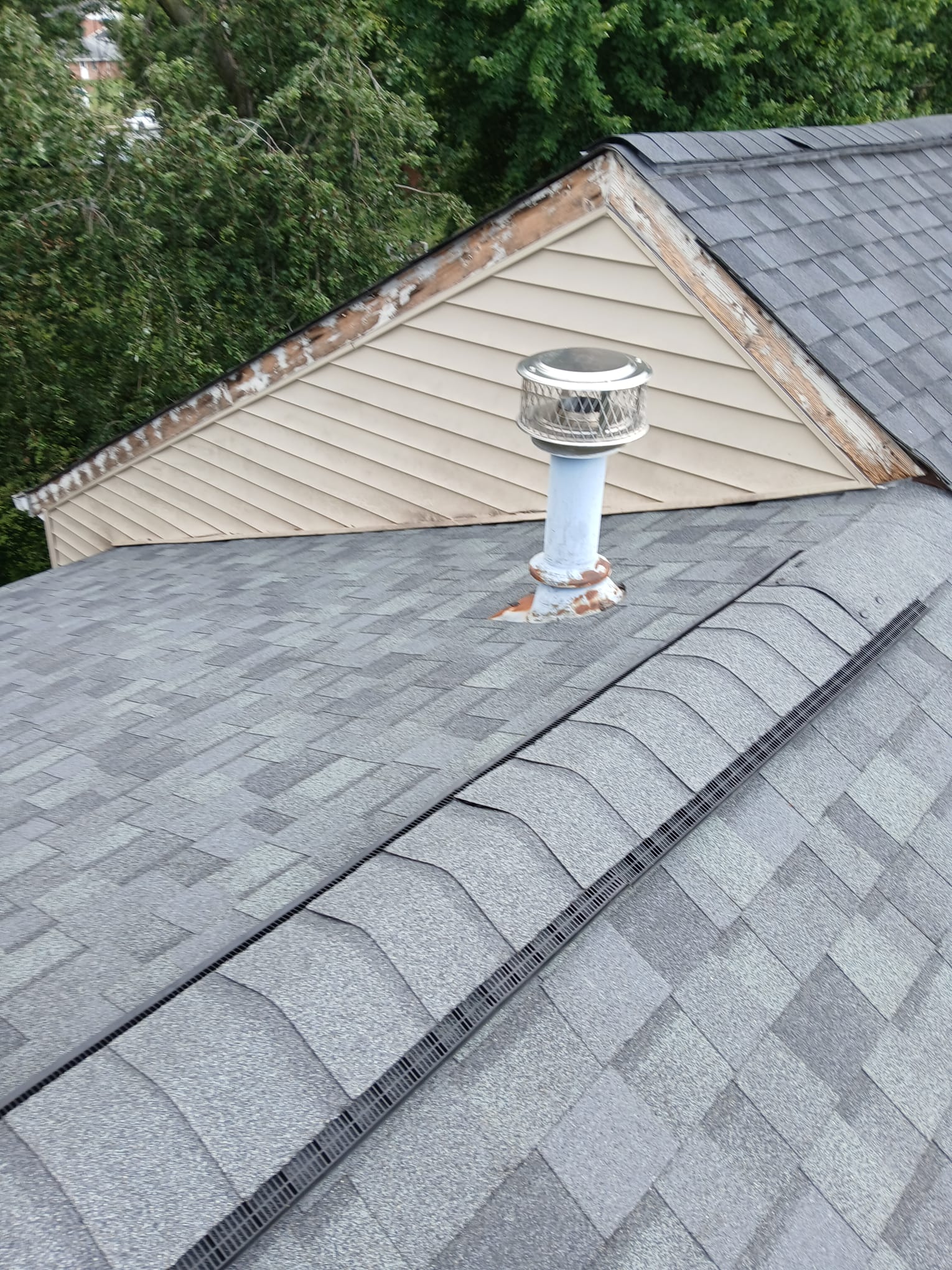
On an asphalt-shingle roof, this transition usually includes a flange and a flexible collar. Shingles below sit beneath the lower flange, while shingles above overlap its upper edge, allowing rain to flow down and away.
The Building America Solution Center’s roof-penetration guidance explains that every penetration is a weak point in the roof’s water-control layer. Flashing must connect with that layer and direct water outward. Sealant may support a correct assembly, but it should not replace proper drainage and overlap.
Why Roof Vent Pipe Leaks Happen
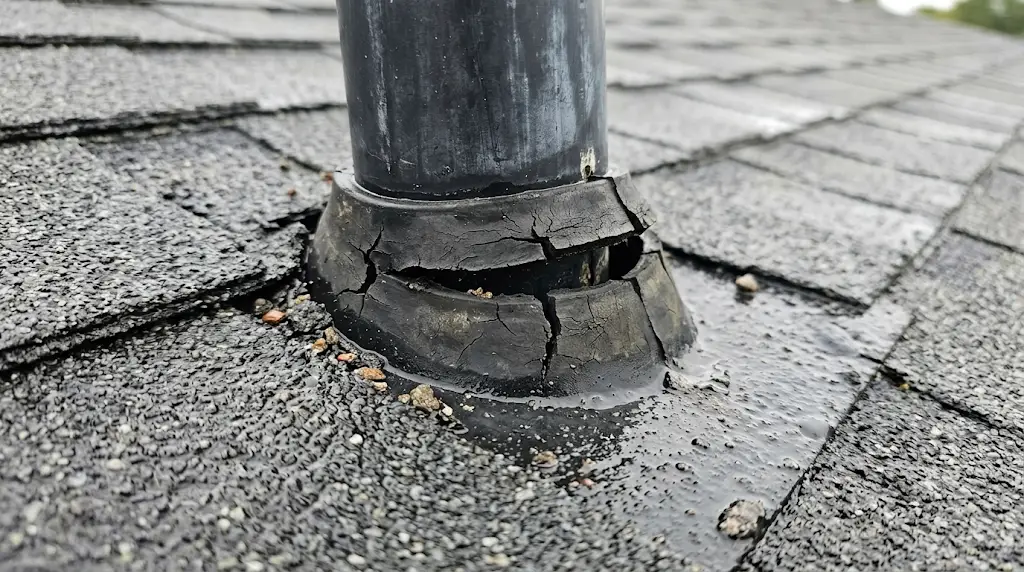
A Cracked or Loose Collar
Many pipe boots combine a metal or plastic base with a rubber-like collar. Sunlight, temperature changes, and movement can make the collar brittle, split it, or pull it away from the pipe. There is no universal failure age because durability varies by product, exposure, and installation.
Incorrect Flashing Installation
Even a new boot can leak when the flange is placed entirely over the shingles, nailed incorrectly, or poorly integrated with the underlayment. Water must flow over successive layers. Roof cement around a badly installed boot may hide the defect temporarily without correcting it.
Failed Fasteners or Sealant
Exposed nails can loosen, corrode, or lose their seal. Roof cement and caulk can crack and separate. Repeated patching may trap water and make a proper repair harder.
Pipe Movement or Poor Placement
A vent stack can move slightly because of temperature changes, framing movement, or weak attic support. A collar fitted too tightly may split; one fitted too loosely may admit water. A pipe close to a valley or wall also requires careful detailing.
The Leak Is Somewhere Else
Water may enter at a shingle, chimney, sidewall, or valley above the pipe and travel along the deck. Condensation on a cold pipe or a leaking plumbing joint can look similar, so diagnosis should include the attic and roof surface.
Why Central Maryland Conditions Matter
Central Maryland roofs face humid summers, winter cold, thunderstorms, and wind-driven rain. In tree-covered parts of Columbia, including Wilde Lake and Oakland Mills, debris may collect uphill of a pipe boot and slow drainage. Wooded properties in Clarksville, Fulton, and Scaggsville can have the same issue.
Roof type matters too. Sloped suburban roofs commonly use shingle-integrated pipe boots. On a Baltimore City rowhouse or addition with a low-slope roof, the vent needs membrane-compatible flashing instead of a standard shingle boot.
Howard County’s local rule is clear. Section P3103.3 of the adopted 2024 Residential Code requires the junction of each vent pipe and roof line to be watertight with approved flashing. A lasting repair should also follow the roofing and flashing manufacturers’ instructions.
Warning Signs of a Vent Pipe Leak
Possible signs include a ceiling stain near a bathroom, kitchen, or laundry area; damp attic insulation; darkened decking; peeling paint; or a musty odor after rain. From the ground, you may notice a cracked collar, lifted flange, missing shingle, exposed nail, or heavy patching.
Timing offers clues. A leak only during wind-driven rain may involve a gap on one side of the boot or poor flange overlap. Moisture during cold weather without rainfall may be condensation. Because old stains remain visible, an inspection should distinguish active moisture from previous damage.
How the Source Is Confirmed
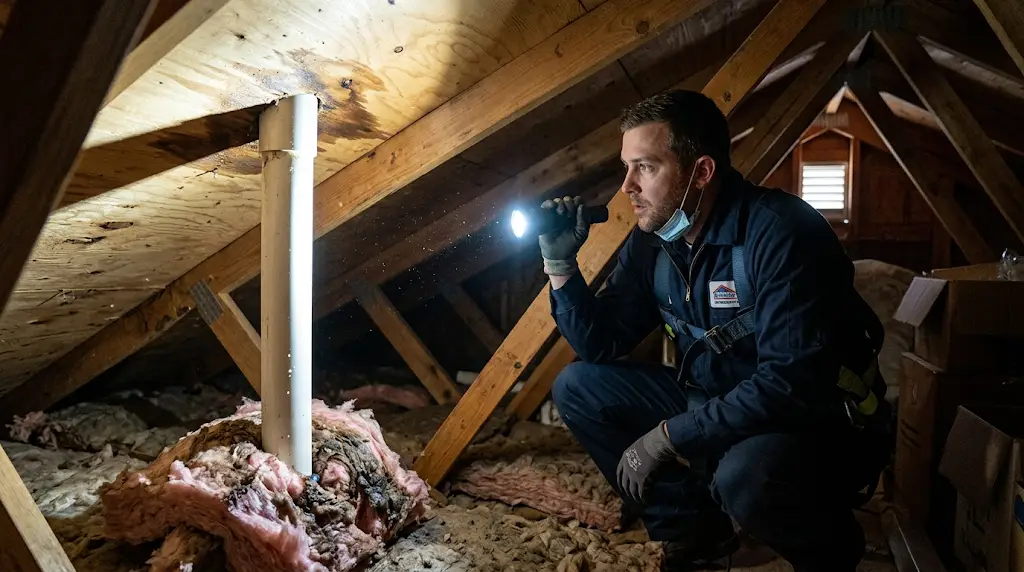
A thorough inspection begins indoors. The roofer checks the stain, insulation, framing, roof deck, and pipe joints or supports. Water trails can show that the indoor drip is not directly below the exterior defect.
Outside, the inspection covers the collar, flange, fasteners, nearby shingles, and adjoining roof details. On a low-slope roof, it should also include membrane seams, patches, drainage, and material compatibility. Controlled water testing may help when the source remains uncertain.

Repair Options
When the roof and decking are sound, the durable approach is often to remove nearby shingles, replace the failed boot or flashing, integrate it with the drainage layers, and install compatible shingles. A secondary repair collar can work in limited situations, but it cannot correct damaged base flashing or poor layering.
Soft or delaminated decking should be repaired first. On TPO, EPDM, PVC, or modified-bitumen roofing, the penetration must be flashed with materials compatible with that membrane.
A leaking vent does not automatically require full roof replacement. Replacement may make sense when deterioration is widespread, several penetrations are failing, repairs recur, or the deck has extensive damage. KangaRoof’s roof repair services help homeowners compare a focused repair with broader replacement.
What to Do When Water Appears
Move belongings away, catch active drips, photograph the stain, and note whether the leak occurred during steady rain, wind, or snowmelt. Do not climb onto a wet, icy, or steep roof, and do not rely on interior caulk. Water must be stopped at the exterior drainage plane.
Roof Vent Pipe Leak FAQ
Can a Vent Pipe Leak on a Newer Roof?
Yes. A newer roof can leak when the boot was damaged, incorrectly layered, over-nailed, or fitted poorly. The surrounding shingles may still have substantial useful life.
Can I Seal a Cracked Pipe Boot With Caulk?
Caulk may provide brief emergency protection, but it is not a dependable repair for a split collar, loose flange, failed fasteners, or incorrect layering. A surface patch also does not address wet decking or damaged underlayment below the boot.
Does a Stain Below the Pipe Prove the Boot Is Leaking?
No. Water can travel along sheathing, framing, fasteners, or the pipe before becoming visible. Condensation and leaking plumbing joints may produce similar symptoms, which is why the attic should be inspected whenever it is safely accessible.
Should I Call a Roofer or a Plumber?
Call a roofer for a failure at the roof covering, pipe boot, or flashing. Call a plumber when the pipe is cracked, disconnected, unsupported, or leaking at an interior joint. Some cases require both trades, particularly when the pipe has moved and damaged the roof flashing.
Does a Vent Leak Mean I Need a New Roof?
Usually not. A localized boot or flashing failure can often be repaired independently. Replacement becomes more reasonable when the roof is near the end of its service life, several roof penetrations are failing, or the surrounding materials have widespread damage.
Schedule a Local Roof Leak Assessment
KangaRoof provides roof inspections and leak repairs in Columbia, Elkridge, Clarksville, Fulton, Scaggsville, Laurel, Baltimore, and Baltimore City. Call (410) 799-1600 or schedule an online estimate to have the flashing, surrounding roof, attic, and likely water path evaluated.