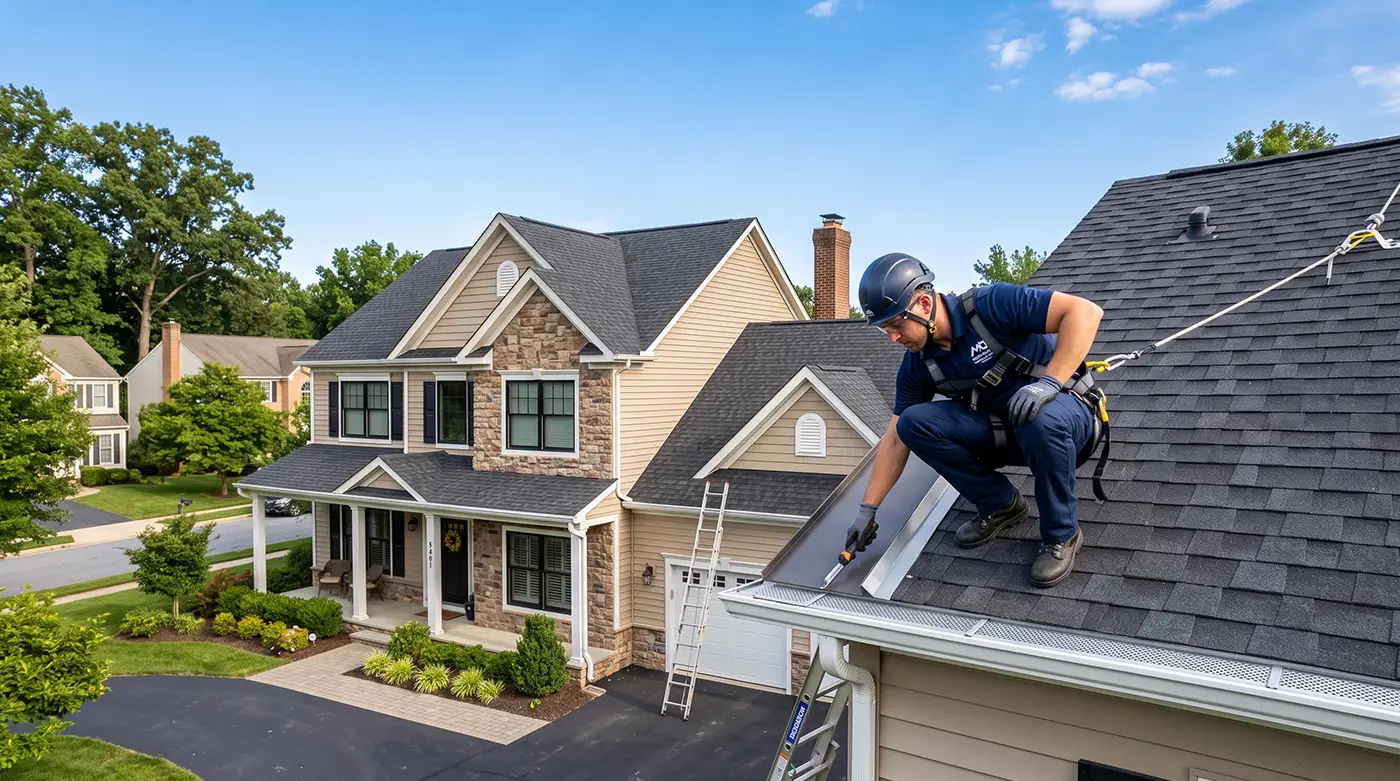
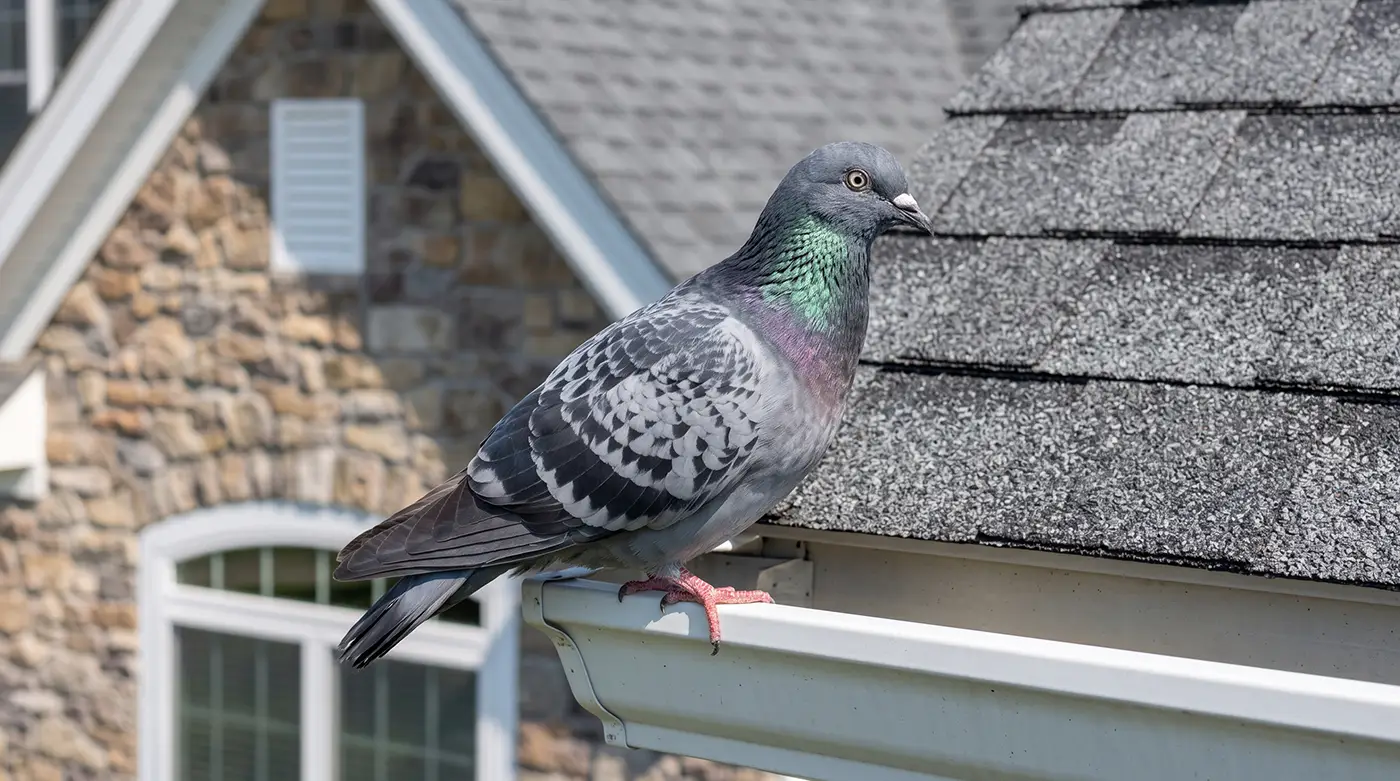
Bird activity may look harmless, but repeated nesting, roosting, and debris buildup can create maintenance problems around shingles, gutters, flashing, vents, soffits, and low-slope roof drains. At A1 Roofing’s KangaRoof in Columbia, MD, we recommend treating bird prevention as routine roof maintenance instead of waiting for blocked drainage, damaged components, or leaks.
How Birds Can Damage a Roof
The main risk is rarely a bird simply landing on the roof. Problems develop when birds repeatedly use the same protected areas.
Nests beneath eaves, behind fascia, near chimneys, or around vents can retain moisture and interfere with airflow. Twigs, grass, and feathers can wash into gutters and downspouts, slowing drainage and allowing water to back up at roof edges. On flat and low-slope roofs, debris around drains or scuppers can contribute to ponding water.
Birds may also exploit loose soffits, damaged flashing, deteriorated vent screens, or gaps at roof transitions. Heavy accumulations of droppings require care: the CDC reports on Histoplasma exposure that Histoplasma grows especially well in material containing large amounts of bird or bat droppings, making prevention of major accumulations important.
1. Inspect Common Bird Nesting and Roosting Areas
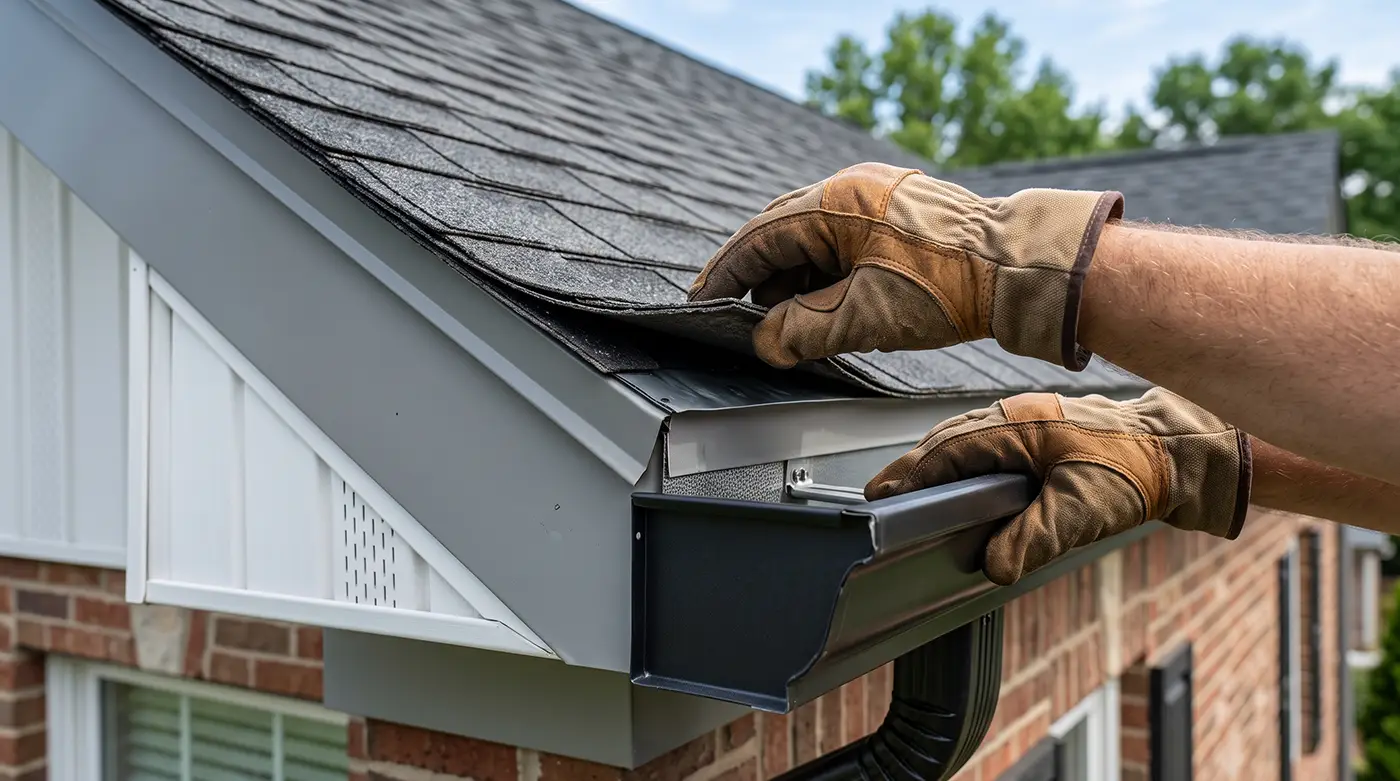
We recommend checking the roofline from the ground and arranging a professional inspection when bird activity becomes frequent. Priority areas include:
- Roof ridges and peaks
- Chimney caps and flashing
- Soffits, fascia, and eaves
- Attic and exhaust vents
- Skylight curbs
- Gutters and downspouts
- Flat-roof drains, scuppers, and parapet walls
Repeated bird entry can indicate an existing roof defect. Our roof repair services address damaged shingles, flashing, and other localized defects that can leave vulnerable openings.
2. Keep Gutters, Drains, and Roof Surfaces Clear
Bird nests and loose nesting material can interfere with drainage, especially during Maryland’s spring storms and fall leaf season. We recommend removing debris before it reaches valleys, gutters, drains, or scuppers.
Homeowners should not climb onto steep, wet, icy, or damaged roofs for this work. If debris has contributed to water intrusion, professional roof leak repair should address both the visible leak and the roofing component that allowed water to enter.
3. Seal Openings Only After Confirming They Are Unoccupied
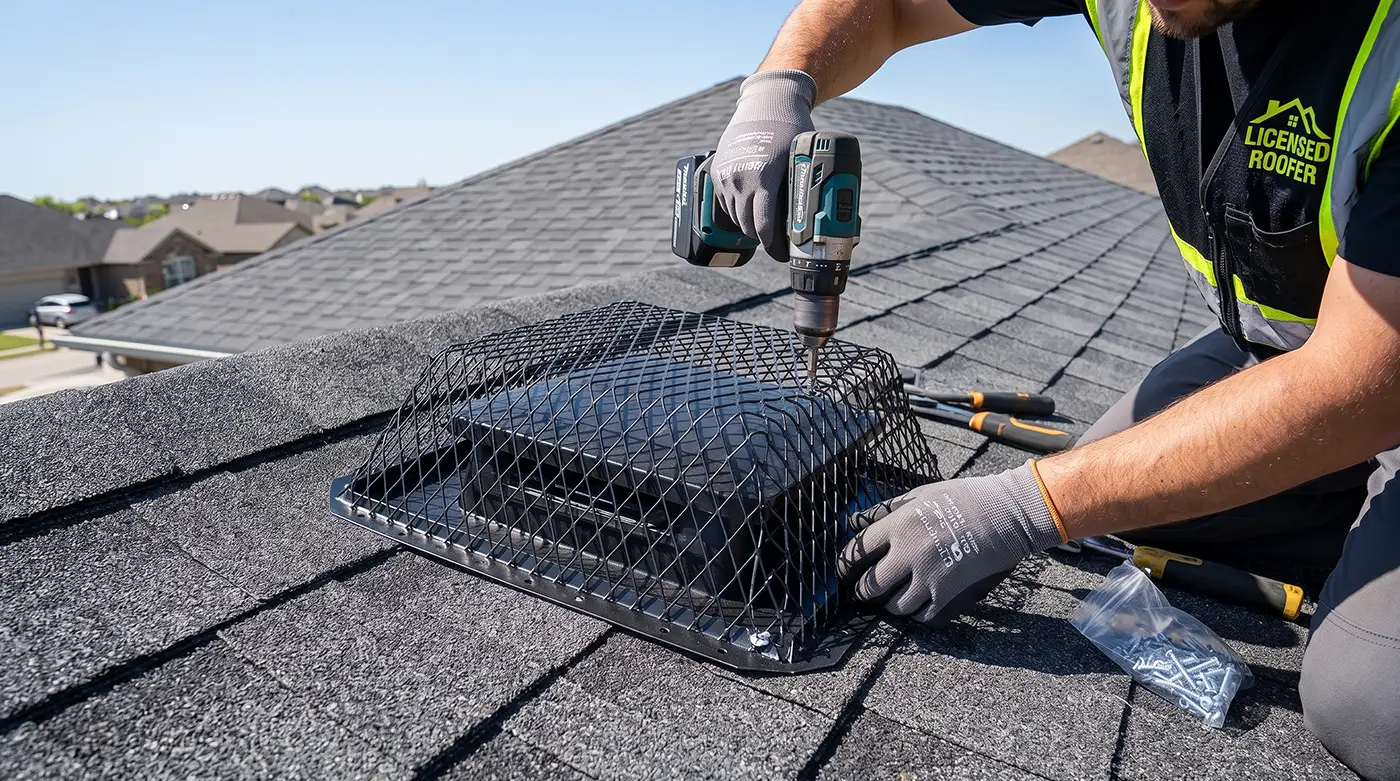
Loose soffit panels, gaps around penetrations, failed vent screens, and deteriorated flashing should be repaired before birds turn them into nesting sites. However, we do not recommend sealing an opening until no bird, nestling, or active nest will be trapped inside.
Many native migratory birds are protected under the Migratory Bird Treaty Act. Federal protections prohibit unauthorized taking of covered migratory birds, so species, nest status, location, and applicable rules should be checked before an active nest is disturbed.
4. Use Humane Bird Deterrents Correctly
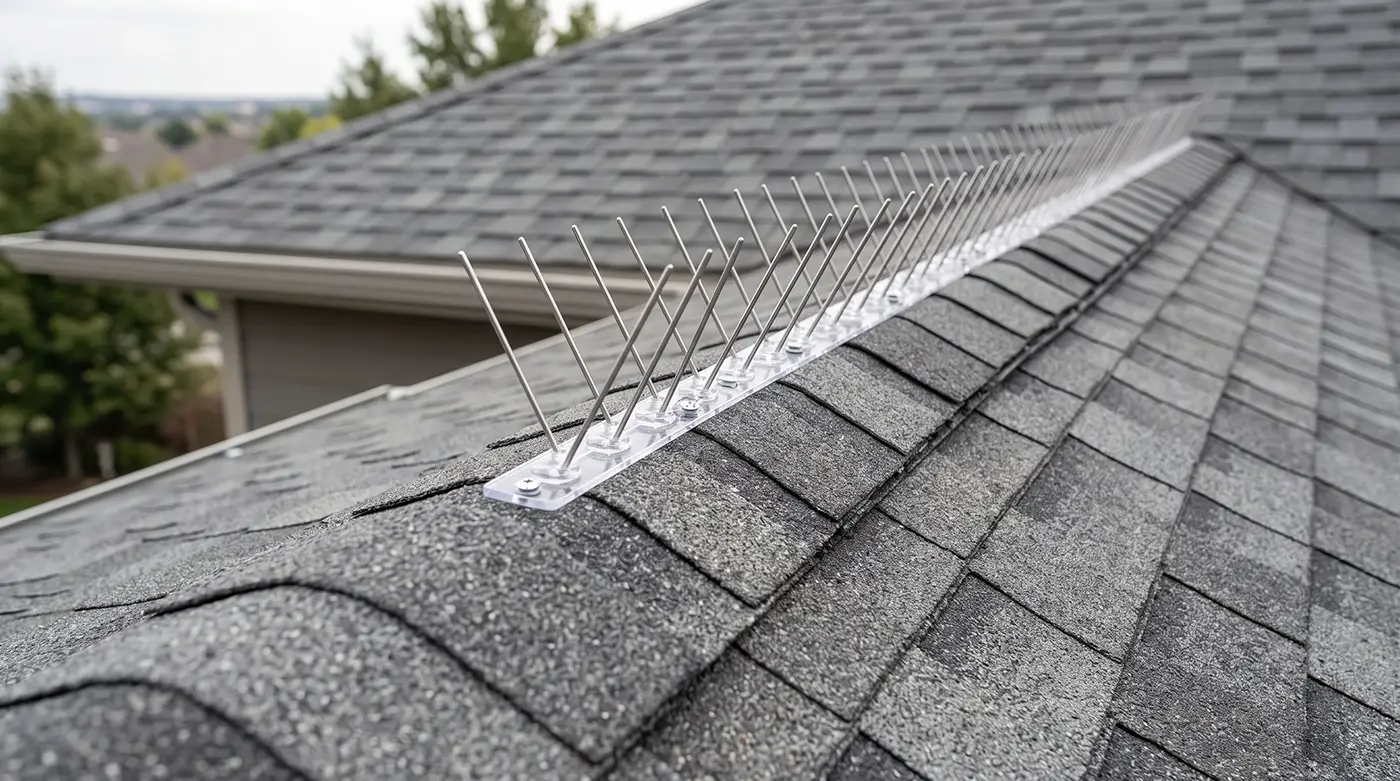
Physical exclusion is generally more dependable than scare devices alone. Depending on the roof configuration, appropriate options may include bird-safe netting, properly installed bird wire, or landing deterrents on ledges and parapets.
Deterrents should never puncture roofing membranes, damage shingles, block ventilation, or obstruct drainage. On flat roofs, improper attachments can create new leak paths. A roofing professional should review any deterrent that must be anchored to roofing components.
Predator decoys may provide temporary discouragement, but birds can adapt when a stationary object poses no threat. We do not rely on decoys as the primary long-term solution.
5. Remove Food and Water Sources Around the Property
Bird pressure often increases when a property provides easy food, water, or shelter. We recommend keeping trash containers closed, cleaning spilled birdseed, avoiding outdoor pet-food exposure, and correcting standing-water areas where practical.
Reducing attractants does not repair roof damage, but it can make exclusion measures more effective by giving birds fewer reasons to return.
Seasonal Bird-Proofing Checklist for Maryland Roofs
Early spring: Inspect soffits, vents, flashing, and gutters before nesting activity increases.
Late spring and summer: Watch for repeated entry at one roof location and avoid disturbing active nests without first confirming wildlife rules.
Fall: Clear leaves, twigs, feathers, and abandoned nesting debris from drainage areas before winter precipitation.
After major storms: Check for lifted shingles, damaged vent covers, loose flashing, or new openings that birds can exploit.
When bird activity exposes recurring leaks or widespread deterioration, we can compare localized repair with roof replacement based on the roof’s actual condition.
CONCLUSION
Protecting a roof from birds requires more than spikes or decoys. We focus on eliminating entry points, protecting drainage, repairing vulnerable components, and using humane exclusion methods that do not damage the roofing system. For persistent nesting, bird-related roof damage, or suspected leaks, homeowners can contact A1 Roofing’s KangaRoof for a professional roof assessment.
FAQ
Can bird nests cause roof leaks?
Yes. Nests and debris can block gutters, drains, and roof valleys, while birds may exploit existing gaps around flashing, soffits, and vents. The leak source should be inspected rather than assuming the nest alone caused the problem.
Is it legal to remove a bird nest from a roof?
It depends on the species and whether the nest is active. Many migratory birds are federally protected, so we recommend confirming applicable U.S. Fish & Wildlife Service rules before disturbing a nest containing eggs or young birds.
What is the best way to keep birds off a roof?
The most reliable approach combines roof maintenance, removal of food and water attractants, repair of entry points, and correctly installed humane exclusion devices. Deterrents should fit the specific roof design and must not puncture, block ventilation, or obstruct drainage components.