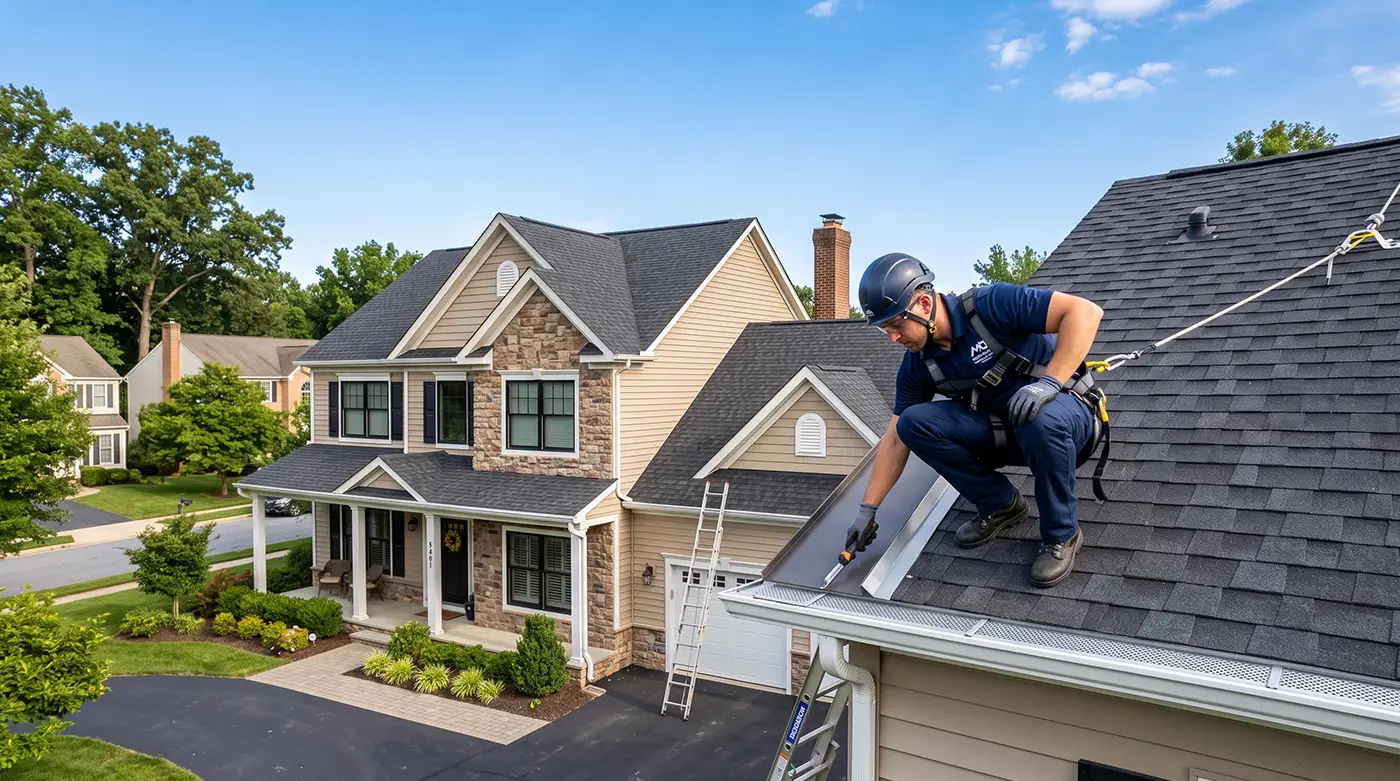

A visual roof inspection is one of the fastest ways to identify problems before they develop into active leaks, damaged decking, or interior repairs. At A1 Roofing’s KangaRoof in Columbia, MD, we inspect the roof as a complete system—not just the shingles—because water often enters at edges, flashing, penetrations, valleys, and other transitions where roofing materials meet.
Start With a Safe Ground-Level Roof Inspection
We recommend beginning from the ground with binoculars or a camera zoom. Homeowners should not walk on steep, wet, icy, brittle, or storm-damaged roofing. From several angles, look for changes in the roofline, missing materials, exposed underlayment, loose metal, debris impact, and sections that appear different from the surrounding roof.
After severe wind, pay particular attention to corners, eaves, rakes, ridges, and perimeter zones. FEMA guidance on wind vulnerability assessments specifically recommends checking asphalt shingles for unsealed tabs and evaluating vulnerable roof-edge areas.
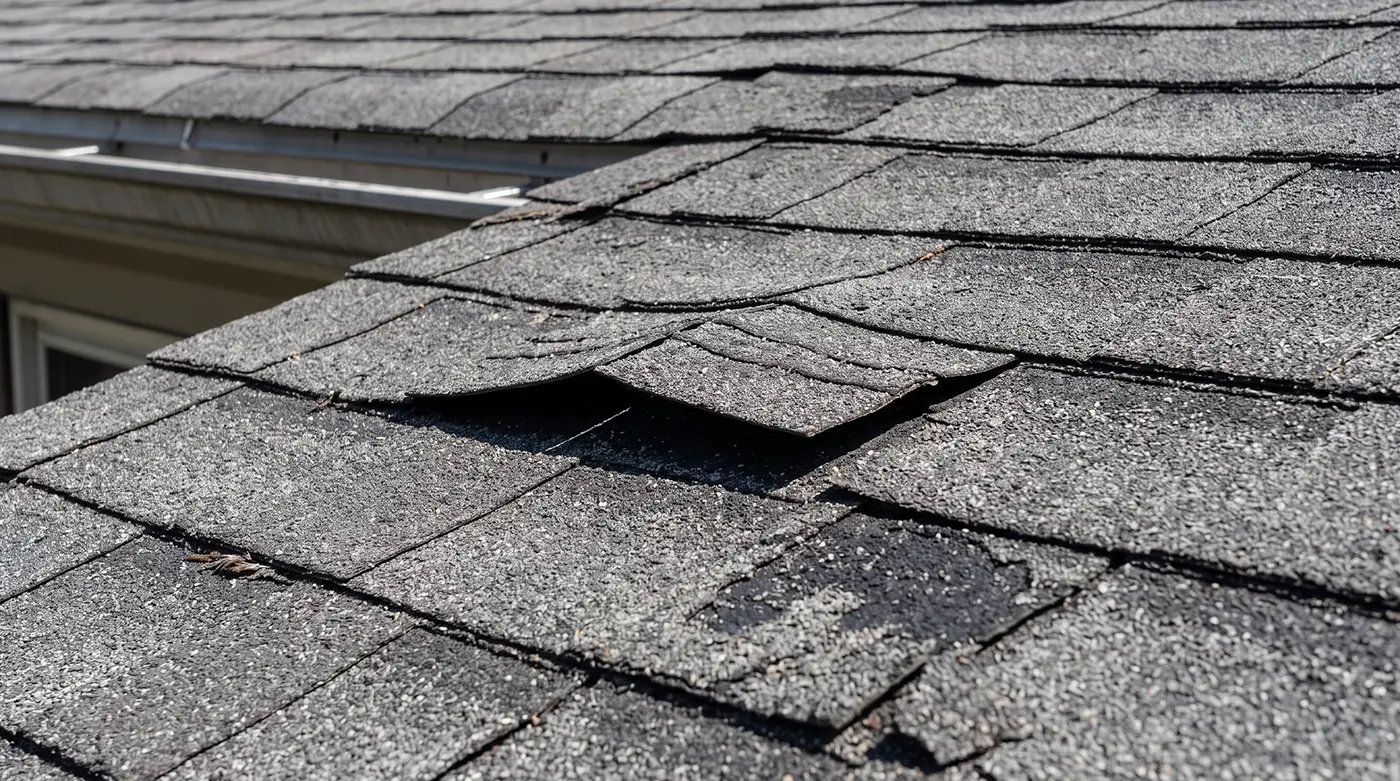
Visible Shingle Damage That Requires Attention
On asphalt-shingle roofs, we look for several specific conditions:
- Missing or displaced shingles: Open areas may expose underlayment and fasteners to rain.
- Lifted or unsealed tabs: Wind can break the seal between shingles even when the shingle has not blown off.
- Cracked, torn, or creased shingles: A crease can indicate wind uplift, while cracks and tears can create pathways for moisture.
- Curling or buckling: Distortion may reflect aging, moisture, installation conditions, or heat-related movement and should be evaluated in context.
- Localized granule loss: Bald areas leave more of the asphalt surface exposed. Granules collecting near downspout outlets can also indicate surface wear, although some loose granules are normal with newer shingles.
- Impact marks after hail: The Insurance Institute for Business & Home Safety identifies three primary hail-damage modes on asphalt shingles: denting, tearing or breaching, and displaced granules.
When damage is isolated and the surrounding roof remains serviceable, targeted roof repair services may be appropriate. Widespread deterioration, repeated leaks, or extensive storm damage may justify comparing repair with a full roof replacement.

Inspect Flashing, Valleys, Vents, and Roof Penetrations
Many roof leaks develop around transitions rather than in the middle of a shingle field. We inspect step flashing at walls, chimney flashing, plumbing vent boots, skylight curbs, valleys, drip edges, and other roof penetrations.
Watch for rust, open seams, lifted flashing, missing fasteners, cracked rubber pipe boots, separated sealant, or metal that has pulled away from masonry or siding. A small opening at one penetration can admit water that travels along roof decking or framing before appearing indoors far from the original entry point.
Check Gutters, Fascia, Soffits, and Roof Edges
Roof edges reveal problems that are easy to miss from inside the home. Look for bent or detached drip edge, loose fascia, sagging gutters, overflow staining, deteriorated wood, or soffit discoloration. Accumulated debris can also obstruct drainage and keep moisture concentrated around the eaves.
After a storm, loose edge metal or displaced shingles should be evaluated promptly because an already weakened roof edge may become more vulnerable during subsequent high winds.
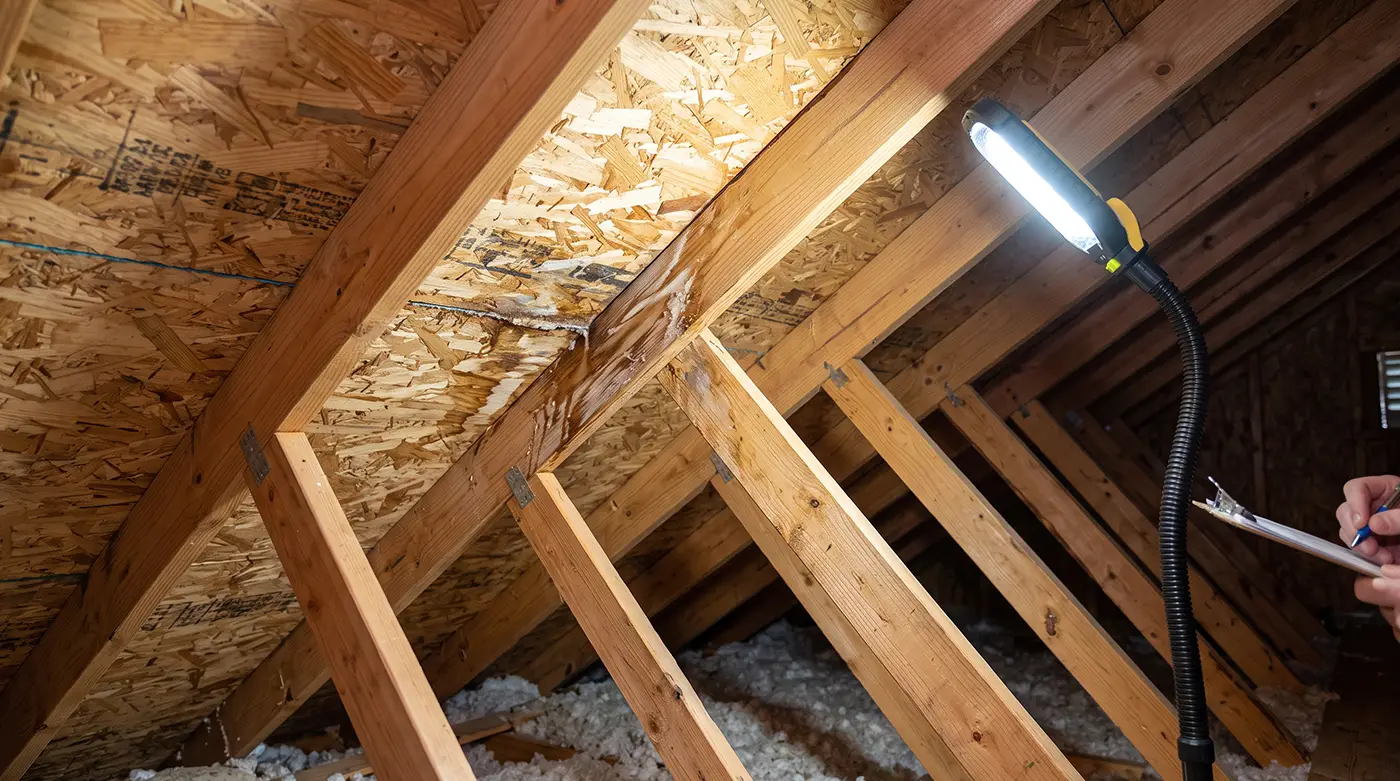
Look Inside the Attic for Hidden Roof Damage
A roof can appear acceptable from the street while water is already entering the assembly. In an accessible attic, we look for damp insulation, darkened roof sheathing, rusted nail tips, water tracks, mold-like growth, or daylight through unintended openings.
Ceiling stains do not necessarily sit directly beneath the roof defect. Water can travel along rafters, fasteners, decking, underlayment, or framing before dripping into the living space. If you see active moisture or recurring staining, professional roof leak repair should focus on tracing the entry point rather than treating only the visible interior symptom.
When Visible Damage Calls for a Professional Roof Inspection
Schedule a professional roof inspection when you find missing shingles, exposed underlayment, sagging roof sections, damaged flashing, repeated ceiling stains, storm-impact marks, or deterioration across multiple areas.
We also recommend an inspection after significant wind, hail, falling branches, or any event that visibly changes the roof. A professional assessment should document the location, type, and extent of damage and determine whether the condition is cosmetic, suitable for repair, or evidence of a larger roofing-system problem.
The inspection should consider shingles or membrane, flashing, penetrations, roof edges, drainage, accessible decking, and interior evidence together. Homeowners who notice suspicious damage can contact our roofing team and schedule an inspection before minor defects develop into larger water-intrusion problems.

Conclusion
Visible roof damage is easiest to control when it is identified early and evaluated as part of the entire roofing system. Missing or lifted shingles, damaged flashing, deteriorated roof edges, hail marks, attic moisture, and recurring stains are all reasons to investigate further. We recommend documenting visible changes after storms and arranging a professional inspection whenever damage is widespread, difficult to access, or associated with water intrusion.
FAQ
What are the most common visible signs of roof damage?
Common signs include missing or lifted shingles, cracks, creases, localized granule loss, damaged flashing, loose edge metal, sagging sections, and water stains in the attic or on interior ceilings.
Can I inspect my roof without climbing onto it?
Yes. A ground-level inspection using binoculars or camera zoom can reveal many visible roofing problems. We do not recommend walking on a roof when it is steep, wet, icy, brittle, storm-damaged, or otherwise unsafe.
Does visible roof damage always mean the roof needs replacement?
No. Localized damage may be repairable when surrounding roofing materials and components remain serviceable. Replacement becomes more likely when deterioration is widespread, leaks repeatedly return, storm damage affects large areas, or multiple parts of the roofing system are failing.