
A cedar roof gives a Maryland home warmth, texture, and historic character, but age alone does not determine its condition. Product grade, installation, ventilation, shade, maintenance, and the time the wood stays wet all matter. For homeowners in Columbia, Elkridge, Clarksville, Fulton, Scaggsville, Laurel, and Baltimore, the key question is how well the specific roof drains and dries.
What Is the Average Lifespan of a Cedar Roof?
The Cedar Shake & Shingle Bureau places the average lifespan of a cedar roof at approximately 30 to 40 years. The USDA Forest Products Laboratory also says properly installed and maintained wood shakes and shingles should last more than 30 years.
These are planning ranges, not guarantees. A high-grade, well-ventilated roof with limited shade may last longer. Poor installation, trapped debris, inadequate drainage, or persistent dampness can cause major repairs much sooner. An on-site inspection therefore provides a better estimate of remaining life than the installation date alone.
Cedar Shingles and Cedar Shakes Are Different
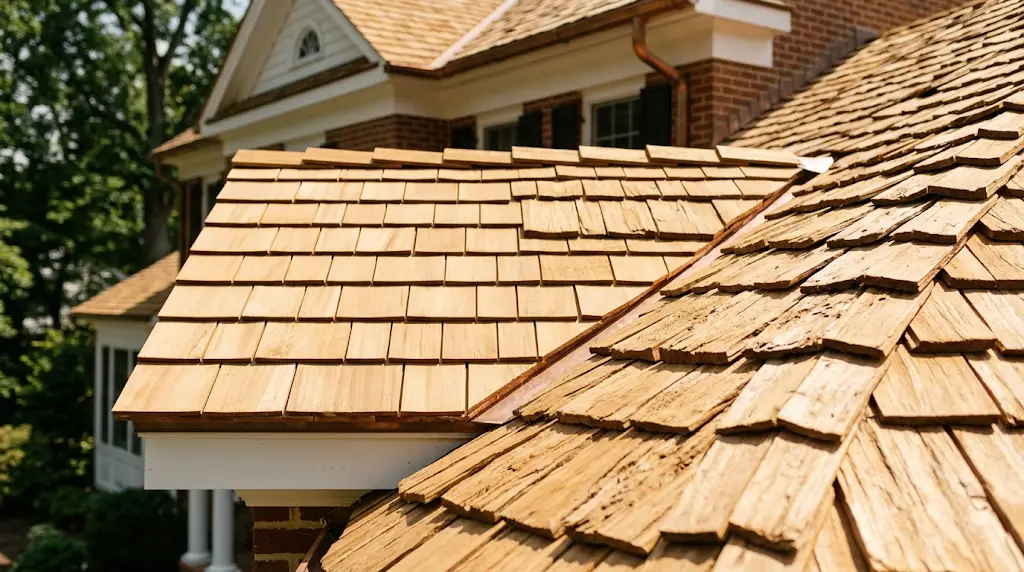
Cedar shingles are sawn on both sides and create a relatively uniform surface. Handsplit-and-resawn shakes have a split face and sawn back, producing a thicker, more rustic appearance. Tapersawn shakes are sawn on both sides but are generally thicker than shingles.
The name alone does not guarantee durability. Grade, heartwood content, grain orientation, thickness, treatment, exposure, and installation quality matter more. Ask for the exact product type, grade, treatment, installation specification, and warranty in writing.
Why Central Maryland Conditions Matter
The National Weather Service’s BWI precipitation record gives a 1991–2020 annual precipitation normal of 45 inches. Central Maryland also has humid summers, thunderstorms, winter freezing, and repeated wet-dry cycles. Cedar can perform well here, but it must drain and dry.
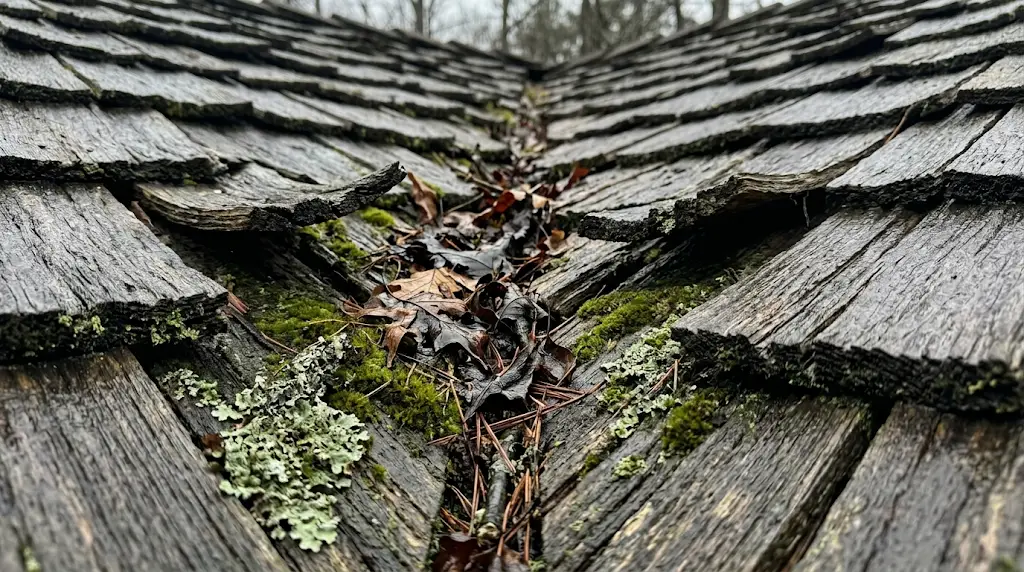
Exposure varies within the same neighborhood. A north-facing slope below mature trees in Wilde Lake, Oakland Mills, or Long Reach may stay damp longer than an open roof nearby. On wooded lots in Clarksville, Fulton, or Scaggsville, debris can collect in valleys and between pieces. Dormers, chimneys, walls, and older additions in Elkridge or Baltimore may create additional flashing trouble spots.
What Determines How Long a Cedar Roof Lasts?
Product Quality
Higher grades containing clear heartwood and vertical grain generally resist decay and movement better than lower grades with more sapwood, defects, or flat grain. Preservative-treated cedar may be useful in humid conditions when it is compatible with the roof system and local requirements.
Installation and Flashing
Correct spacing allows cedar to expand and contract. Course exposure, offset, corrosion-resistant fasteners, underlayment, eave protection, valleys, chimney flashing, and wall flashing all affect performance. Because shakes and shingles use different installation methods, contractors should follow the product instructions, cedar-specific standards, and current code.
Ventilation and Drying
A ventilated attic helps the assembly dry. Depending on the design, a ventilated underlayment or rain-screen approach may also improve airflow behind the cedar. USDA guidance notes that ventilation between cedar and solid sheathing can improve performance in humid regions.
Shade, Debris, and Repairs
Leaves, needles, twigs, and moss hold moisture and may interfere with drainage. Overhanging limbs also reduce sunlight and airflow. Damaged pieces and flashing defects should be repaired before moisture reaches the roof deck, insulation, or interior finishes.

A Practical Cedar Roof Maintenance Plan
Review the roof from the ground in spring and fall and after strong wind or hail. Look for missing pieces, new gaps, lifted sections, debris piles, gutter overflow, damaged flashing, and staining below roof-to-wall connections. Avoid unnecessary foot traffic because aging cedar can split.
Keep gutters and downspouts open, and do not discharge an upper downspout directly onto a lower cedar slope. Have leaves and branches removed without damaging the wood. The CSSB maintenance guidance warns against sealing a cedar roof because moisture must be able to evaporate.
Aggressive pressure washing is also risky. The USDA maintenance report says it is rarely necessary and can remove wood fiber, reducing roof life. When cleaning is justified, use a professional experienced with cedar roofing.
Repair or Replace?
Localized repair may be appropriate when damage is limited to several pieces, one flashing detail, or a small section and the surrounding wood remains firm. Replacement becomes more likely when splitting, erosion, curling, softness, or decay is widespread; several slopes leak; the sheathing is damaged; or repairs are becoming frequent.
Gray color alone does not mean failure. Cedar naturally changes color as it weathers. More important signs are loss of thickness, soft wood, poor drainage, recurring leaks, and an assembly that remains damp long after rain.
Local Approvals to Check Before Work Begins
In Columbia, each of the ten villages has a community association. The Columbia Association explains that village covenants set exterior-alteration standards. Before changing cedar to another material, color, or visible profile, contact the correct village association.
Howard County lists the 2024 International Residential Code among the codes effective September 7, 2025. Confirm applicable requirements through the county’s Adopted Codes page.
Properties in the Lawyers Hill Historic District in Elkridge may also require a Certificate of Approval for exterior alterations. Homeowners can review the process through Howard County’s Historic Planning resources.
For a Baltimore City property in a local historic district or on a landmark list, confirm review requirements with the Commission for Historical and Architectural Preservation before ordering materials. Baltimore City applications involving designated historic properties may be forwarded to CHAP for review and approval.
FAQ
Can a Cedar Roof Last 50 Years?
It can in favorable conditions, but 50 years should not be treated as the standard. The more defensible general range is about 30 to 40 years, with actual performance depending on material grade, installation, exposure, ventilation, and maintenance.
Is Moss on Cedar Only a Cosmetic Issue?
No. Heavy moss retains moisture and can interfere with drainage. It may also hold soil and organic material against the wood. Moss should be evaluated and removed using cedar-appropriate methods rather than aggressive pressure washing.
Should Cedar Shingles Be Sealed?
No. The CSSB advises against sealers or waterproofers that lock moisture into the roof. Cedar needs to release moisture as weather conditions change. A compatible water-repellent preservative may be appropriate in some cases, but only after the roof’s condition, existing treatment, and manufacturer requirements are reviewed.
Can Damaged Cedar Shingles Be Replaced Individually?
Often, yes. Individual pieces or small groups can frequently be replaced when the surrounding roof remains sound. Widespread deterioration, failing flashing, damaged sheathing, or leaks across several slopes may make full replacement more practical.
Do I Need Village or Historic Approval for a Roof Replacement?
Possibly. Columbia village covenants may regulate exterior materials, color, and appearance. Properties in the Lawyers Hill Historic District or Baltimore City historic districts can have additional review requirements. Confirm approvals before signing a material order or changing the visible roof design.
Schedule a Local Cedar Roof Assessment
Remaining roof life should be estimated by inspecting the wood, flashing, ventilation, drainage, attic, and roof deck—not by age alone. KangaRoof serves homeowners in Columbia, Elkridge, Clarksville, Fulton, Scaggsville, Laurel, Baltimore, and Baltimore City. Call (410) 799-1600 or schedule an estimate online