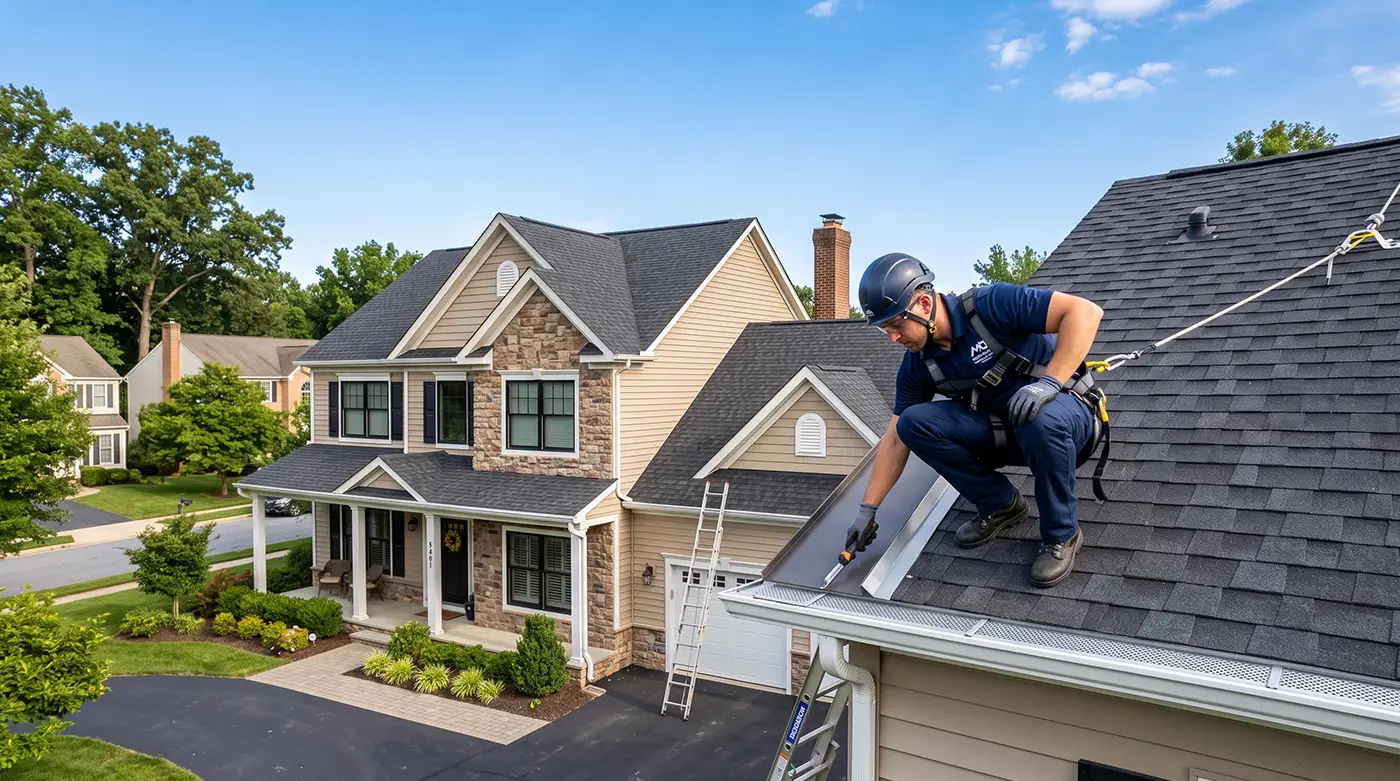

A ceiling leak is rarely just a ceiling problem. Water can enter through damaged shingles, flashing, roof penetrations, or low-slope roofing, then travel along decking, rafters, insulation, and fasteners before appearing indoors. At A1 Roofing’s KangaRoof, located in Columbia, MD, we approach ceiling leaks by controlling immediate water damage, tracing the true entry point, and determining whether targeted roof repair in Columbia, MD or broader roofing work is required.
What to Do Immediately When Your Ceiling Starts Leaking
Fast action can significantly reduce damage to drywall, insulation, flooring, electrical components, and personal property.
First, move furniture, electronics, rugs, and valuables away from the affected area. Place containers beneath active drips and use towels or waterproof coverings to protect surrounding surfaces.
If water is approaching a ceiling light, fan, outlet, or other electrical component, avoid touching the fixture. Electricity should only be shut off when the breaker panel can be reached safely without standing in or crossing water. The American Red Cross electrical safety guidance recommends professional assistance when electrical systems may have been exposed to water.
A swollen or sagging ceiling requires additional caution. Saturated drywall becomes substantially heavier and may fail without warning. Keep people and pets away from the area rather than standing beneath the bulge.
For substantial active leakage, storm damage, missing roofing materials, or water entering multiple rooms, we recommend treating the condition as an emergency and contacting our 24/7 emergency roofing service.
Dry Wet Materials Before Mold Has Time to Develop
Stopping the visible drip is only the first stage of water-damage control. Moisture may remain inside insulation, drywall cavities, roof decking, and framing after the rain stops.
The U.S. Environmental Protection Agency recommends drying wet or damp materials within 24–48 hours because rapid moisture removal can significantly reduce the likelihood of mold growth.
Once the active water source has been controlled, we recommend:
- Removing standing water promptly.
- Increasing ventilation when weather conditions allow.
- Using dehumidifiers to reduce indoor moisture.
- Drying salvageable flooring, wood, and furnishings.
- Removing saturated materials that cannot be thoroughly dried.
- Checking insulation and concealed cavities rather than assuming a dry ceiling surface means the assembly is dry.
Painting over a ceiling stain before the leak and trapped moisture are resolved can conceal continuing damage without correcting it.
Where Ceiling Roof Leaks Commonly Begin
The stain visible inside a room may be several feet away from the actual roof opening because water follows gravity and the path of least resistance.
Common roof leak sources include:
Damaged or Missing Shingles
Wind can lift shingles, break seals, expose fasteners, or remove roofing materials completely. Cracked or deteriorated shingles can also allow water to reach the underlayment and roof deck.
Failed Flashing
Roof flashing protects vulnerable intersections around chimneys, walls, valleys, skylights, and other transitions. Corrosion, separation, improper installation, or failed sealant can create a small opening that produces significant interior leakage during wind-driven rain.
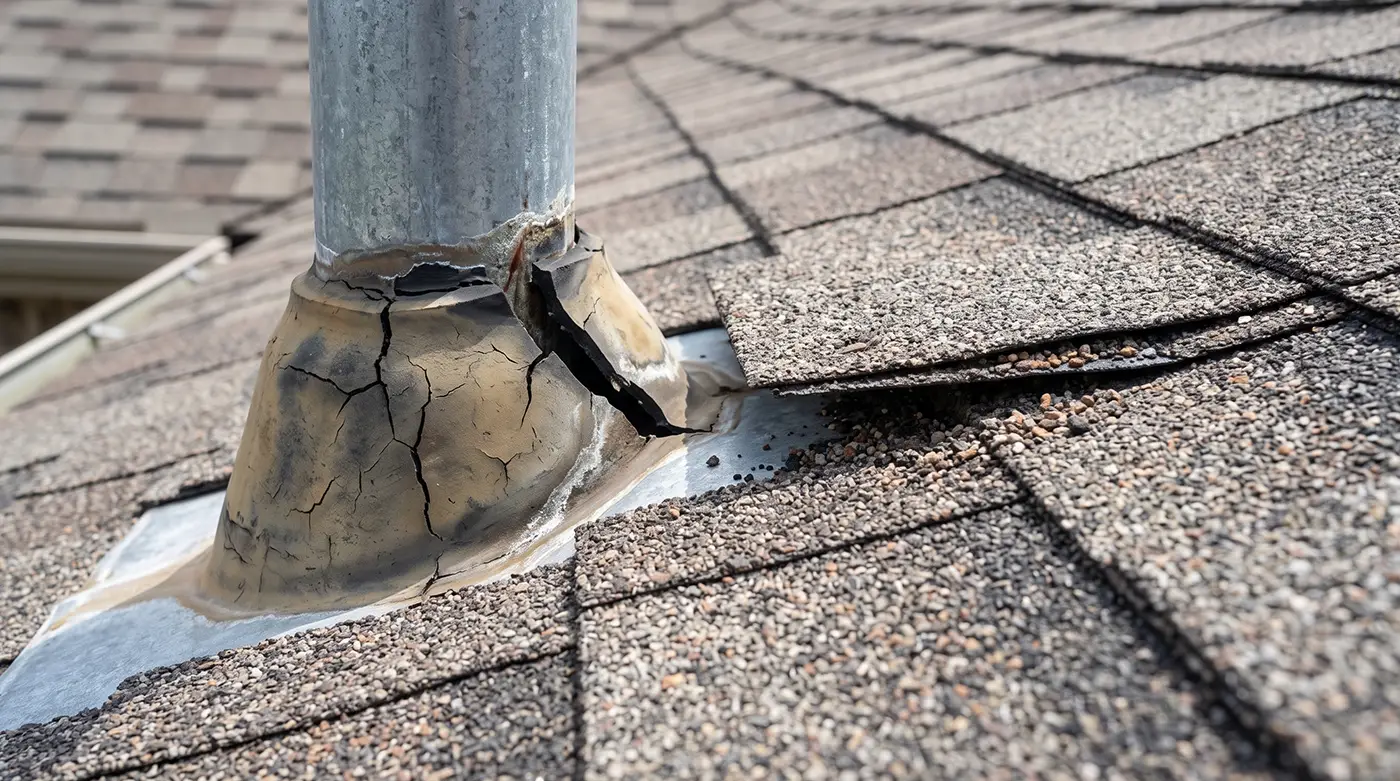
Plumbing Vent and Pipe Boot Leaks
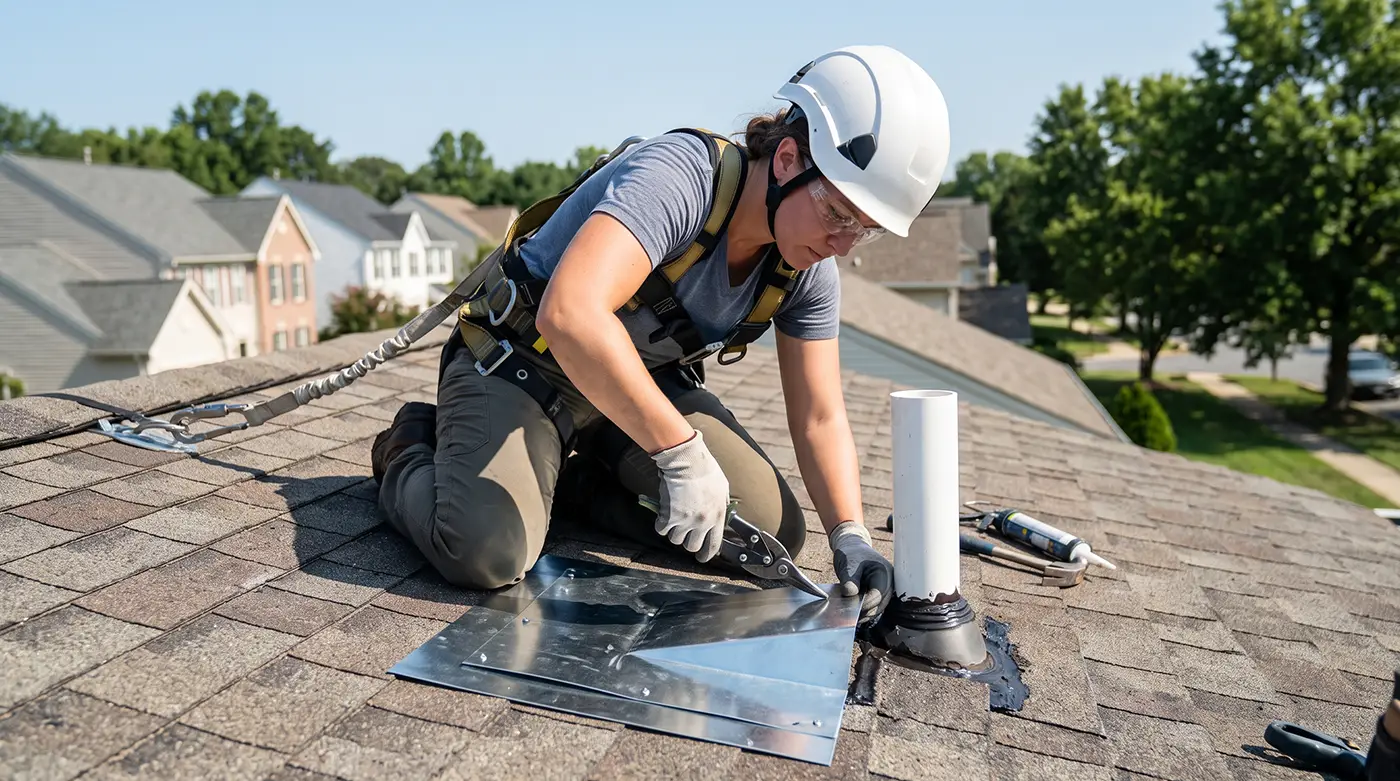
Rubber pipe boots can crack as they age, while metal components may corrode or separate. Water entering around a plumbing vent frequently travels down the pipe or roof framing before reaching the ceiling.
Skylight and Chimney Leaks
Leakage near a skylight does not automatically mean the skylight itself has failed. Flashing, surrounding shingles, sealants, or water traveling from farther upslope may be responsible. Chimneys present similar diagnostic challenges.
Flat and Low-Slope Roof Problems
TPO, EPDM, PVC, and modified bitumen systems can develop leaks around seams, penetrations, flashing, punctures, or drainage areas. Our flat roofing services address these systems differently from conventional asphalt-shingle roofs.
Why the Ceiling Stain Is Not the Leak Location
Finding the interior stain and sealing the roof directly above it often fails because roof leaks rarely travel in a perfectly vertical line.
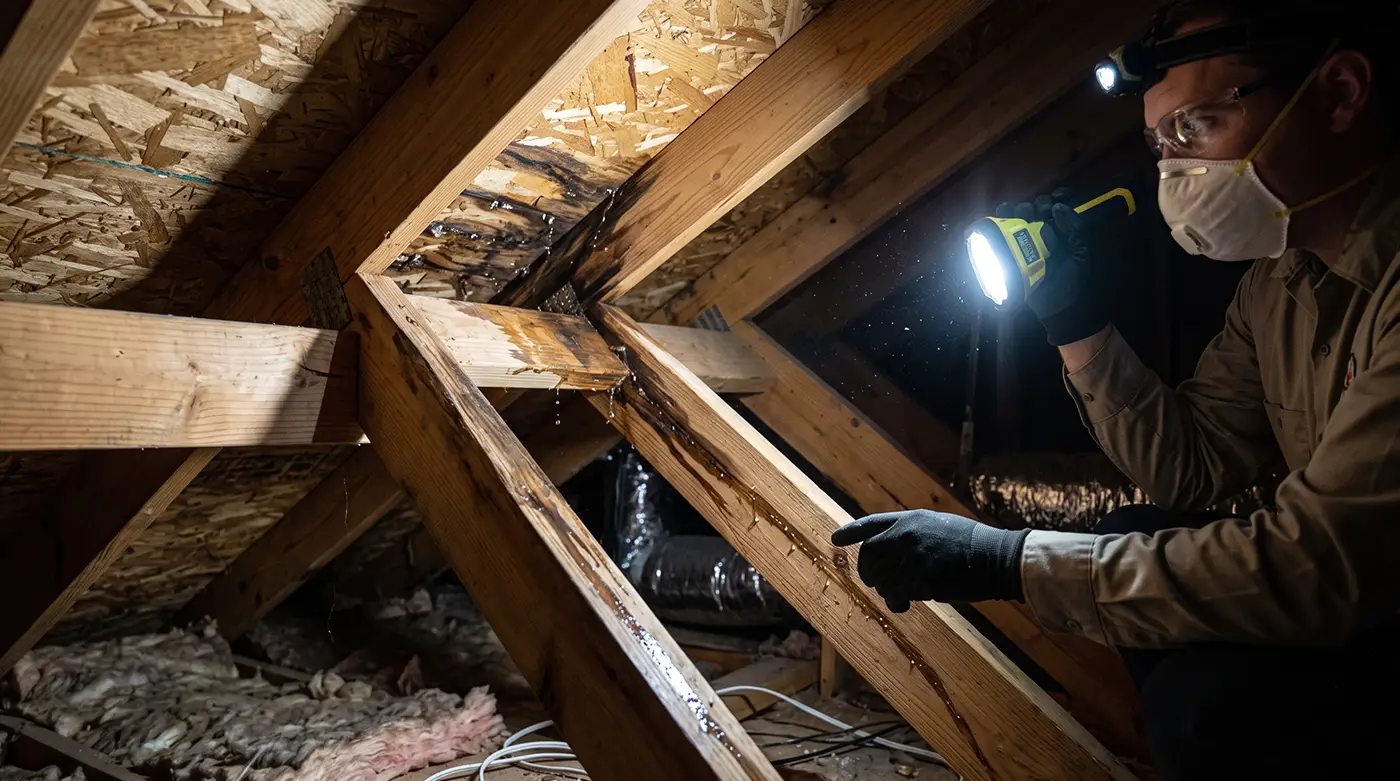
During a professional inspection, we evaluate the roof surface together with accessible attic or interior evidence. Water staining on decking, damp insulation, rusted fasteners, moisture trails, deteriorated flashing, penetrations, and previous repair areas can help establish the route water followed.
Our roof leak repair service focuses on correcting the source rather than simply treating the visible symptom.
Repair the Roof Before Repairing the Ceiling
Interior restoration should generally follow roof repair and moisture removal. Otherwise, new drywall, insulation, paint, or trim may be damaged by the next rainfall.
A localized repair may be appropriate when the leak originates from a repairable component and the surrounding roofing remains serviceable. When leakage is recurring, deterioration is widespread, or multiple roof areas have failed, we may recommend comparing repair costs with roof replacement options.
Homeowners should also photograph visible water stains, damaged belongings, roofing damage, and affected rooms before cleanup when conditions permit. Documentation can be useful if an insurance claim becomes necessary, although coverage depends on the individual policy and insurer.

CONCLUSION
A ceiling leak requires two solutions: controlling indoor water damage and permanently correcting the source of the roof leak. We recommend protecting the affected area immediately, avoiding electrical and structural hazards, drying wet materials within the critical 24–48-hour period, and having the roofing system professionally inspected. For leaking roofs in Columbia and surrounding Maryland communities, homeowners can contact A1 Roofing’s KangaRoof to identify the source, compare practical repair options, and prevent repeated water intrusion.
FAQ
Can a small roof leak cause major ceiling damage?
Yes. A small opening can repeatedly wet insulation, roof decking, framing, and drywall before visible dripping begins. Repeated moisture exposure can enlarge ceiling stains, damage finishes, deteriorate building materials, and create conditions favorable to mold growth.
Should we repair a ceiling leak ourselves?
We can safely contain dripping water and begin drying accessible materials, but locating and repairing the roof opening often requires professional inspection. Roof access, wet surfaces, electrical fixtures, sagging drywall, and concealed moisture can introduce significant hazards.
How quickly should a leaking roof be repaired?
An active roof leak should be evaluated as soon as practical. Immediate containment limits interior damage, while prompt roof repair prevents additional water from entering during subsequent rainfall. Wet interior materials should ideally be dried within 24–48 hours.