
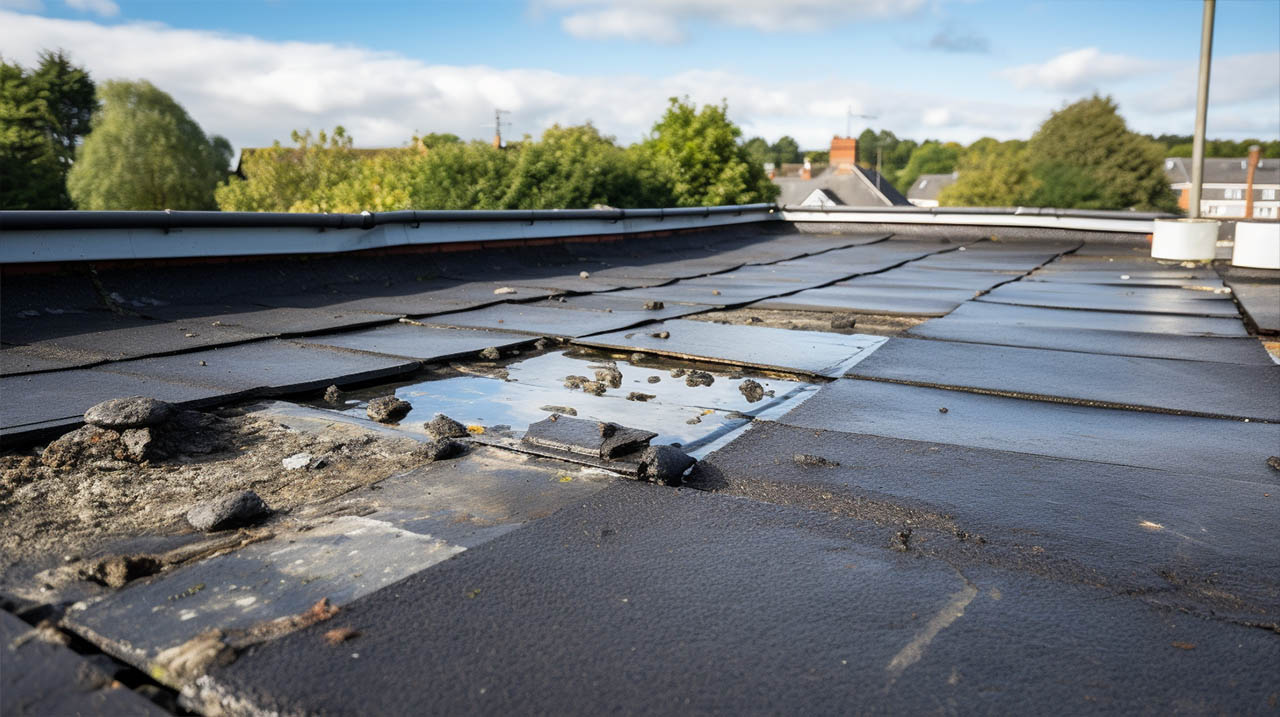
Recurring puddles, open seams, and fresh ceiling stains can all signal a flat roof problem. The right response depends on the roof system and whether water has reached the insulation or deck. Start by noting what changed and when. A roofer can then trace the issue and determine how far the damage extends.
Seven signs your flat roof needs attention
| What you notice | What it can mean | What to do next |
|---|---|---|
| Recurring ponding | On any low slope system, recurring pools may point to a blocked drain or scupper, a low spot, or a change in the roof’s slope. | Note where and when water collects. Ask the roofer to check drainage and any change in the roof surface. |
| Cracks, splits, or blisters | Asphalt based systems such as modified bitumen can show blisters or surface splits. A small intact blister and a split that exposes underlying layers call for different responses. | Leave the surface intact and have the affected area inspected. |
| New stains or active leaks | Water can move below any membrane before appearing indoors. A stain can develop away from the opening. Repeated leaks can leave insulation wet. | Arrange a prompt inspection. Keep clear of a bulging ceiling or water near electrical equipment. |
| Peeling or worn coating | On a coated roof, a surface change may be cosmetic or may expose the material underneath. | Ask whether the coating is still bonded and what condition the underlying roof is in before considering another coat. |
| New sagging or movement | A visible change in the roofline or a sagging ceiling may indicate a deck or structural issue. | Keep people away from the affected area and arrange prompt professional assessment. If there is immediate danger, leave by a safe route and call 911. |
| Wrinkles, loose seams, or lifting flashing | TPO and PVC typically use welded seams. EPDM commonly uses compatible taped seams. A wrinkle can be superficial, while an open seam or displaced flashing can let water in. | Ask the roofer to check seams, wall flashing, edges, and penetrations. The installed material determines the repair detail. |
| An aging roof with repeated repairs | Installation age helps with planning. Repeated leaks, multiple patch areas, and widespread wear give more direct information about the roof’s condition. | Gather installation and repair records and ask for a condition assessment before budgeting for replacement. |
When to repair and when to consider replacement
A localized puncture, failed seam, or damaged flashing may be repairable if the adjacent roofing is sound and the assembly is dry. Several failed areas, persistent water entry, wet insulation across a wider section, or deteriorated decking can point to a larger job. Coating suitability depends on the existing system, moisture, and adhesion. See our guide to flat roof repair options for how patches, coatings, recover, and replacement differ.
What a flat roof inspection checks
The roofer starts with the interior symptoms and checks seams, flashings, penetrations, perimeter edges, drains, and scuppers. If moisture may have spread beneath the membrane, the roofer may recommend a moisture survey or a targeted opening to check the insulation and deck. One photo can help describe a symptom, while the condition of the assembly determines the repair scope. Carlisle’s flat roof inspection guidance describes the areas a crew typically checks.
See the details on a Columbia flat roof
Our Columbia TPO project gallery shows membrane installation and seam work on a completed recover project. It illustrates where seams are located and how they fit into the roof system. For routine care, see our flat roof maintenance guide.
If you see recurring puddles, a lifting edge, or water inside, request a roof assessment. Tell us when the issue appeared and where you see it. Learn more about our flat roofing services in Columbia and surrounding areas.