Standing seam metal roofing combines long service life, weather resistance, low maintenance, and clean architectural lines. At A1 Roofing’s KangaRoof in Columbia, MD, we evaluate the entire roof assembly—not just the panel—to determine whether metal roofing fits the home, roof geometry, ventilation, and budget.
What Is Standing Seam Metal Roofing?
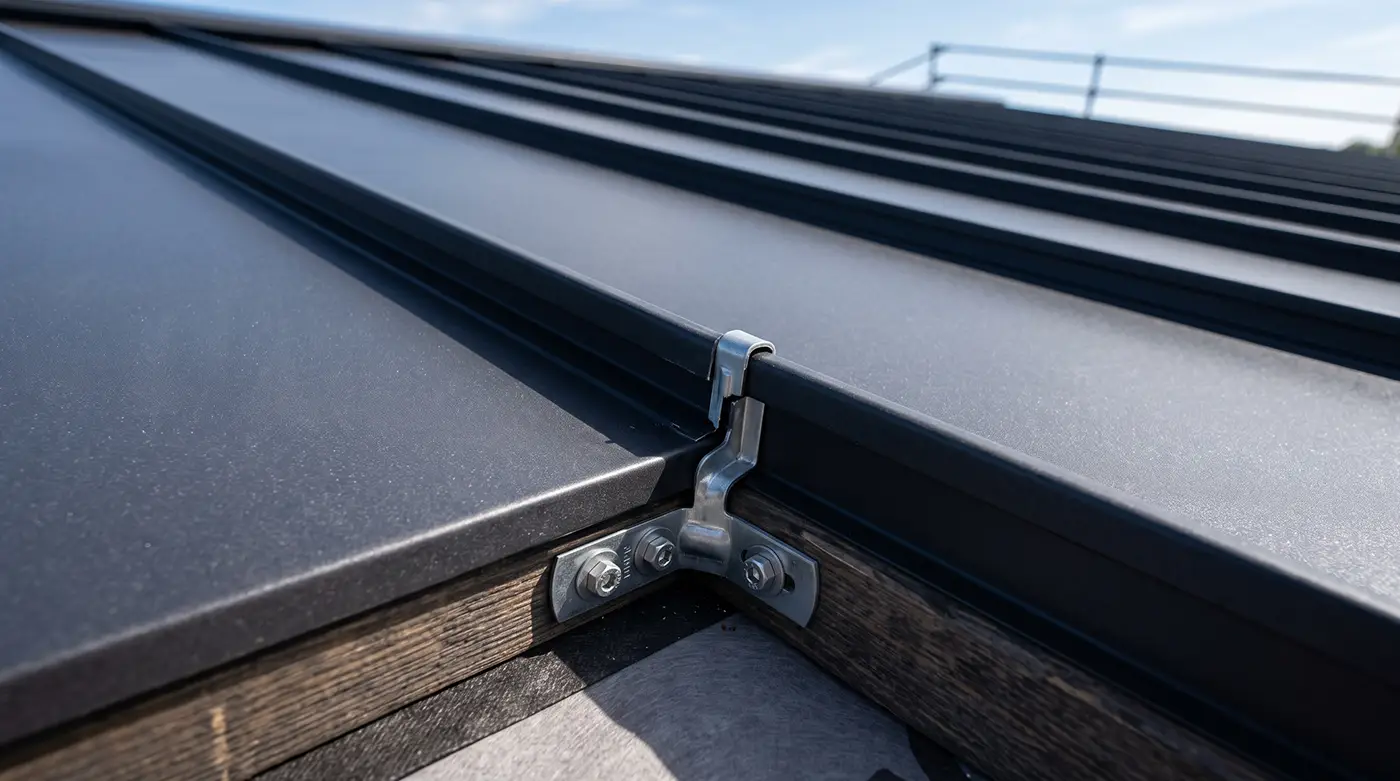
Standing seam roofs use long metal panels joined by raised vertical seams running from eave to ridge. Unlike exposed-fastener panels, most standing seam systems secure the panels with concealed clips beneath the seams instead of screws driven through the weathering surface.
This is a major performance advantage. Metal expands in heat and contracts as temperatures fall. Properly selected clips allow controlled panel movement while keeping the roof anchored. In its standing seam clip guidance, the Metal Construction Association explains that these attachment systems must “allow for thermal expansion and contraction” while protecting against attachment fatigue.
Why Standing Seam Metal Roofs Last for Decades
A properly designed standing seam metal roof can provide decades of service because its attachment points are protected beneath the seams. Longevity still depends on the metal substrate, coating, panel thickness, drainage, flashing, ventilation, and installation quality.
Residential systems commonly use galvanized or aluminum-zinc-coated steel, often in 24- or 26-gauge panels. Premium PVDF finishes are frequently selected where long-term color retention and resistance to chalking matter. Critical details include valleys, eaves, ridges, sidewalls, chimneys, skylights, and pipe penetrations; high-quality metal cannot compensate for poorly designed flashing.
If the existing roof is approaching the end of its useful life, our roof replacement service begins with an inspection of the roof condition, ventilation, flashing, and other factors that influence the new system.
Standing Seam Metal Roofing in Maryland Weather
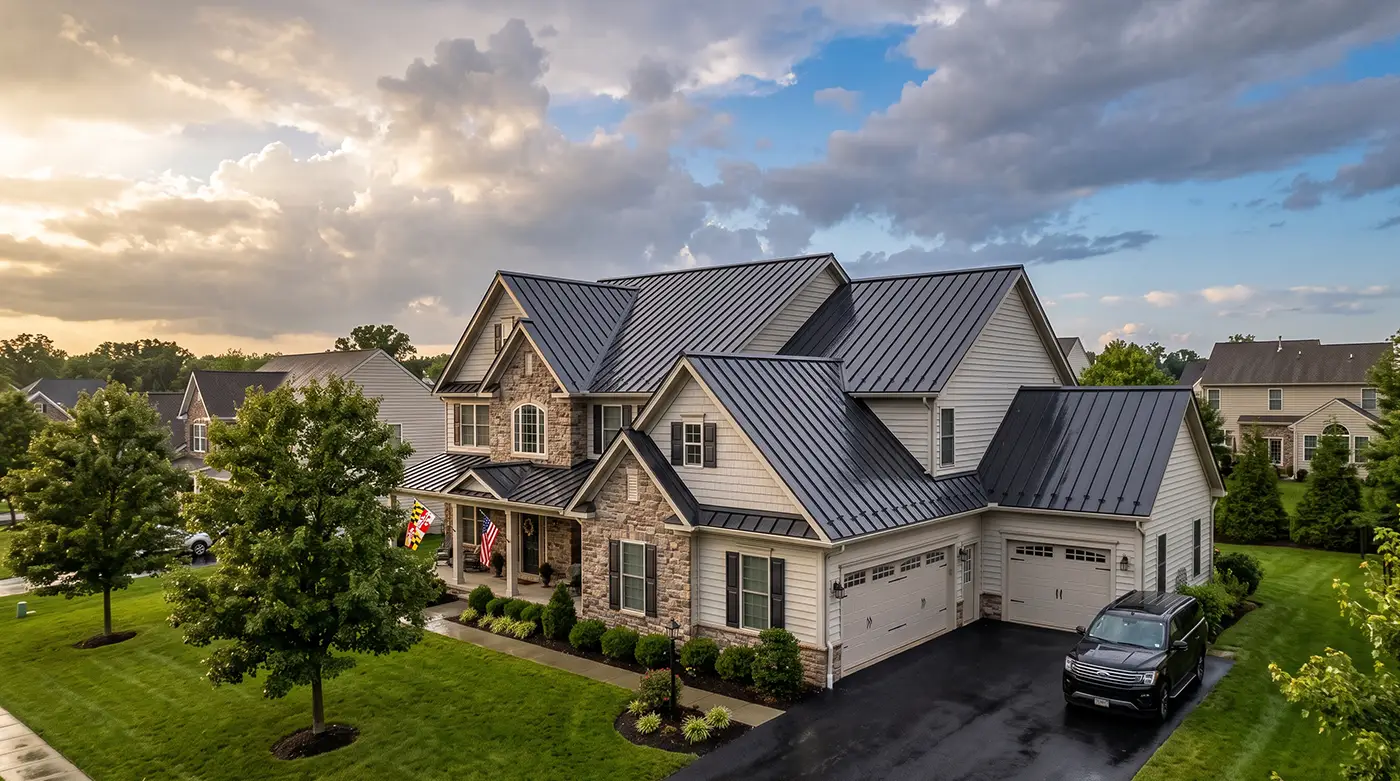
Maryland roofs must handle summer heat, humidity, heavy rain, thunderstorms, winter freezes, snow, and repeated temperature swings. Standing seam roofing is well suited to these conditions when the complete assembly is engineered correctly.
Raised seams help manage water, concealed fastening reduces exposed roof penetrations, and metal does not absorb water or rot. Clips also allow panels to respond to thermal expansion and contraction instead of forcing movement against exposed screws and washers.
Wind resistance should never be reduced to one universal number. Panel profile, seam configuration, clip spacing, fasteners, deck attachment, roof height, perimeter zones, and tested assembly ratings all affect wind-uplift performance. We evaluate the complete system rather than assuming every metal panel provides identical storm resistance.
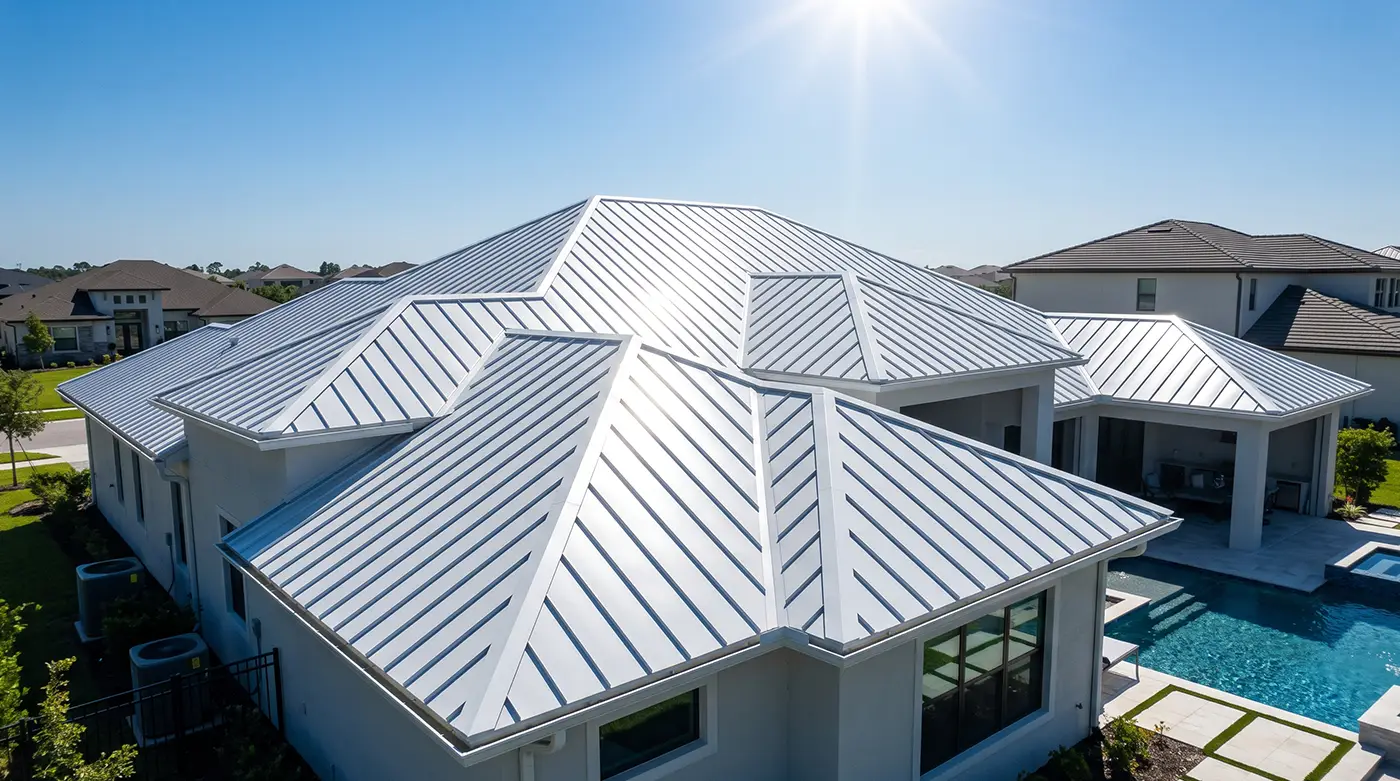
Energy Efficiency Depends on the Metal Roof Finish
Metal roofing can reduce roof heat gain, but metal alone does not automatically make a roof energy efficient. Surface finish matters.
According to U.S. Department of Energy cool-roof guidance, cool roofs depend primarily on solar reflectance, durability of that reflectance, and thermal emittance. DOE notes that qualifying cool roofs can remain up to 60°F cooler than traditional black roofs during summer conditions, although actual savings depend on climate, insulation, roof construction, and HVAC efficiency.
For Maryland homes, reflective metal roofing works best as part of a complete building-envelope strategy that also considers attic insulation, air sealing, and ventilation.
Standing Seam Metal Roofing vs. Asphalt Shingles
Architectural asphalt shingles remain practical when lower upfront cost is the priority. Standing seam metal typically costs more initially because the panels, fabrication, flashings, clips, accessories, and installation are more specialized.
The long-term comparison is different. Metal panels are not dependent on a granulated asphalt surface and do not crack or shed granules as they age. Maintenance generally focuses on flashing, sealants, penetrations, drainage, coatings, and physical damage instead of widespread deterioration across the roof surface.
Homeowners comparing materials can review our residential roofing services or schedule a roof installation assessment before selecting a roofing system.
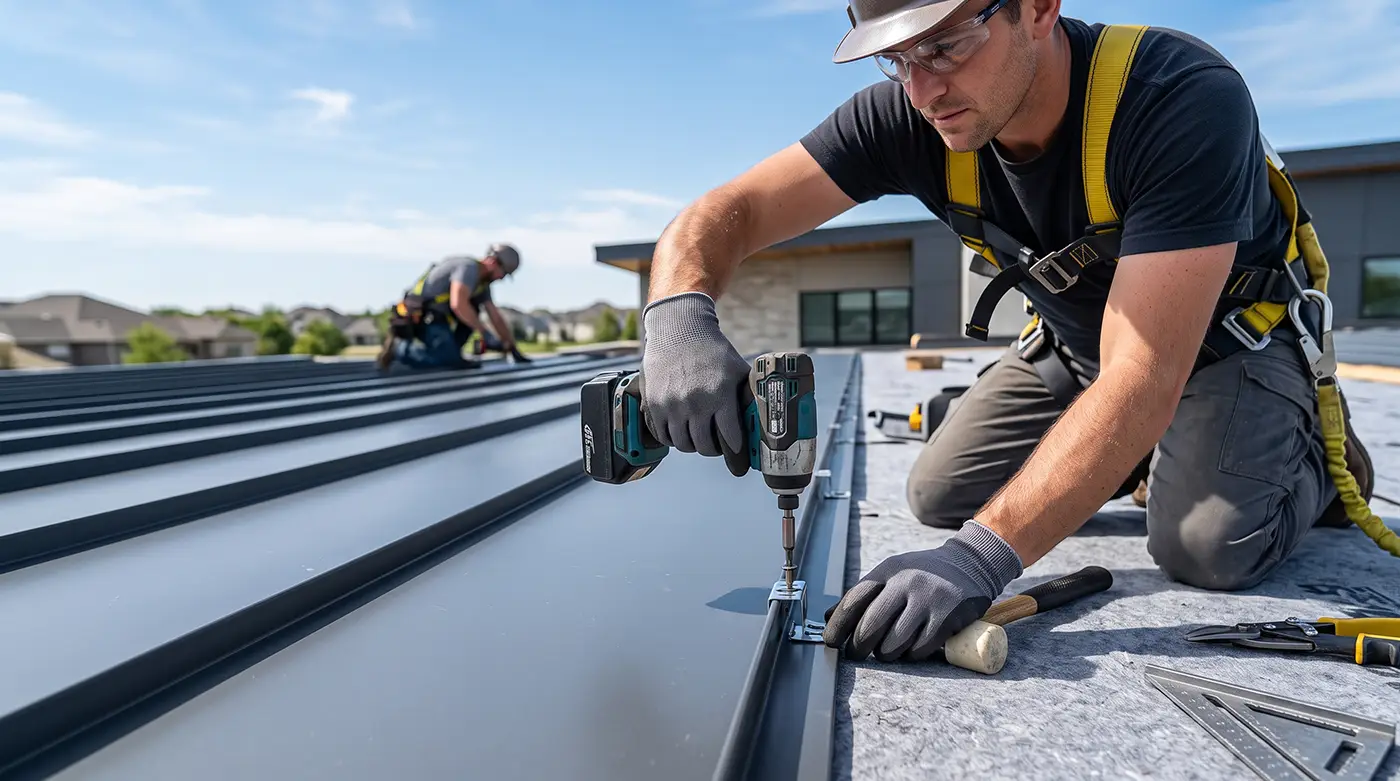
Installation Details That Determine Metal Roof Performance
The strongest standing seam roof is a complete system. We focus on:
- Deck condition: Damaged, soft, or uneven decking should be corrected before installation.
- Underlayment: The product must be compatible with the metal system and expected roof temperatures.
- Panel specification: Gauge, width, seam height, and seam configuration influence performance.
- Flashing: Valleys, walls, chimneys, skylights, and penetrations require metal-specific detailing.
- Thermal movement: Clip selection and attachment layout must allow panels to move as designed.
- Drainage: Eaves, roof transitions, gutters, valleys, and snow-management requirements should be planned together.
- Finish: Coating quality affects reflectivity, fading, appearance, and corrosion protection.
When Is Standing Seam Metal Roofing Worth It?
Standing seam metal roofing is especially compelling for homeowners planning to keep a property long-term, owners seeking a premium architectural appearance, and projects where reducing the likelihood of repeated roof replacement is a priority.
It can also work particularly well with future solar installations. Compatible mounting systems can clamp equipment directly to certain standing seams, potentially avoiding penetrations through the metal panel itself.
To compare metal roofing with other replacement options for your property, contact our Columbia roofing team for an inspection and written estimate.

Conclusion
Standing seam metal roofing earns its premium through system design: concealed fastening, controlled thermal movement, durable panels, raised seams, specialized coatings, and purpose-built flashing. For Maryland homes, those details can provide durable protection, lower maintenance demands, strong architectural appeal, and excellent long-term value.
FAQ
How long does a standing seam metal roof last?
A quality standing seam metal roof can remain in service for several decades. Actual lifespan depends on the metal substrate, protective coating, environmental exposure, roof design, installation quality, drainage, and maintenance.
Is standing seam metal roofing worth the higher cost?
It can be when durability, reduced replacement frequency, low maintenance, and architectural appearance matter more than achieving the lowest initial price. The most useful comparison is total life-cycle value rather than material cost alone.
Can standing seam metal roofing handle heavy rain, wind, and snow?
Yes, when the complete assembly is designed and installed for the building. Seam configuration, clip spacing, deck attachment, flashing, drainage, and tested wind-uplift performance all influence how effectively a standing seam roof handles severe weather.