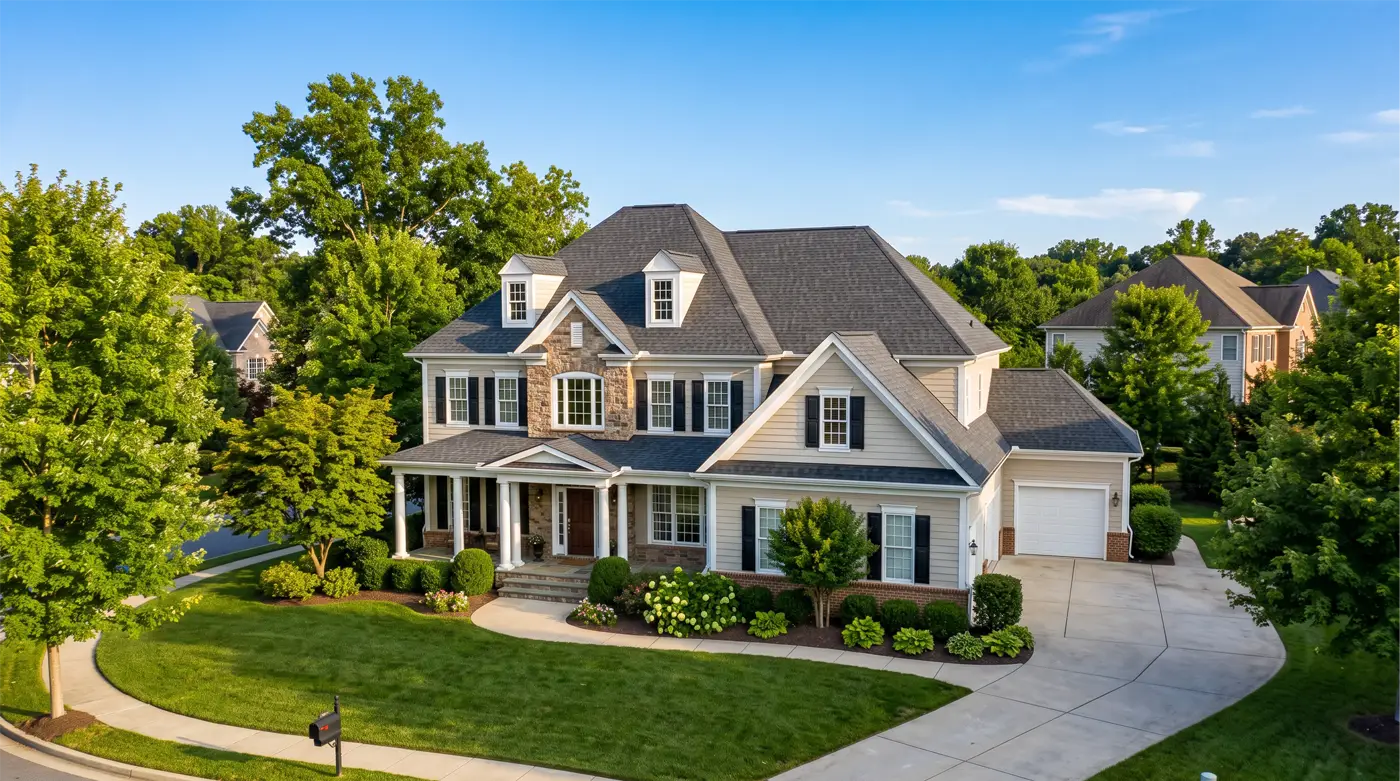
Choosing between a hip roof and a gable roof affects far more than architectural style. Roof geometry influences wind resistance, installation cost, attic volume, ventilation, drainage, maintenance, and future roof replacement complexity. At A1 Roofing’s KangaRoof in Columbia, MD, we evaluate roof shape together with pitch, framing, decking, ventilation, and roofing materials because the complete system determines how well a home handles Central Maryland weather. Homeowners planning a major roofing project can review our residential roofing services before comparing the two designs.
What Is a Hip Roof?
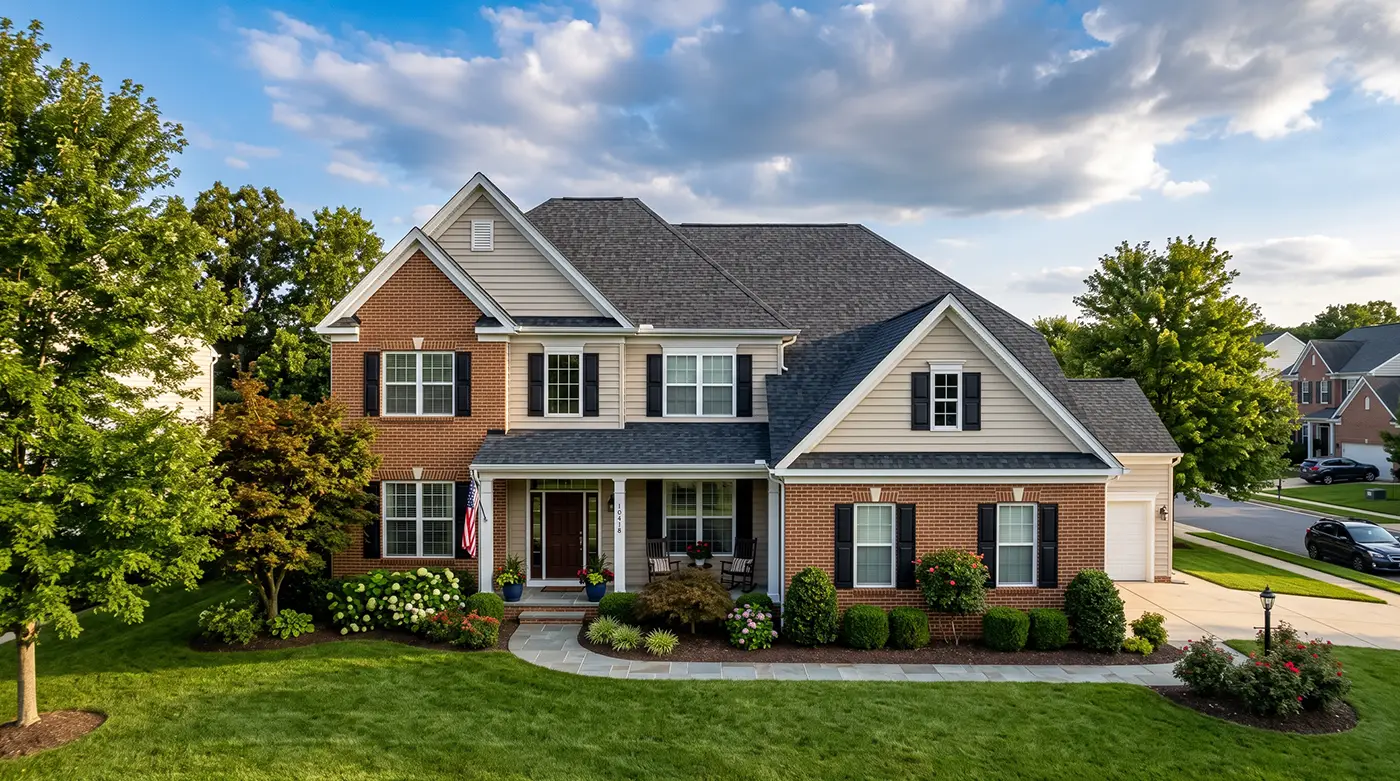
A hip roof slopes downward toward the exterior walls on all sides. A basic rectangular hip roof normally has four roof planes: two larger trapezoidal sections and two triangular sections. The diagonal intersections where these planes meet are called hips, while the horizontal line at the highest point is the ridge.
Because there is no large vertical gable end exposed above the exterior walls, wind flows around a hip roof differently than around a conventional gable roof. The design also distributes roof loads through several sloping planes.
Hip roofs commonly appear on ranch homes, Colonial-inspired houses, modern suburban properties, and homes where a balanced roofline is an architectural priority.
Advantages of Hip Roofs
The primary structural advantage is wind performance. The Federal Emergency Management Agency states that hip roofs “generally perform better in high winds” because they have fewer sharp corners and abrupt changes in building geometry.
That distinction matters locally. A National Weather Service storm survey documented an EF-1 tornado with estimated peak winds of 95 mph in Columbia, Maryland, on June 5, 2024.
Hip roofs also provide:
- Sloped surfaces on every side for efficient rain runoff.
- Eaves around much or all of the house, providing consistent architectural lines.
- Good structural stability when framing and roof-to-wall connections are properly designed.
- Multiple roof orientations that may be useful when positioning skylights or solar equipment.
Disadvantages of Hip Roofs
A hip roof generally requires more framing components, angled cuts, hip rafters or trusses, and hip-cap roofing material than a simple gable roof. More roof intersections also mean more areas that require careful installation.
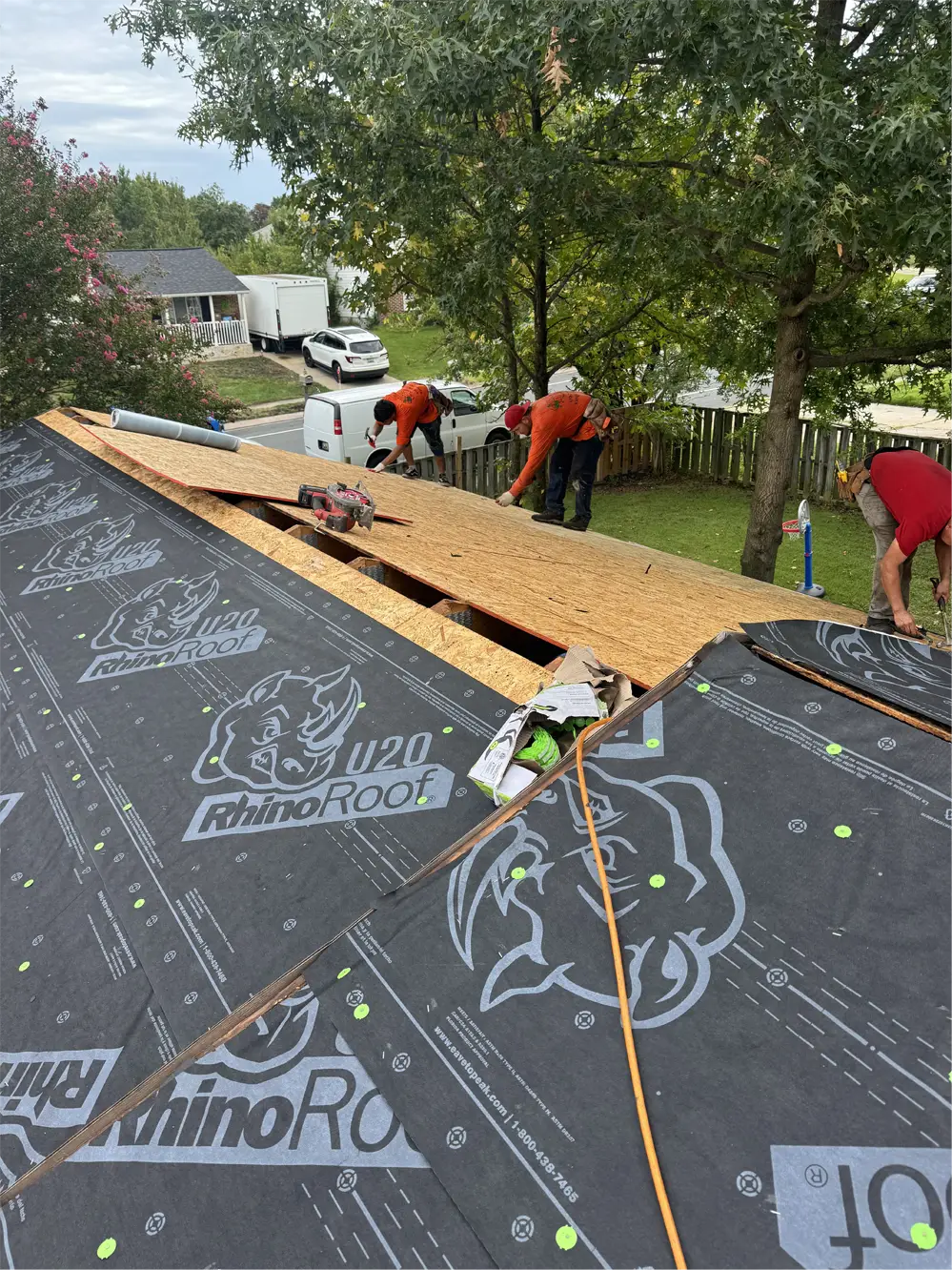
Complex hip-and-valley designs can contain substantially more flashing and transition points than a basic two-plane roof. Those details become especially important during a roof replacement because poor installation around valleys, hips, penetrations, or adjoining roof sections can create future leak paths.
Hip roofs can also reduce usable attic volume because the roof slopes inward from every exterior wall.

What Is a Gable Roof?
A gable roof consists primarily of two sloping roof planes that meet along a ridge. At each end, the exterior wall extends upward into a triangular section known as the gable end.
This simple geometry is one reason gable roofs are widely used on residential properties. Large rectangular roof planes simplify framing, shingle installation, ventilation planning, and future repairs.
Variations include front-gable, side-gable, cross-gable, and Dutch-gable designs.
Advantages of Gable Roofs
Gable roofs typically require fewer complicated framing connections than hip roofs. A basic gable design therefore tends to be more economical to frame and roof, although actual project cost depends on pitch, size, materials, access, dormers, valleys, and deck condition.
The design also creates several practical advantages:
- More attic volume: Vertical gable ends preserve headroom near each end of the structure.
- Simpler roofing planes: Large uninterrupted surfaces can reduce complicated cuts and transitions.
- Solar-friendly geometry: Rectangular roof planes can provide large continuous areas for photovoltaic panels.
- Straightforward maintenance: Fewer hips and intersections can simplify inspection and targeted repairs.
- Flexible ventilation: Depending on the system, gable roofs can accommodate balanced soffit-and-ridge ventilation as well as other properly designed vent configurations.
Hip Roof vs. Gable Roof: Key Differences
| Factor | Hip Roof | Gable Roof |
| Roof planes | Usually four or more | Usually two |
| Wind exposure | Aerodynamic geometry offers an advantage | Gable ends receive greater wind pressure |
| Construction | More complex | Generally simpler |
| Initial cost | Often higher | Often lower |
| Attic space | Usually reduced | Usually greater |
| Drainage | Water sheds toward multiple sides | Water primarily sheds toward two eaves |
| Roofing details | More hips and angled cuts | Fewer intersections on simple designs |
| Solar layout | Multiple orientations but smaller planes | Large rectangular planes |
| Appearance | Balanced, low-profile look | Strong triangular architectural profile |
Which Roof Handles High Winds Better?
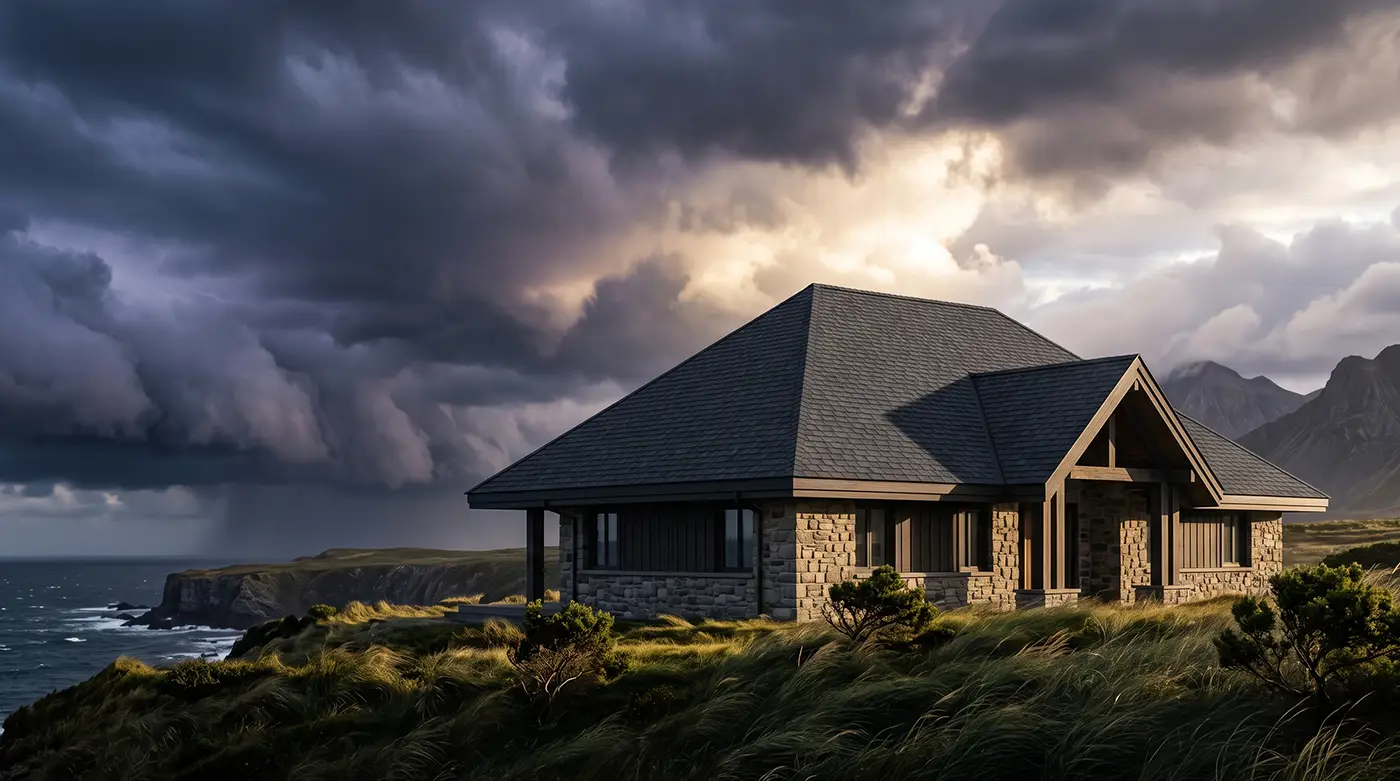
When all other variables are comparable, a properly constructed hip roof generally has an aerodynamic advantage. Wind can travel over and around its sloping surfaces without encountering the same large vertical end wall found on a gable structure.
A gable roof is not inherently weak. Performance depends heavily on structural bracing, roof sheathing attachment, truss or rafter connections, roof-to-wall connections, overhang design, and roofing installation.
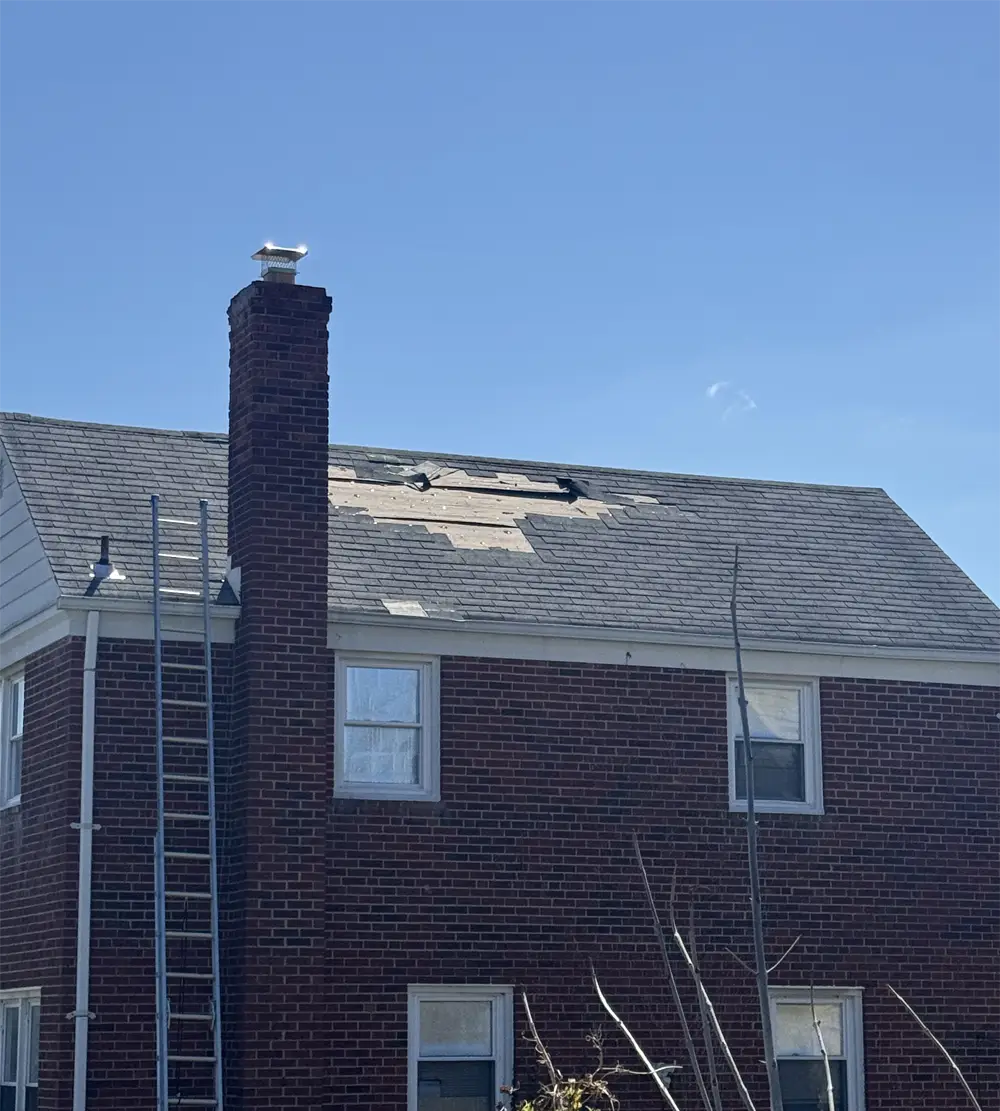
The condition of the covering is equally important. Loose shingles, deteriorated flashing, exposed fasteners, damaged decking, or previous storm damage can compromise either roof type. When problems are localized, professional roof repair services may restore the system without requiring complete replacement.
Which Roof Is Better for Rain and Snow?
Both designs perform effectively when pitch, underlayment, flashing, gutters, and drainage are correctly designed.
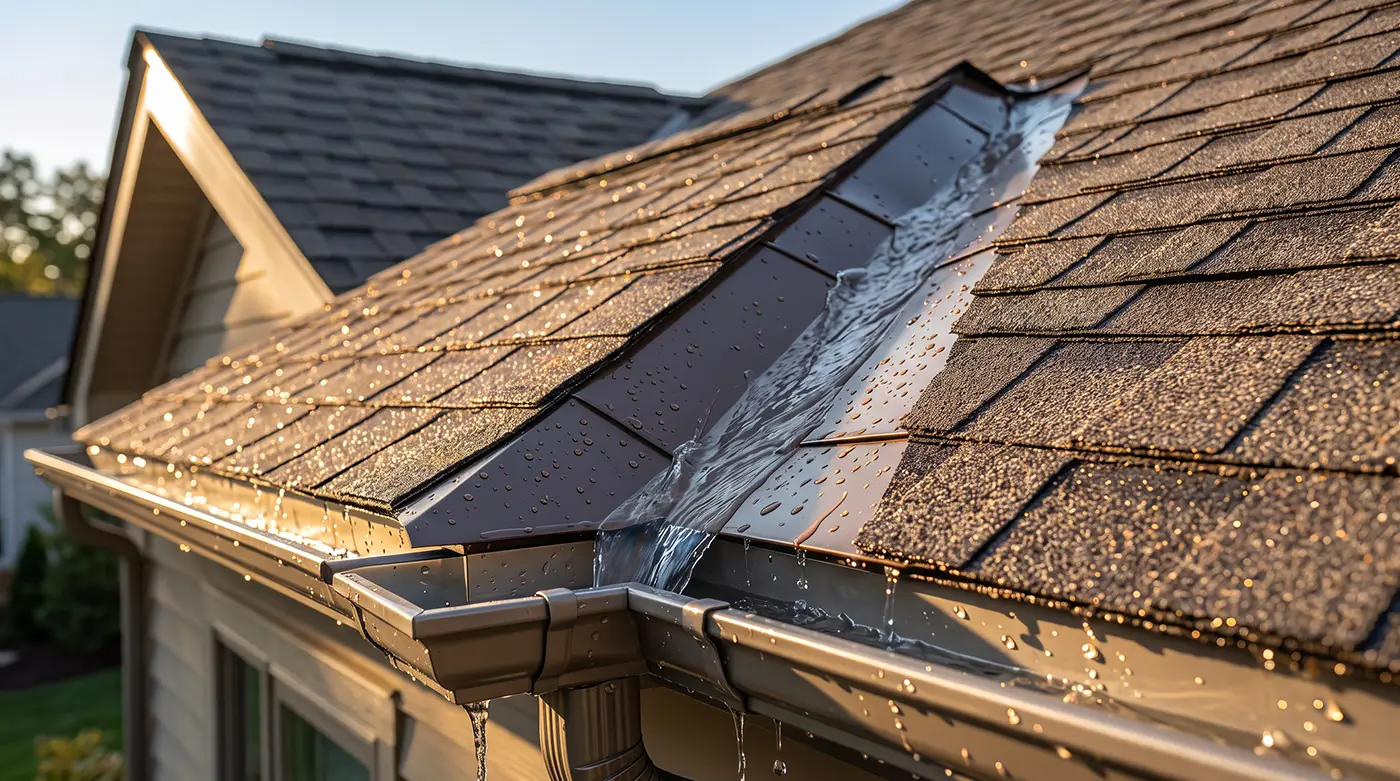
A hip roof sheds precipitation on every side, so gutters and downspouts may be required around a larger portion of the perimeter. A gable roof concentrates most roof runoff along the two eave sides, which makes gutter sizing and downspout placement especially important.
For snow, roof pitch and structural design matter more than simply choosing hip versus gable. Valleys, dormers, lower roof sections, and transitions can create areas where snow and ice accumulate regardless of the basic roof shape.
Which Roof Is Easier to Maintain?
Simple gable roofs usually have fewer intersections to inspect. A basic two-plane roof may contain a ridge, eaves, rakes, penetrations, and flashing but no hips or valleys.
Hip roofs add diagonal hip lines, additional cap shingles, and potentially more complicated flashing details. These components do not automatically create problems, but they increase the number of installation points that should be examined during inspections.
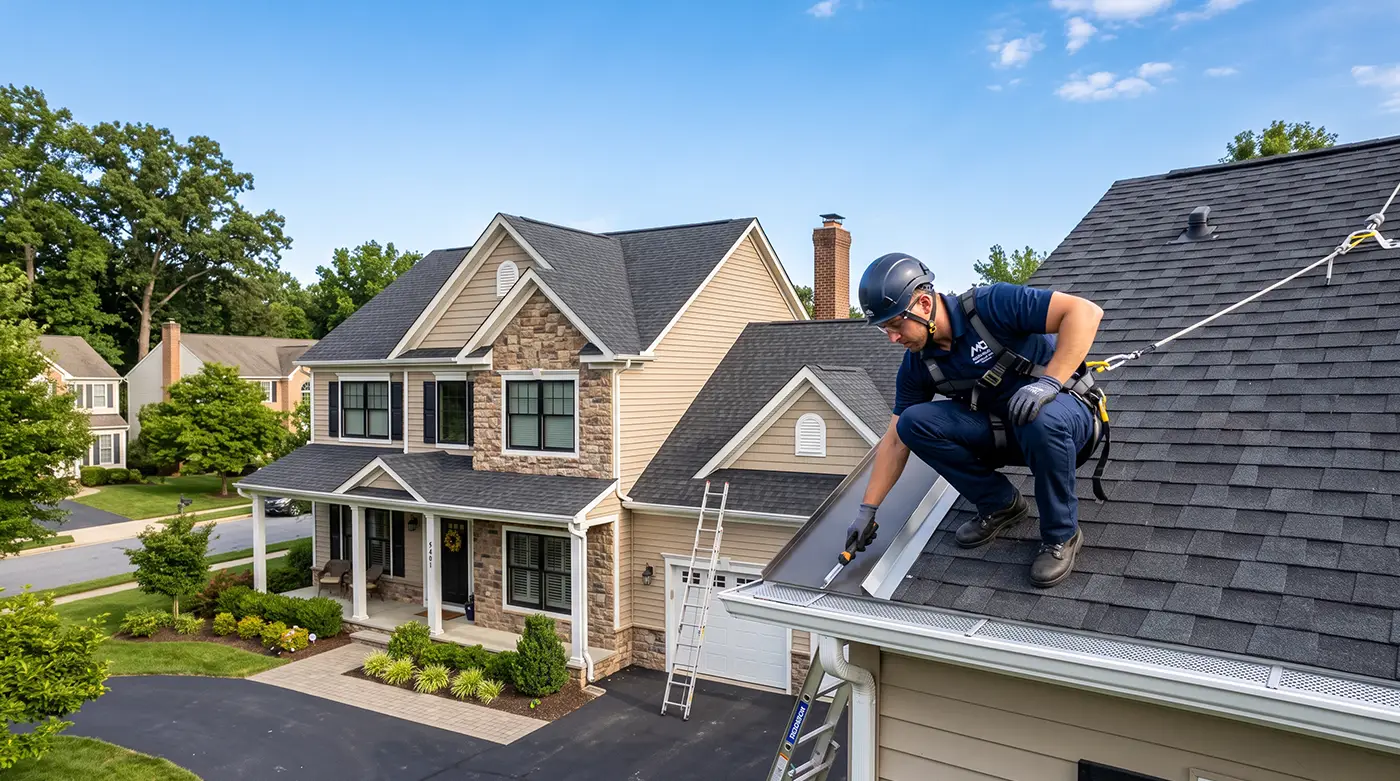
Regardless of design, we pay close attention to shingles, flashing, penetrations, ventilation, decking, drainage, and evidence of water intrusion rather than evaluating the visible roof covering alone.
Hip or Gable Roof: Which Is Best for a Maryland Home?
We recommend making the decision according to the entire structure rather than roof appearance alone.
A hip roof may be preferable when wind resistance, a balanced architectural profile, and eaves around multiple sides are priorities. A gable roof may be preferable when homeowners want simpler construction, greater attic volume, larger uninterrupted roof planes, or potentially lower construction costs.
For existing houses, changing from one roof geometry to another is a major structural project. During most replacements, retaining the existing sound roof configuration is considerably more practical than reconstructing the framing solely to change architectural style.

Conclusion
Neither design is universally superior. Hip roofs provide valuable aerodynamic and structural advantages, while gable roofs deliver efficient construction, generous attic space, simple roof planes, and excellent design flexibility. The correct choice depends on framing, wind exposure, pitch, drainage, ventilation, budget, and the architecture of the home. Homeowners considering repair, replacement, or a new roofing system can contact A1 Roofing’s KangaRoof for a professional assessment of the roof as a complete system.
Frequently Asked Questions
Is a hip roof more expensive than a gable roof?
Usually, yes. Hip roofs contain additional sloping planes, hip rafters or trusses, angled cuts, and hip-cap materials, which can increase framing and roofing labor. Actual cost depends on roof size, pitch, complexity, materials, access, and existing structural conditions.
Is a hip roof stronger than a gable roof?
Hip roofs generally perform better aerodynamically in high winds because all sides slope toward the exterior walls. However, either design can perform well when the framing, sheathing, connections, bracing, and roofing materials are properly engineered and installed.
Can a gable roof withstand strong Maryland storms?
Yes. A properly built and maintained gable roof can withstand significant weather exposure. Gable-end bracing, secure roof-to-wall connections, properly fastened decking, sound shingles, and correctly installed flashing are particularly important for reducing vulnerability during high winds.