
A professional roof inspection is a systematic evaluation of the roofing system—not simply a quick look at the shingles. At A1 Roofing’s KangaRoof in Columbia, MD, we inspect accessible roof components, drainage, penetrations, flashing, and visible interior evidence of leaks. As a Maryland roofing contractor, we use those findings to identify active problems, early deterioration, storm damage, and conditions that should be monitored.
When Should You Schedule a Roof Inspection?
Roof inspections are especially useful after high winds, hail, falling branches, recurring leaks, or unexplained ceiling stains. They also help before buying or selling a property and when an aging roof begins showing widespread wear.
The National Roofing Contractors Association recommends roof inspections at least twice per year, preferably in spring and fall, plus additional inspections after severe weather. Even without a visible leak, an inspection may reveal loose flashing, missing shingles, cracked materials, or drainage problems before water reaches the living space.
What Happens During a Professional Roof Inspection?
A thorough inspection follows the paths water and weather can take through the roof system. Safe access and roof conditions determine which areas can be physically examined.
1. We Review the Roof From the Ground
We look for missing or displaced shingles, uneven roof planes, damaged edges, debris, sagging areas, staining, and visible problems around chimneys, vents, gutters, or roof-to-wall transitions. These observations identify areas that deserve closer attention.
2. We Inspect Shingles or the Roof Membrane
On asphalt-shingle roofs, we check for lifted, cracked, curled, missing, or heavily worn shingles; exposed fasteners; abnormal granule loss; and signs of wind or impact damage. On flat and low-slope roofs, we focus on membrane condition, seams, punctures, open laps, penetrations, deterioration, and ponding areas.
One missing shingle does not automatically justify replacement. Widespread deterioration across several slopes, however, may indicate that isolated repairs will not provide good long-term value.
3. We Check Flashing and Roof Penetrations
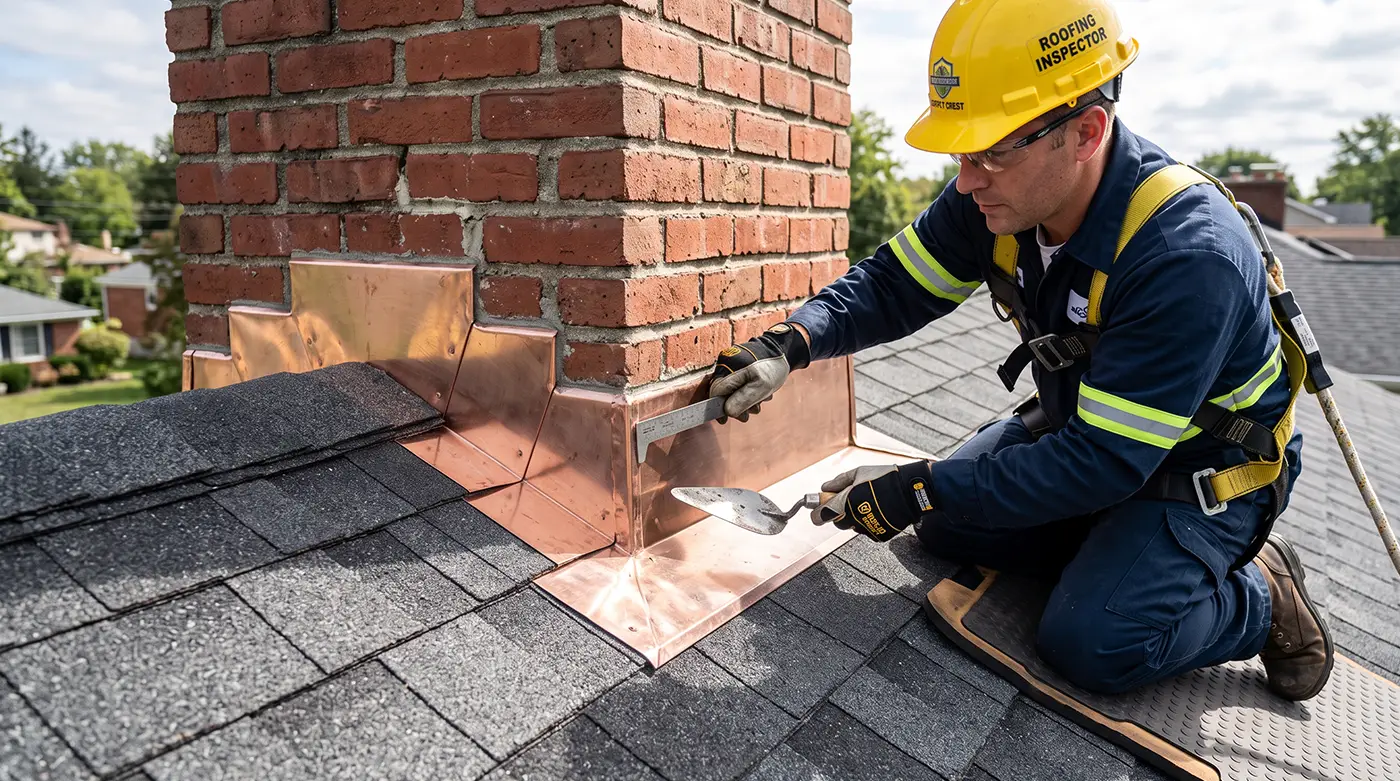
Leaks frequently develop where the roof changes direction or meets another component. We examine accessible flashing around chimneys, skylights, plumbing vents, walls, valleys, and roof edges for gaps, corrosion, displacement, failed sealant, or poor detailing.
A ceiling stain does not necessarily identify the entry point directly above it. Water can travel along decking, framing, or underlayment before appearing indoors, so leak diagnosis requires following evidence rather than patching the nearest visible area.
4. We Evaluate Roof Drainage
Water must move off the roof efficiently. We check valleys, roof drains, scuppers, gutters, and other accessible drainage paths for debris, obstruction, deterioration, or signs of backup. On flat roofs, repeated ponding can indicate a drainage or slope issue requiring further evaluation.
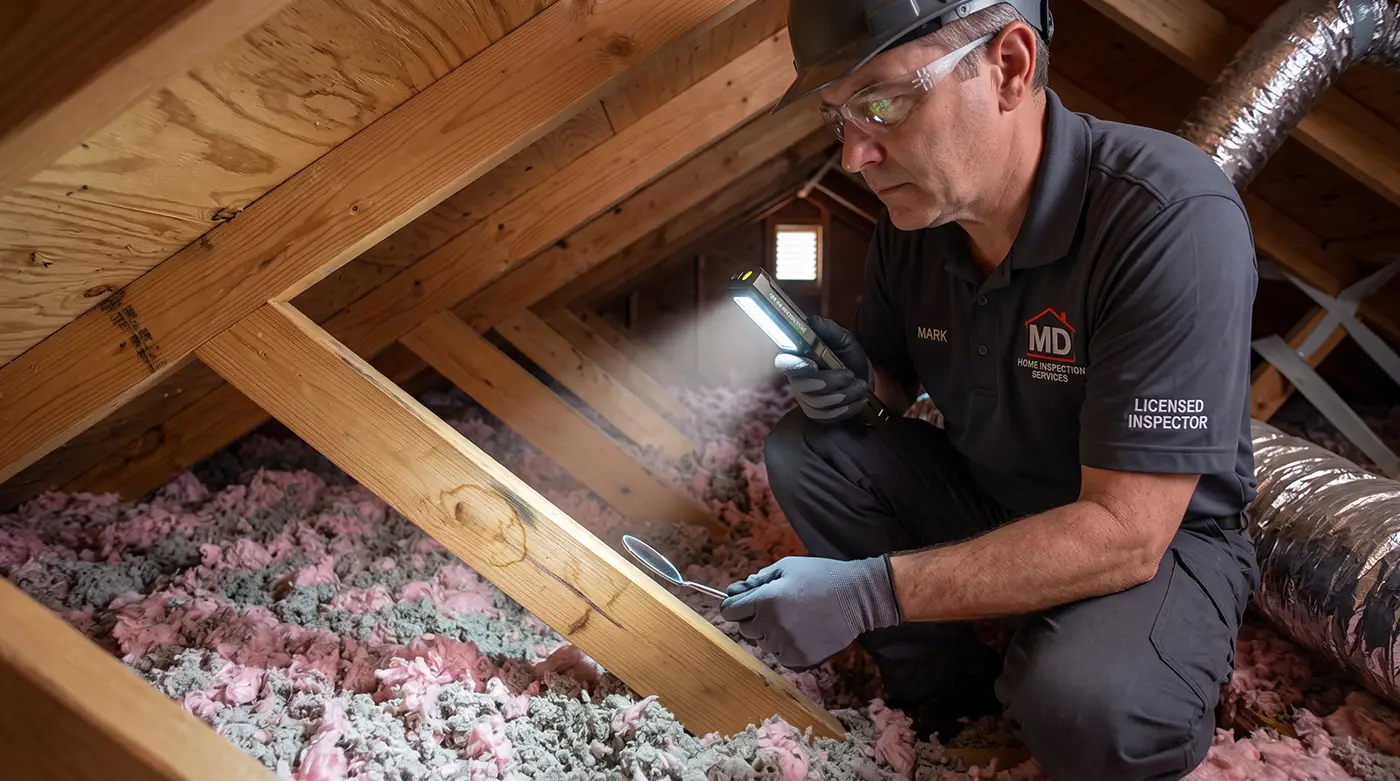
5. We Look for Interior Signs of Roof Leaks
When attic or interior areas are accessible, we look for water stains, damp insulation, deteriorated wood, visible openings, or patterns that help trace moisture intrusion. Interior evidence is compared with exterior findings because the visible stain may be several feet from the roof defect.
If water is already entering the property, our roof leak repair service focuses on locating the likely source and developing a targeted repair scope.
What Does a Roof Inspection Report Tell You?
The useful outcome is a prioritized plan. Findings should separate urgent defects, routine maintenance items, areas to monitor, and damage significant enough to discuss roof replacement.
A focused roof repair may address isolated flashing failures, missing shingles, localized storm damage, or a specific leak while the surrounding roof remains serviceable. Replacement may be more practical when leaks recur, deterioration is widespread, storm damage is extensive, or multiple sections are failing.
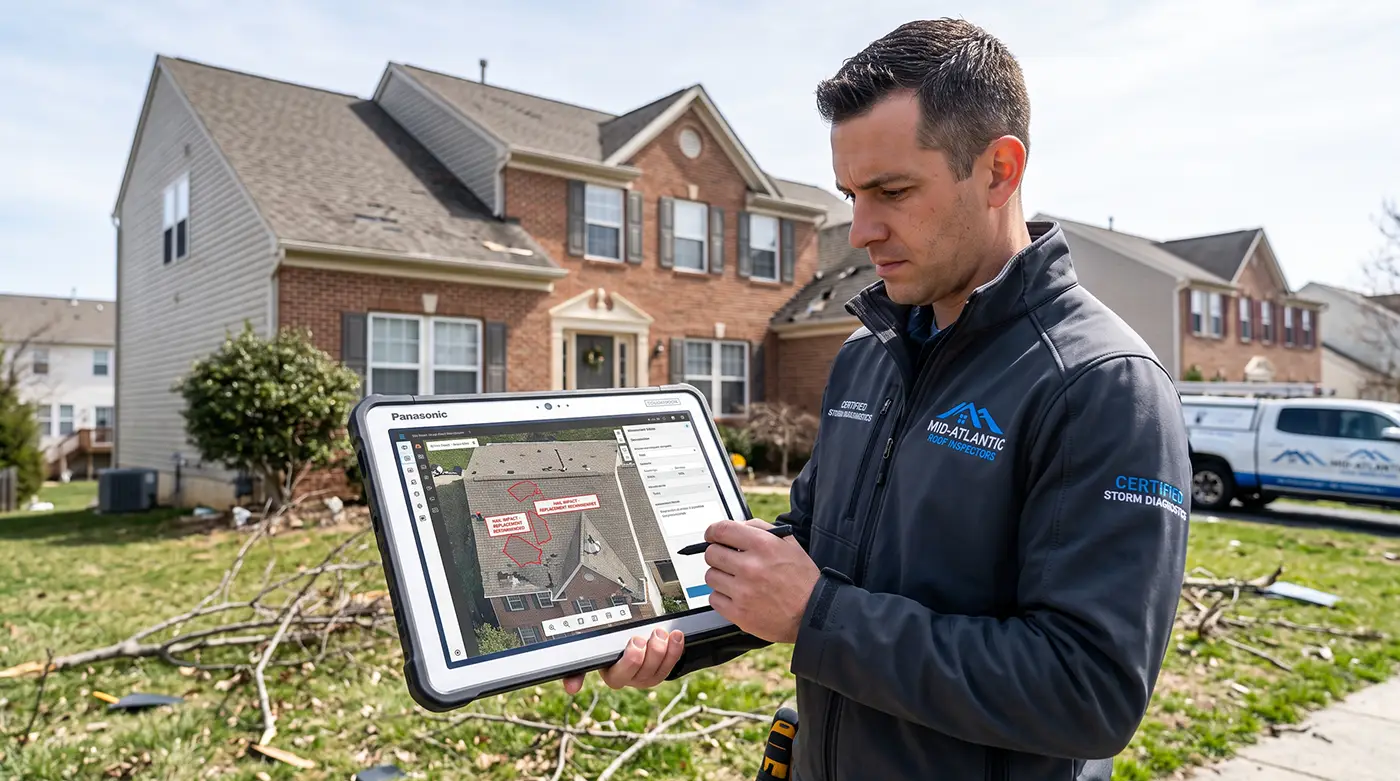
Roof Inspections After Storm Damage
After severe wind or hail, damage may not be obvious from the ground. The Insurance Institute for Business & Home Safety recommends professional roof inspections and needed repairs as part of reducing storm vulnerability. Missing shingles, loosened edges, displaced flashing, punctures, and impact damage can expose the roof to later water intrusion even when no immediate leak appears.
Homeowners should not climb onto a steep, wet, icy, or damaged roof. Professional inspection allows visible conditions to be documented safely and helps determine whether repair, monitoring, or replacement should be considered.

CONCLUSION
A roof inspection should answer three practical questions: Where is the roof vulnerable, how urgent is the problem, and what is the appropriate next step? At A1 Roofing’s KangaRoof, we use inspection findings to help Columbia-area property owners compare maintenance, repair, and replacement options based on actual roof condition. To schedule an assessment, contact us or review our roofing services.
FAQ
How long does a roof inspection take?
Timing depends on roof size, slope, material, penetrations, accessibility, and whether attic or interior leak tracing is needed. A simple residential roof generally takes less time than a large or complex system.
Can a roof inspection find the exact source of a leak?
Often, but not always from visual inspection alone. Water can travel beneath roofing materials or along framing before becoming visible indoors. We use exterior defects, interior staining, moisture patterns, and roof geometry to narrow the likely entry point and determine whether additional investigation is needed.
Does a damaged roof always need to be replaced?
No. Localized damage may be repairable when the surrounding roof remains serviceable. Replacement becomes more appropriate when deterioration is widespread, leaks recur in multiple areas, storm damage is extensive, or repeated repairs no longer provide reasonable long-term value.