
Replacing a roof is a major property investment, and the final price depends on far more than the cost of shingles. At A1 Roofing’s KangaRoof, located in Columbia, MD, we evaluate the complete roofing system—from roof size and structural condition to ventilation, flashing, tear-off requirements, and material specifications—before calculating a replacement estimate. Homeowners considering a new roof can review our roof replacement services or learn more about our Maryland roofing company.
How Much Does a New Roof Cost?
There is no reliable universal price-per-square-foot figure for roof replacement because two houses with similar floor plans can require very different amounts of labor and material.
For perspective, the 2025 Cost vs. Value Report lists the national average cost of an asphalt-shingle roof replacement at $31,871, with an estimated $21,501 in resale value, or approximately 68% of the project cost recouped. The report lists metal roof replacement at $51,865 nationally.
These figures are useful benchmarks, not estimates for an individual Maryland property. Actual roof replacement cost depends on the conditions found at the home and the roofing system selected.
1. Roof Size and Actual Roofing Area
Roofing contractors measure roofing in squares, with one roofing square equal to 100 square feet of roof surface.
A 2,000-square-foot house does not necessarily have a 2,000-square-foot roof. Roof pitch, overhangs, garages, porches, additions, dormers, and multiple roof sections increase the actual surface area.
Material quantities must also account for cutting and waste around valleys, hips, ridges, walls, and penetrations. A simple gable roof generally requires less labor and material than a highly segmented roof of similar overall size.
2. Roof Pitch, Height, and Architectural Complexity
Steeper and more complicated roofs typically cost more to replace because installation requires additional labor, safety procedures, staging, and material handling.
Important complexity factors include:
- Steep roof slopes
- Multiple valleys, hips, and ridges
- Dormers and intersecting roof sections
- Chimneys and skylights
- Plumbing vents and other penetrations
- Two- or three-story working heights
- Restricted equipment or disposal access
A straightforward roof can therefore cost considerably less to replace than a smaller roof with difficult access and numerous architectural details.
3. Tear-Off and Existing Roofing Layers
A roof replacement estimate must account for what happens before the new roofing system is installed.
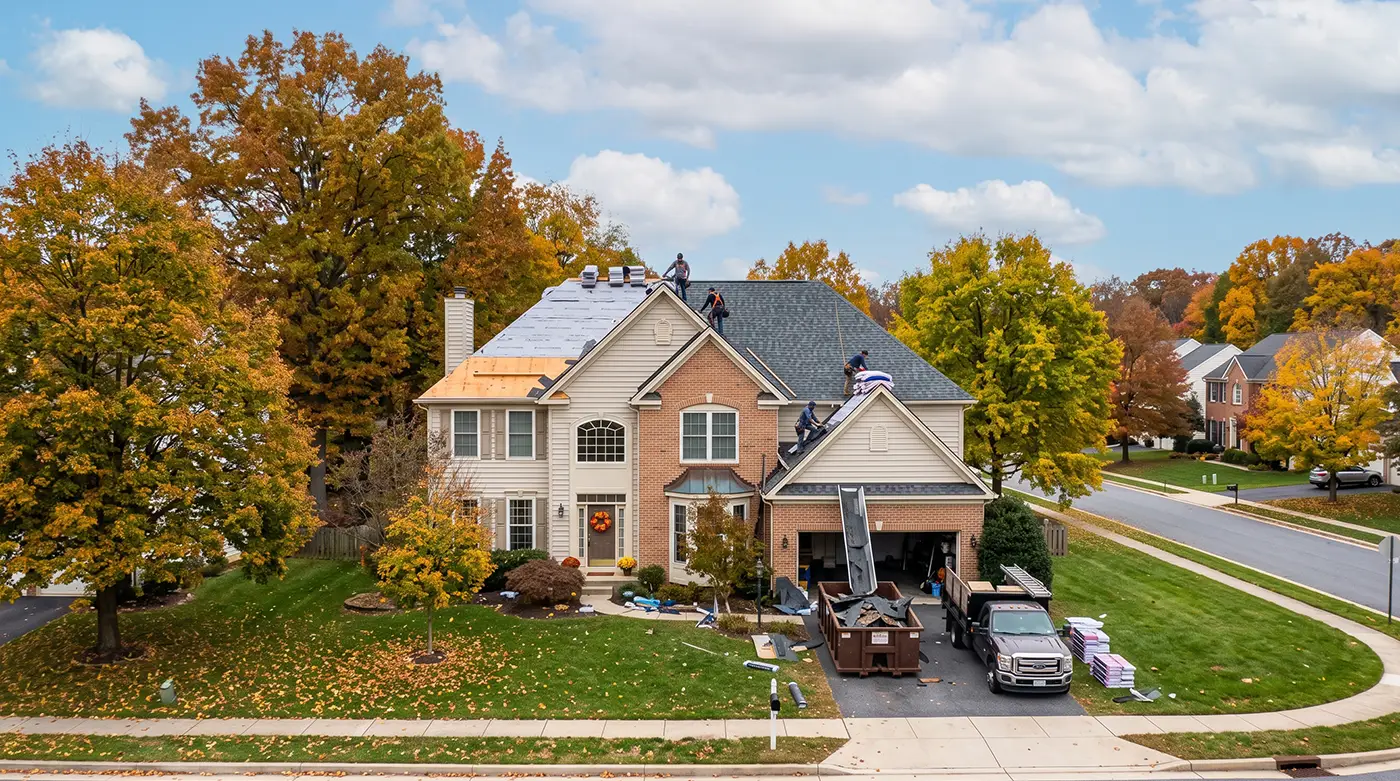
Removing existing shingles requires labor, equipment, debris handling, transportation, and disposal. Multiple existing roofing layers can increase the amount of material that must be removed.
Tear-off also exposes the roof deck, allowing hidden deterioration to be identified. This is one reason an initial quote may contain allowances or unit pricing for unexpected deck repairs.

4. Roof Decking and Hidden Damage
New shingles should be installed over a suitable roof deck. If plywood or other roof sheathing has deteriorated because of prolonged moisture exposure, leaks, or structural problems, damaged areas may require replacement.
The amount cannot always be determined from an exterior inspection because deterioration may remain concealed beneath the existing roofing materials.
This is an important distinction when comparing roofing proposals: a low initial number does not necessarily represent the final project cost if necessary decking work is excluded.
5. Roofing Material and Complete System Components
Shingles are only one part of a new roof.
A complete asphalt roofing system may include shingles, starter shingles, underlayment, leak-protection membranes, ridge-cap shingles, flashing, pipe boots, fasteners, ventilation components, and other accessories.
Product grade also affects pricing. Standard shingles and higher-performance architectural products can differ in material specifications, appearance, wind ratings, warranty options, and installed cost.
Homeowners should compare complete roofing systems, not simply shingle prices.
6. Flashing, Chimneys, Skylights, and Roof Penetrations
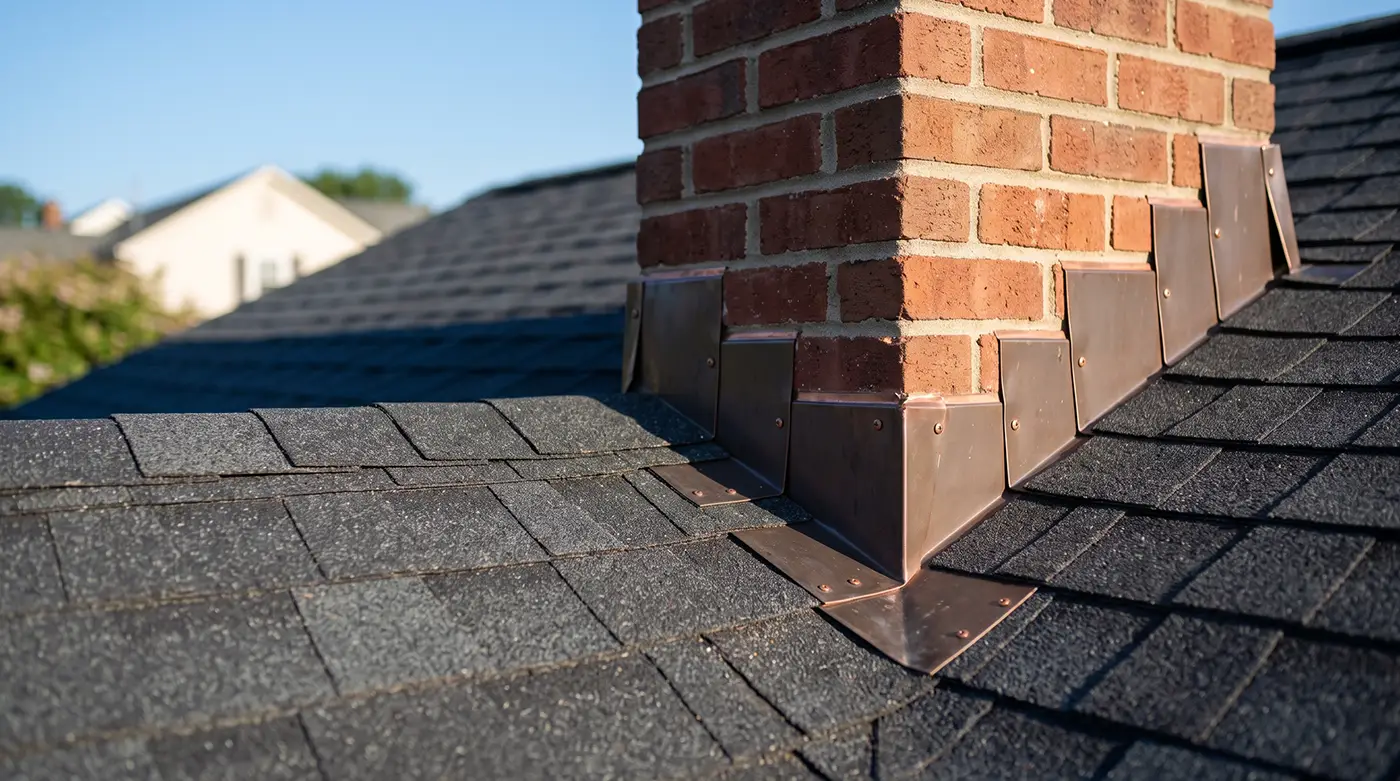
Roof penetrations create some of the most detail-intensive areas of an installation.
Chimney flashing, wall flashing, valleys, skylights, plumbing vents, and roof-to-wall intersections must be integrated correctly with the new roofing system. A roof containing several penetrations normally requires more installation time than an uninterrupted roof plane.
Existing flashing conditions can also influence whether components can remain or should be replaced as part of the project.
7. Attic Ventilation
Roof replacement provides an opportunity to evaluate attic ventilation.
Proper intake and exhaust ventilation helps control accumulated heat and moisture. The required solution depends on the roof and attic design and may involve ridge vents, soffit intake ventilation, or other ventilation components.
Ventilation deficiencies should be identified before installation rather than simply covering the existing roof with new materials.
8. Repair or Replace: Avoid Paying for a Roof Too Early
Not every roof problem requires replacement.
Localized missing shingles, damaged flashing, a failed pipe boot, or another isolated problem may sometimes be addressed through professional roof repair services when the surrounding roofing system remains serviceable.
Replacement becomes more practical when deterioration is widespread, leaks repeatedly appear in different areas, significant storm damage affects the system, or repeated repairs no longer provide dependable protection.

How to Compare Roof Replacement Estimates
We recommend comparing the scope of work, not simply the bottom-line price. A detailed estimate should clearly identify the roofing materials, tear-off scope, underlayment, flashing work, ventilation, disposal, decking provisions, workmanship coverage, manufacturer warranty information, and any potential additional charges.
Large price differences between estimates often result from differences in scope rather than contractor markup alone.

Conclusion
The cost of a new roof is determined by the complete installation—not simply the number of shingles required. Roof area, pitch, architecture, tear-off, decking condition, material selection, flashing, ventilation, accessibility, and warranty coverage can all change the final price. A1 Roofing’s KangaRoof evaluates these factors before recommending a replacement solution. Homeowners ready for project-specific pricing can contact us for a roofing estimate.
FAQ
How much should I budget for a roof replacement?
Budget requirements vary considerably by roof size, pitch, materials, complexity, decking condition, and removal requirements. National averages can provide context, but an on-site inspection is necessary to calculate a meaningful project-specific estimate.
What can unexpectedly increase the cost of a new roof?
Hidden roof-deck deterioration is one of the most common conditions that may not be fully visible until existing roofing is removed. Multiple roof layers, damaged flashing, ventilation changes, difficult access, and structural repairs can also affect the final scope.
Is it cheaper to repair a roof instead of replacing it?
A targeted repair usually costs less initially when damage is isolated and the remaining roof is in serviceable condition. If leaks are recurring or deterioration is widespread, continued repairs may offer poorer long-term value than replacing the aging roofing system.