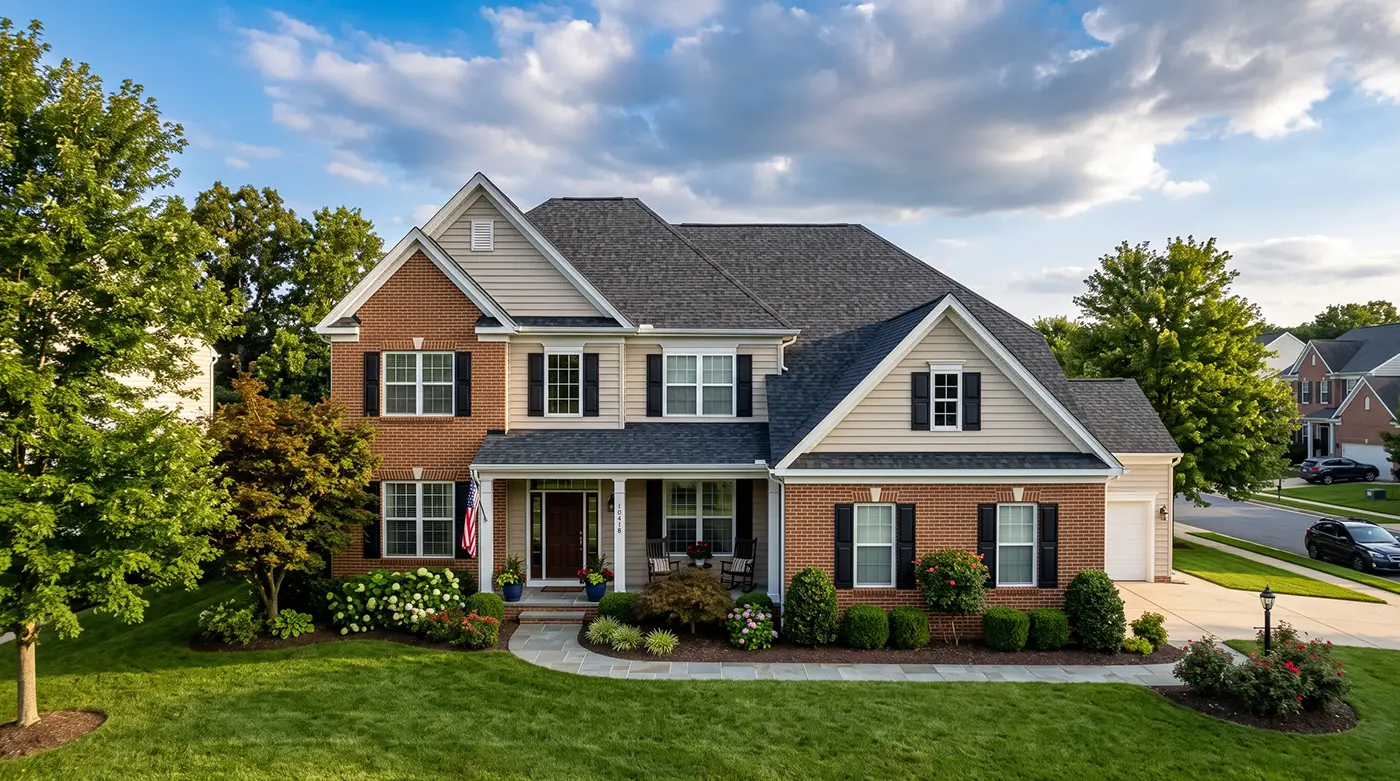

Choosing among the different roof types in Maryland requires more than comparing appearance and price. Maryland roofs face humid summers, freezing winter temperatures, heavy rain, wind, occasional hail, snow, and repeated freeze-thaw cycles. At A1 Roofing’s KangaRoof in Columbia, MD, we evaluate roofing materials based on roof slope, drainage, expected service life, maintenance requirements, structural capacity, and long-term value before recommending a system.
For homeowners planning a new roof or researching a future replacement, our roofing company in Columbia, MD provides residential and commercial roofing solutions throughout Central Maryland.
Asphalt Shingles: The Most Practical Maryland Roof Type
Asphalt shingles remain one of the most practical choices for pitched residential roofs because they combine moderate installation cost, broad design flexibility, repairability, and reliable weather protection.
Modern fiberglass asphalt shingles contain a fiberglass reinforcing mat coated with asphalt and surfaced with ceramic-coated mineral granules. The granules protect the asphalt from ultraviolet radiation while providing color and texture.
There are two primary options:
3-tab shingles use a thinner, uniform construction. They generally cost less but provide less dimensional depth and typically have shorter expected service lives.
Architectural shingles, also called dimensional or laminated shingles, contain multiple layers that create a thicker profile. They generally provide better wind performance, visual depth, and longer service life than basic 3-tab products.
For many Maryland homes, architectural shingles offer the best balance of initial cost, durability, curb appeal, and future repairability. We install systems using manufacturers including Owens Corning and CertainTeed. Homeowners comparing options can review our asphalt roofing services.
Standing-Seam Metal Roofing
Metal roofing is increasingly used on Maryland homes where owners prioritize longevity and low routine maintenance. Standing-seam systems use long metal panels connected by raised seams, with fasteners concealed beneath the roofing surface.
A properly designed metal roof may provide roughly 40–70 years of service, depending on the metal, coating, installation, environment, and maintenance. Concealed fastening also allows panels to expand and contract as temperatures change without exposing large numbers of fasteners directly to rain.
Reflective finishes can reduce solar heat gain. The U.S. Department of Energy reports that highly reflective cool roofs can remain as much as 60°F cooler than conventional dark roofs during summer conditions, although actual energy savings depend on climate, insulation, roof construction, and HVAC efficiency.
Metal’s higher upfront price makes it most attractive when long service life is more important than minimum initial cost.
Natural Slate Roofing
Slate is one of Maryland’s premium roofing materials, particularly for historic and high-end homes.
Unlike manufactured roofing, slate is natural stone split into individual roofing units. It does not rot, is noncombustible, and resists ultraviolet degradation exceptionally well.
The National Park Service describes slate as “one of the most aesthetically pleasing and durable” roofing materials and reports properly installed slate roofs can last 60–125 years or longer.
Slate is heavy, however. Decking, framing, fasteners, flashing, and structural capacity must be evaluated before installation. Repair work also requires contractors familiar with individual slate replacement rather than standard shingle techniques.
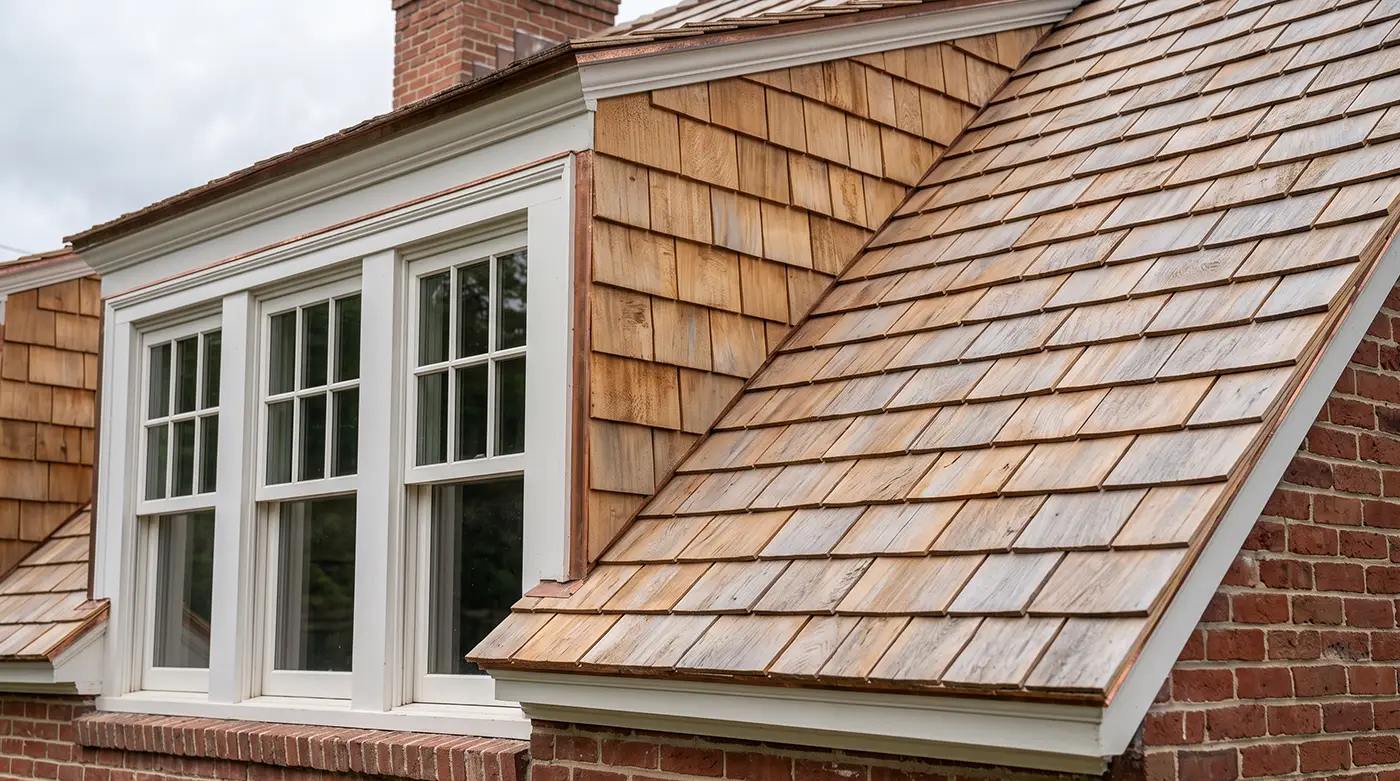
Cedar Shingles and Cedar Shakes
Cedar provides a natural appearance that works particularly well with traditional Maryland architecture.
Cedar shingles are generally sawn for a more uniform appearance, while cedar shakes are thicker and produce a more textured profile.
Cedar can provide decades of service, but its performance depends heavily on ventilation, drainage, sunlight exposure, and maintenance. Persistent moisture, heavy shade, algae, moss, and accumulated debris can accelerate deterioration. For wooded Maryland properties, roof orientation and surrounding tree coverage should therefore influence material selection.
Clay and Concrete Tile Roofing
Clay and concrete tiles offer excellent resistance to sunlight and can provide 50 years or more of service when the roofing system and structure are properly designed.
Their primary limitation is weight. Tile can be substantially heavier than asphalt shingles, so the roof structure should be evaluated before converting from a lightweight material.
Maryland homeowners should also select tile products engineered for climates that experience freezing temperatures. Moisture absorbed into unsuitable materials can expand during freezing and contribute to cracking.
Synthetic Composite Roofing
Synthetic roofing uses engineered polymers or composite materials to reproduce the appearance of slate, cedar, or traditional shingles without matching the weight of natural slate or the maintenance requirements of wood.
Quality varies significantly by manufacturer. We recommend comparing impact ratings, wind ratings, fire classifications, warranty terms, UV resistance, installation requirements, and documented product history rather than selecting composite roofing based on appearance alone.
Synthetic slate can be particularly useful where homeowners want a slate-style roof but the structure was not designed for natural stone.

Flat and Low-Slope Roofing Systems
Flat roofs require different materials because shingles depend on sufficient slope to shed water effectively.
Common Maryland low-slope systems include:
- TPO, a thermoplastic membrane with heat-welded seams.
- EPDM, a flexible synthetic rubber membrane.
- PVC, a thermoplastic membrane commonly selected for durable welded seams and chemical resistance.
- Modified bitumen, an asphalt-based membrane reinforced for additional strength.
Drainage, seam construction, flashing, insulation, penetrations, and membrane attachment are critical. Ponding water or poorly detailed penetrations can shorten the life of even a premium membrane. We work with TPO, EPDM, PVC, and modified bitumen systems through our flat roofing services.

Comparing the Best Roof Materials for Maryland
| Roofing Material | Typical Service Life* | Best Application |
| Architectural asphalt shingles | 20–30+ years | Most residential homes |
| Standing-seam metal | 40–70 years | Long-term residential roofing |
| Natural slate | 60–125+ years | Premium and historic properties |
| Cedar | 25–40 years | Traditional architectural styles |
| Clay/concrete tile | 50+ years | Structurally suitable homes |
| Synthetic composite | 30–50 years | Slate or cedar appearance |
| TPO/EPDM/PVC | 20–30+ years | Flat and low-slope roofs |
*Actual roof lifespan varies substantially with product quality, installation, ventilation, roof geometry, exposure, maintenance, and weather.
Material alone does not determine roof performance. Decking condition, underlayment, flashing, ventilation, valleys, penetrations, fastening patterns, drainage, and installation quality all influence service life. If an existing roof has widespread deterioration or recurring leaks, our roof replacement services can determine whether targeted repairs or complete replacement provide better long-term value.

Conclusion
There is no single best roofing material for every Maryland property. Architectural asphalt shingles provide excellent overall value for most homes, metal offers exceptional longevity, slate delivers unmatched natural durability, cedar provides traditional character, tile offers long-term performance where structural conditions allow it, and synthetic materials provide lighter alternatives to premium natural products. Flat and low-slope buildings require membrane systems such as TPO, EPDM, PVC, or modified bitumen. A1 Roofing’s KangaRoof can evaluate the existing roof, slope, drainage, structural conditions, and project goals before recommending the appropriate system. Property owners ready to compare options can contact our roofing team for a project-specific assessment.
Frequently Asked Questions
What is the best roof type for a Maryland home?
Architectural asphalt shingles are often the most practical choice because they balance cost, weather resistance, appearance, availability, and repairability. Metal and slate may provide substantially longer service lives when the budget and structure support them.
What roof lasts the longest in Maryland?
Natural slate is among the longest-lasting roofing materials available. Properly installed slate can last approximately 60–125 years or longer. Standing-seam metal is another long-life option, commonly providing several decades of service.
Are metal roofs better than asphalt shingles in Maryland?
Neither material is universally better. Metal typically offers greater longevity and lower routine maintenance but costs more initially. Architectural asphalt shingles usually provide a lower upfront cost, broad style selection, and easier localized repairs, making them suitable for a larger percentage of Maryland homes.